
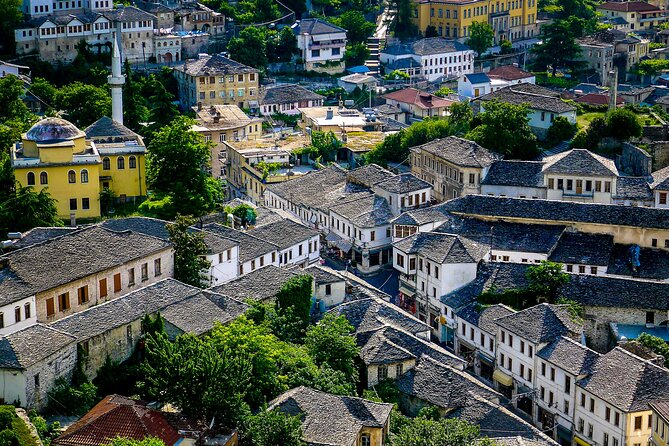
REVIEW · GJIROKASTRA STONE CITY TOURS
Gjirokaster walking Tour The Old Baazar, Cfake, Dunavat, Ali Pasha Bridge
Gjirokaster rewards slow steps. This Old Bazaar, Cfaka, and Ali Pasha Bridge walking tour takes you off the obvious route and into neighborhoods that sit right under the castle walls. I like how it threads together cobblestones, older houses, and working local culture in just a few hours, and I also like the way the guide brings the town to life with history that feels personal.
Two spots in particular stand out to me: the Old Bazaar area with its cobbled lanes and some of the oldest houses, and the final approach to Ali Pasha Bridge. As a heads-up, it is still a walking tour, so if you do not enjoy uneven stone streets or hillside paths, plan for that before you book.
The group stays small (up to 15), the tour runs about 3 hours, and you start and end at the same place, Çerçiz Topulli Square. Guides are included, and the experience is priced in a way that feels fair for what you get: a local perspective and a guided loop through multiple historic areas.
In This Review
- Key reasons this walk feels worth your time
- Finding your feet at Çerçiz Topulli Square
- Old Bazaar streets that still feel ancient
- Crossing ZerzeBili bridge toward Cfaka
- Cfaka’s Bektashi tekke stop
- Old houses, protected buildings, and what to look for
- Reaching Ali Pasha Bridge, the payoff moment
- Price and value: is $18.08 a fair deal?
- What to bring and how to prepare for the walk
- Should you book this Gjirokaster walking tour?
- FAQ
- How much does the Gjirokaster walking tour cost?
- How long is the tour?
- Where does the tour start and end?
- Is a guide included?
- Is there an admission ticket required?
- What is the group size?
- Is there free cancellation?
Key reasons this walk feels worth your time
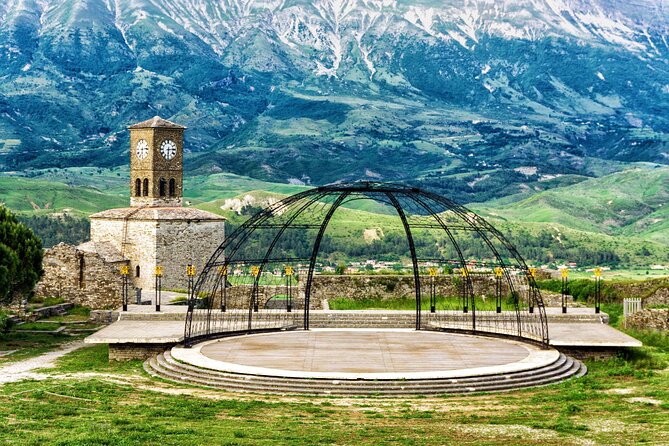
- You see real neighborhoods: old houses and viewpoints beyond the castle ticket crowd.
- Cobblestones and age on display: the Old Bazaar area is no longer a bazaar, but it still feels ancient.
- Cfaka brings cultural layers: you pass a tekke linked to the Bektashi Order.
- Nature shows up fast: you’ll notice sheep on the hills along the way to the bridge.
- Small group energy: maximum 15 people, so it stays interactive.
- Guide-led pacing: guides can adjust as you go, including with photo stops.
Gjirokastra walked, compared and priced
- Walking Tour Baazar – The Argjiro Castle – Zekate house★ 4.5 · 18 reviews
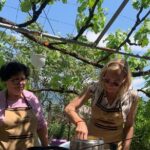
- Wood Crafting Experience in Gjirokastra★ 4.5 · 10 reviews
- Walking Tour “The Old Bazaar, Cfake, Dunavat, Ali Pasha Bridge”★ 5.0 · 10 reviews
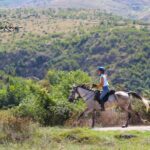
- 2-Hours Guided Drino’s Valley Ride★ 4.5 · 5 reviews
- Gjirokaster – The Stone City of UNESCO, Private Tour from Tirana★ 4.5 · 4 reviews
Finding your feet at Çerçiz Topulli Square
Most people start out by scanning Gjirokaster’s big sights. This tour starts where local life and the old-town grid connect: Çerçiz Topulli Square. It’s a good meeting point because it keeps everything simple, and the tour ends back at the same place, so you are not stuck figuring out a pickup.
The timing matters here. With an about 3-hour duration, you are not racing across town. You can take your time on the older streets, listen to the guide, and still finish at Ali Pasha Bridge without turning the day into a sprint.
Also, check how you’ll reach the square. The tour is listed as being near public transportation, which is handy if you are coming in from outside town or hopping between sights. If you plan to use a phone as your compass, you’ll also want your battery charged, since the tour uses a mobile ticket.
Old Bazaar streets that still feel ancient
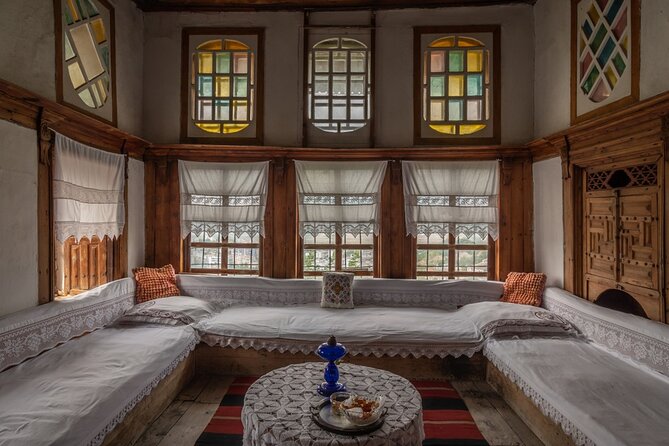
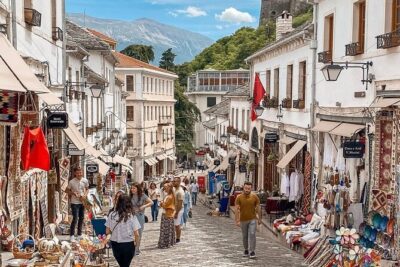
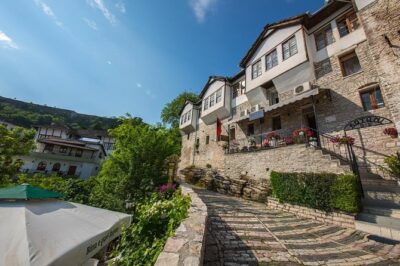
The first area you walk through is the Old Baazar. The name is a little misleading, since it is not a bazaar in the modern sense anymore, but the character is still there: cobblestone lanes and some of the oldest houses. This is one of the reasons I like this tour concept. You get “old town” without doing the same repeat photo-stop loop.
You are also walking in a transitional zone: the Old Bazaar is described as the first neighborhood outside the castle walls, running along beneath them. That means your perspective changes as you move. Instead of only looking up at the fortifications, you see how daily life grew around the castle edge.
A practical note: cobblestones mean your shoes matter. Wear something with grip and comfort, even if you think you can handle “just a short walk.” The route may include uneven stone and small changes in grade as you move from street to street along the old blocks.
Crossing ZerzeBili bridge toward Cfaka
After the Old Bazaar area, you pass the Zerzebili bridge. Bridges in stone towns are not just shortcuts. They mark a shift in neighborhood mood and give you a natural moment to pause, look, and reset your sense of direction.
Then you reach Cfaka, another ancient part of town. This is where the tour starts to feel like a layered walk, not just a sequence of landmarks. You move past old houses that are noted as belonging to the first monument category, which signals that these buildings are protected and considered especially significant.
Cfaka also brings a softer side to the walk: the route includes views of nature and hills, with many sheep often visible overhead. That matters because it breaks up the “walls and stone” feeling you can get in fortress towns. It also gives you a sense of how Gjirokaster sits in its setting, not only inside its historic boundaries.
Cfaka’s Bektashi tekke stop
One of the most interesting cultural details on this route is a tekke associated with the Bektashi Order. Even if you are not studying Albanian religious history, this kind of stop helps you understand how communities formed beyond the castle.
Here’s the practical takeaway for you: a guided walk like this is one of the easiest ways to catch context you would likely miss wandering alone. A tekke is not just a building. It connects architecture with tradition, and it often sits in the middle of the neighborhood story, not off in a museum box.
The guide’s role becomes obvious at this point. You can tell when a local guide truly likes the subject, and the feedback for this tour highlights that kind of genuine enthusiasm. In one guide example, Besi is mentioned as warm, curious, and passionate, and that kind of energy makes small details click, like why this tekke belongs on a walk through Cfaka rather than being treated like a random roadside stop.
More of Albania taken at walking pace
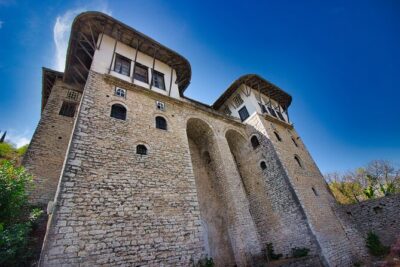
Old houses, protected buildings, and what to look for
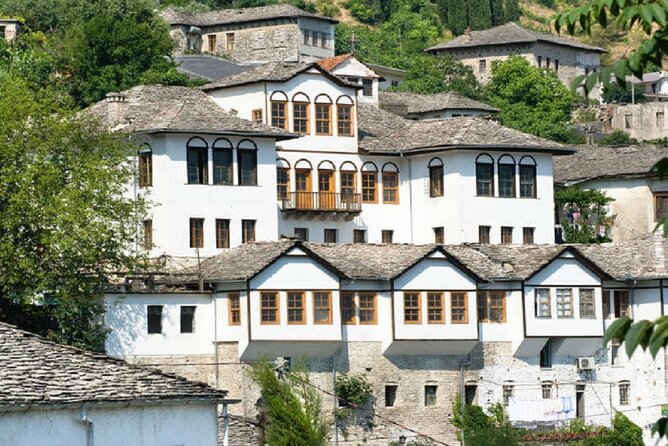
When a tour tells you that certain houses are in a protected or top monument category, it is a clue. You should slow down and look at patterns: how the street faces the houses, how windows and doorways sit in the façade, and how the stone and layout reflect the neighborhood’s age.
This is also a good moment to practice a simple travel habit: ask your guide what makes a building significant. You are not asking for trivia. You are learning how locals read the town, like what stands out in construction, placement, or style.
One of the best values in a guided old-town walk is that your guide can also point out the invisible stuff. For example, why this neighborhood is “where you are” in relation to the castle walls, and why the route chooses ZerzeBili bridge as the transition. These are the kinds of connections that make the walk feel like a story instead of a checklist.
Reaching Ali Pasha Bridge, the payoff moment
You finish at the Ali Pasha Bridge. That is a strong ending choice because the bridge functions like a natural stage. Bridges give you height, perspective, and a clear view of how town structures connect across water or valleys.
Even if you keep your expectations realistic, this final stop tends to land well because you arrive after seeing the neighborhoods that lead up to it: Old Bazaar streets first, then ZerzeBili bridge, then Cfaka with old houses and the Bektashi tekke. So when you stand at Ali Pasha Bridge, you are not seeing it as an isolated photo. You understand where it fits into the walk’s geography.
If you care about photos, this is also the part of the tour where you will likely want to take a little extra time. Your guide can usually handle pacing without feeling rigid, and one of the praised points about the tour is that guides are flexible and able to adjust as you go. That makes a difference at the end, because people often run out of time on tours that do not build in breathing room.
Price and value: is $18.08 a fair deal?
At $18.08 per person for an about 3-hour guided walk, this tour sits in a reasonable price zone for Gjirokaster. You are paying for more than someone walking with you. You are paying for local interpretation, plus a planned route through multiple historic areas.
Two things make the value stronger. First, the tour includes the guide, and guide quality is repeatedly highlighted as a standout feature. Second, admission is indicated as ticket free for the listed portion, meaning you are not stacking extra fees just to see the streets and neighborhood sites.
Also worth noting: the tour requires a minimum of 2 persons. That usually means you will not join if there are zero bookings, but it also signals the provider is organizing actual group walks rather than running it as a solo add-on every hour.
Group size matters too. With a maximum of 15 travelers, you avoid that “too many people, too little conversation” problem. If you like asking questions and getting real answers, a smaller group helps.
Finally, the booking pattern suggests people plan ahead, too. It is listed as being booked about 42 days in advance on average, which is a hint that this is a popular add-on for folks who want more than the main castle circuit.
What to bring and how to prepare for the walk
This tour is best thought of as an old-town walking route with stops. You should treat cobblestones as the main variable, not the distance.
Here are the practical items that will make the experience smoother:
- Wear comfortable, grippy shoes for stone streets.
- Bring a water bottle, since you are out for about 3 hours.
- Have your phone ready for the mobile ticket and the meeting point navigation.
- Bring a light layer, because weather can change quickly in towns with hills.
If you like getting the most out of a guide, come ready with questions. Good topics for this specific walk include what makes the Old Bazaar area special as an early neighborhood outside the castle walls, why ZerzeBili matters in the geography, and what a tekke represents in local community life.
Based on the guide feedback, I would also lean into conversation. Guides here are described as pleasant, entertaining, and flexible, and that combination is where walking tours turn from information delivery into real understanding.
Should you book this Gjirokaster walking tour?
Book it if you want the town’s everyday bones. I like that this walk covers Old Bazaar lanes, Cfaka, and the Ali Pasha Bridge approach, all in a tight time window. It is also a smart choice if you care about culture beyond the big ticket sights, especially with the Bektashi tekke stop and the focus on older neighborhoods.
Skip it if your priority is only the absolute top castle viewpoints and you do not want uneven stone streets in a hill town. Also skip if you hate guided walking formats and would rather wander freely with zero structure.
If you do book, aim for comfortable shoes, show up at Çerçiz Topulli Square with your phone charged, and give your guide a chance to set the tone. With guides like Besi being singled out for warmth and passion, this is the kind of tour where the guide quality can be the difference between seeing places and truly understanding them.
FAQ
How much does the Gjirokaster walking tour cost?
It costs $18.08 per person.
How long is the tour?
The duration is about 3 hours.
Where does the tour start and end?
It starts at Çerçiz Topulli Square in Gjirokastër, Albania, and ends back at the same meeting point.
Is a guide included?
Yes, the guide is included.
Is there an admission ticket required?
Admission is listed as free for the tour.
What is the group size?
The tour has a maximum of 15 travelers, and it requires a minimum of 2 persons to run.
Is there free cancellation?
Yes, free cancellation is offered up to 24 hours in advance for a full refund.
More Albanian Tours, Rated

More of the Stone City

Every Albania Review We Have

Latest Albania reviews off the desk
- Gjirokastra Private Half-Day Walking Tour
★ 5.0 · 3 reviews - Gjirokaster – The Stone City of UNESCO, Private Tour from Tirana
★ 4.5 · 4 reviews - Private Cold War City Tour in Gjirokaster
★ 4.5 · 4 reviews - 2-Hours Guided Drino’s Valley Ride
★ 4.5 · 5 reviews - Prepare Osa with Teta Marjeta
★ 4.5 · 7 reviews - Wood Crafting Experience in Gjirokastra
★ 4.5 · 10 reviews
Gjirokastra Stone City Tours, compared.
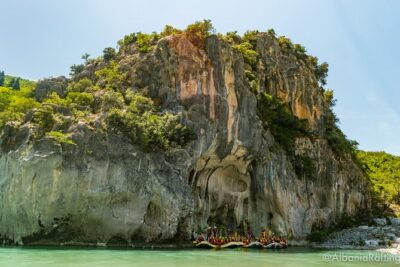 ★ 5.0Rafting Vjosa River Gjirokastër Albania ARGFrom $54199 reviews
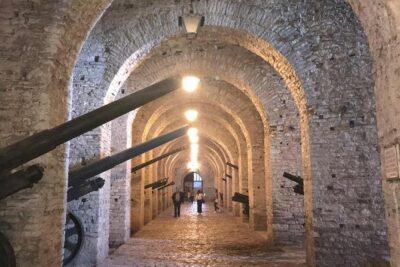 ★ 4.5Gjirokastra- The Stone City & Blue Eye- The monument of Nature.From $71180 reviews
 ★ 5.0Gjirokastra UNESCO & Ksamil Beach – From Tirana/Durres/GolemFrom $58117 reviews
 ★ 5.01-Day Tour in Blue Eye, Monastery, Gjirokaster and Lekursi CastleFrom $4476 reviews
 ★ 4.5Gjirokastra, Blue Eye, Ksamil & Saranda – Day Tour from TiranaFrom $19847 reviews
 ★ 5.0Blue Eye, Gjirokaster & Lekures | Private & Small Group ToursFrom $13444 reviews
 ★ 4.5Tour Gjirokaster,Blue Eye & Lekursi CastleFrom $4139 reviews
 ★ 5.0Private Day Tour of Saranda Gjirokaster and Butrint from TiranaFrom $25138 reviews
Browse the lists this tour appears in