
REVIEW · GJIROKASTRA STONE CITY TOURS
Private Cold War City Tour in Gjirokaster
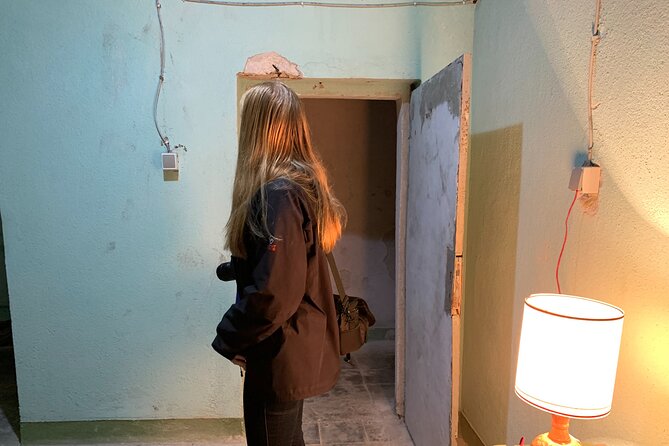
A cold war bunker in Albania? It sounds weird, but it works. This private Gjirokastër tour mixes Cold War facts with human stories, starting underground and ending with museum time and coffee. What I like right away is the warm touch, coffee and tea included to keep the mood from turning too heavy.
You’ll also get an easier pace thanks to the small group setup, which makes questions feel normal instead of rushed. I like that you’re not just handed dates, you’re guided through what these places meant and what life looked like under the communist regime. The stop at the City Castle area and the prison building fits the theme well, because it connects the bunker story to real power.
One thing to consider: it’s English only, and some explanations may be delivered verbally rather than through multilingual text on site. If you need lots of translated signage to follow every detail, this could feel a bit fast or incomplete.
In This Review
- Key points to know before you go
- Entering the Cold War Tunnel in Gjirokastër
- Musine Kokalari at the My Muse Memorial
- From Enver Hoxha’s Birth House to the Ethnographic Museum
- The City Castle Stop and the Prison Building Angle
- Coffee and Tea, Plus Why Small Groups Matter
- Price, entrance fees, and whether it’s value for money
- Timing, meeting point, and how to start smoothly
- Who this private Cold War tour is best for
- Should you book the Private Cold War City Tour in Gjirokastër?
- FAQ
- Is the tour offered in English?
- How long is the Private Cold War City Tour in Gjirokastër?
- What does the tour price include?
- Is there an additional entrance fee?
- Where does the tour start and end?
- What is the cancellation policy?
Key points to know before you go
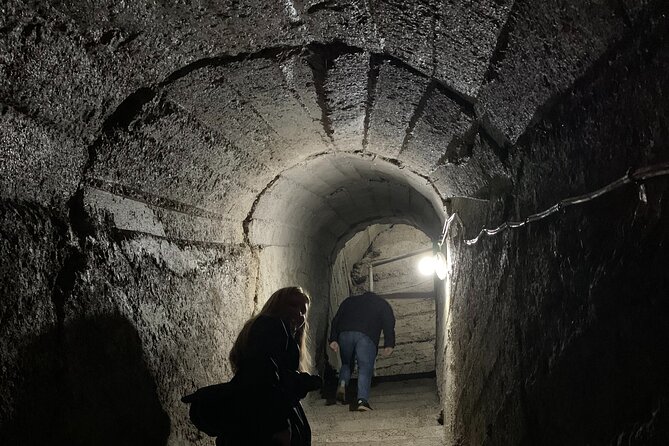
- Cold War Tunnel first for the best atmosphere, built to shelter the 1970s political leadership
- My Muse memorial highlights Musine Kokalari, a writer and politician persecuted under communism
- Enver Hoxha birthplace turned museum with a focus on how one house kept changing roles
- City Castle and prison building stop connects ideology to places where people were held
- Coffee and tea included, plus a coffee break after the museum-style presentation
- Private, small group format with an English-speaking guide, so you can ask questions
Gjirokastra walked, compared and priced
- Walking Tour Baazar – The Argjiro Castle – Zekate house★ 4.5 · 18 reviews
- Wood Crafting Experience in Gjirokastra★ 4.5 · 10 reviews
- Walking Tour “The Old Bazaar, Cfake, Dunavat, Ali Pasha Bridge”★ 5.0 · 10 reviews
- 2-Hours Guided Drino’s Valley Ride★ 4.5 · 5 reviews
- Gjirokaster – The Stone City of UNESCO, Private Tour from Tirana★ 4.5 · 4 reviews
Entering the Cold War Tunnel in Gjirokastër
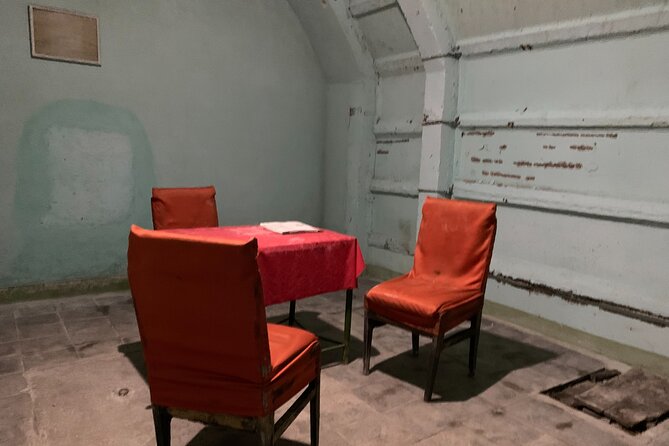
This tour kicks off at the Cold War Tunnel, and that choice matters. Going in first gives you the right mental picture before you learn how it was meant to protect the political leadership.
You’ll spend about 50 minutes underground with guided stories and factual context about why the tunnel was built. The big theme is shelter for the leaders, designed as a place to survive danger and keep command going, even in a crisis. It’s the kind of setting where the facts land harder because you’re physically in the space the system was built around.
A practical note: tunnels tend to feel visually dim and enclosed, so go in ready to slow down your eyes and listen carefully. If you’re the type who likes to ask questions, this is one of the best spots to do it, because the guide can point out what to look for as you move through.
Musine Kokalari at the My Muse Memorial
After the tunnel, you shift from survival infrastructure to personal conviction. The second stop is the “My Muse” Memorial, built in honor of Musine Kokalari, an Albanian female intellectual, writer, and politician connected to Gjirokastër.
This visit is about 40 minutes, and it’s free entry. The story centers on how she became the first female writer of Albania, then faced persecution because her ideas challenged the communist regime, especially around prison conditions at Burrel and hard labor at Rreshen.
What I like about this stop is that it doesn’t just repeat ideology. It focuses on her inner world and what she continued to do even while living in poverty. For me, it’s one of those moments that turns the tour from political history into something more human, because you can feel how ideas and risk can travel together.
If you prefer tours that balance institutions with people, you’ll probably enjoy this part the most. It also works as a relief break after the bunker tone, because it’s less about walls and more about voice and courage.
From Enver Hoxha’s Birth House to the Ethnographic Museum
Next comes the house where Enver Hoxha was born and raised. This is one of the most unusual layers of the whole route because the building itself kept changing roles, and the guide ties that into the larger story.
You’ll spend about 40 minutes here, and the tour description says the stop includes admission. The house was burned, then rebuilt five times bigger, and over time it moved through different identities, starting as Hoxha’s home, then becoming a Museum of Weapons, and later ending up as the Ethnographic Museum.
The guide’s job here is to explain the psychology behind the story: resentment, punishment, and control that could reach opponents, acquaintances, and even childhood friends. Even if you don’t know the names going in, the way the house changes helps you understand how regimes try to manage memory, not just people.
One detail I think is worth planning for: after the visit, you’ll get a short presentation in a hall nearby. You’ll also enjoy coffee as part of that wrap-up, and the presentation is described as focusing on the less visible sides of what happened in that system. That’s a smart way to land the message, because it gives you one more layer after you’ve already seen the spaces.
The City Castle Stop and the Prison Building Angle
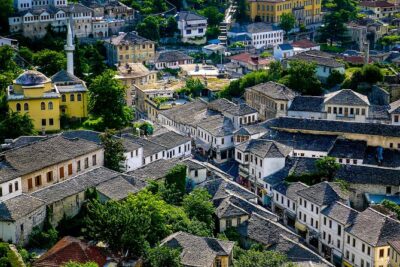
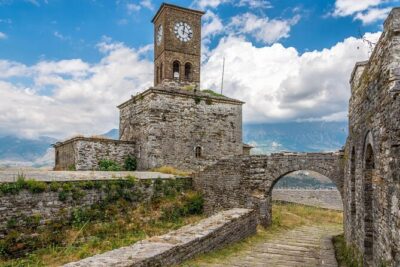
The highlights for this tour include a visit to the City Castle area, plus time connected to the prison building. That pairing is exactly why the tour feels cohesive: the tunnel is built for command survival, and the castle prison stop grounds the lesson in how control played out on the ground.
Even without getting lost in dates, you’ll learn about the communist regime through what these structures were used for. It’s the sort of stop that helps you connect architecture to policy, and that’s where a guided format pays off.
One practical thing to keep in mind is pacing. Castle zones can mean you’re moving between viewpoints and buildings, so it helps to keep your questions queued up. If your guide offers explanations on site, this is the time to ask how each part fits the bigger theme, because later stops won’t have the same “place-based” context.

Coffee and Tea, Plus Why Small Groups Matter
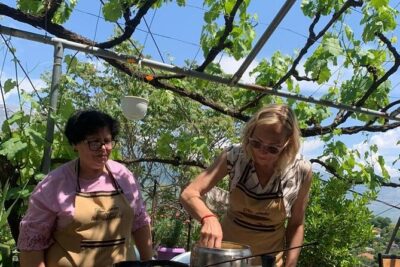
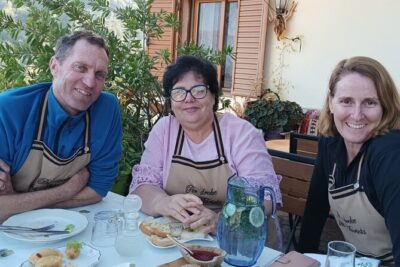
This tour’s tone is never purely gloomy, which is a big part of why it works. You’ll get coffee and/or tea included, and there’s another coffee moment after the museum-style presentation.
The small group setup makes a real difference in a topic like this. When the group is smaller, you can ask the obvious follow-ups, and the guide can adjust the pace if someone needs the story retold in a clearer way. With a private tour, it’s just your group, so you’re not stuck matching your questions to the loudest person in the crowd.
In English reviews, the name Elisa comes up, and people described her as friendly and experienced. Even if you don’t get Elisa, the takeaway is clear: you want a guide who can balance facts with stories, and this tour is positioned that way.
Also, the tour uses a mobile ticket, so you won’t need to fuss with paper receipts in the middle of museum lines.
Price, entrance fees, and whether it’s value for money
The price is listed as $75.74 per person, and the duration runs about 2 hours 30 minutes to 3 hours 10 minutes. For a private guided route with multiple sites, coffee included, and time inside the tunnel, it’s not the cheapest option in Gjirokastër, but it’s also not trying to be a “big coach bus” experience.
Here’s the important part: entrance fees are a bit of a puzzle based on what’s listed. The tour says the price does not include an entrance fee of €14 per person, but it also indicates admission tickets included at the Cold War Tunnel and the Ethnographic Museum, while the My Muse memorial is free.
So what should you do? Treat it as a “small extra payment might be required” situation and confirm what the €14 covers before you assume all entry costs are already settled. This is the kind of detail that can change your final cost by a noticeable amount in a short tour.
My value verdict: if you care about guided interpretation, especially around communism and the way places shaped people’s lives, this price is reasonable. If you only want quick photos and minimal talking, you might feel the cost more than the content.
Timing, meeting point, and how to start smoothly
The tour starts at C-Adventures & Tours, address listed as 6001, Gjirokastër. It ends back at the meeting point, so you don’t need to figure out a second pickup area.
The tour is offered in English, and confirmation is received at booking. It also notes that the experience is near public transportation, which is useful if you’re already moving around town and don’t want to plan a dedicated taxi trip.
In terms of comfort, most travelers can participate, and service animals are allowed. If you have mobility concerns, it’s still smart to ask ahead what walking and indoor time will look like for your group, especially since the route includes a tunnel.
Who this private Cold War tour is best for
This is best for you if you like history that connects places to real decisions. The tunnel stop gives atmosphere, the memorial adds a personal viewpoint, and the museum sequence helps you understand how power reshaped daily life and even how buildings got repurposed.
It’s also a good match if you want an English-guided flow through several different sites in a single afternoon. The tour length is long enough to feel substantial, but not so long that you’ll be stuck everywhere for hours and hours.
You might rethink it if you rely on multilingual printed explanations. One English-focused comment flagged that the visit is in English and that there wasn’t translated text available in multiple languages, plus the time at some stops can feel quick. If that matters to you, consider pairing this with a little self-guided reading beforehand so the main story sticks even if your last details blur.
Should you book the Private Cold War City Tour in Gjirokastër?
I think it’s worth booking if your goal is a guided, small-group introduction to Gjirokastër through the lens of communism and the Cold War. The Cold War Tunnel opening is the standout structure for atmosphere, and the sequence keeps the story from feeling like random stops.
Book it if you like your history tied to specific locations: a bunker shelter meant for leadership, a memorial for Musine Kokalari, and a house that kept reinventing itself into different uses. The included coffee and tea also makes the experience feel more human, less like a lecture you have to endure.
Skip or reconsider if you need extensive multilingual signage or you want a slower, more text-heavy museum experience. Since the tour runs on an English speaking guide format, you’ll get the most from it if you’re comfortable following explanations out loud.
If you go, bring a curious mindset and a couple of questions ready. This tour is at its best when you talk back, not just watch.
FAQ
Is the tour offered in English?
Yes. This private tour is offered in English.
How long is the Private Cold War City Tour in Gjirokastër?
The duration is approximately 2 hours 30 minutes to 3 hours 10 minutes.
What does the tour price include?
The tour includes a guided experience and coffee and/or tea. It also notes that some admission tickets are included and that the My Muse memorial is free.
Is there an additional entrance fee?
Yes. The tour information states that an entrance fee of €14.00 per person is not included in the price, so you should plan for a possible extra cost and confirm what it covers.
Where does the tour start and end?
It starts at C-Adventures & Tours, 6001, Gjirokastër, Albania and ends back at the same meeting point.
What is the cancellation policy?
Free cancellation is available. You can cancel up to 24 hours in advance for a full refund, and cancellation within 24 hours does not include a refund.
More of the Stone City


Every Albania Review We Have

Latest Albania reviews off the desk
- Gjirokastra Private Half-Day Walking Tour
★ 5.0 · 3 reviews - Gjirokaster – The Stone City of UNESCO, Private Tour from Tirana
★ 4.5 · 4 reviews - Private Cold War City Tour in Gjirokaster
★ 4.5 · 4 reviews - 2-Hours Guided Drino’s Valley Ride
★ 4.5 · 5 reviews - Prepare Osa with Teta Marjeta
★ 4.5 · 7 reviews - Wood Crafting Experience in Gjirokastra
★ 4.5 · 10 reviews
Gjirokastra Stone City Tours, compared.
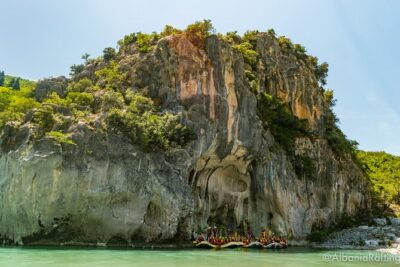 ★ 5.0Rafting Vjosa River Gjirokastër Albania ARGFrom $54199 reviews
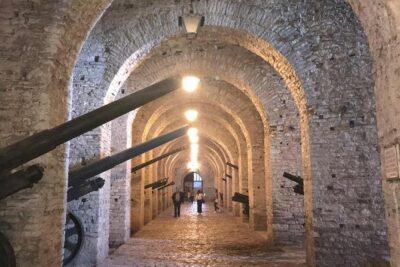 ★ 4.5Gjirokastra- The Stone City & Blue Eye- The monument of Nature.From $71180 reviews
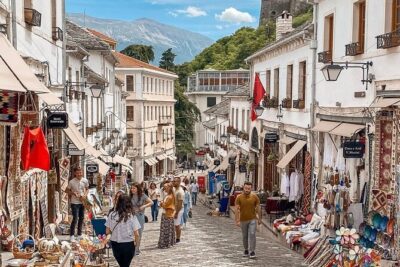 ★ 5.0Gjirokastra UNESCO & Ksamil Beach – From Tirana/Durres/GolemFrom $58117 reviews
 ★ 5.01-Day Tour in Blue Eye, Monastery, Gjirokaster and Lekursi CastleFrom $4476 reviews
 ★ 4.5Gjirokastra, Blue Eye, Ksamil & Saranda – Day Tour from TiranaFrom $19847 reviews
 ★ 5.0Blue Eye, Gjirokaster & Lekures | Private & Small Group ToursFrom $13444 reviews
 ★ 4.5Tour Gjirokaster,Blue Eye & Lekursi CastleFrom $4139 reviews
 ★ 5.0Private Day Tour of Saranda Gjirokaster and Butrint from TiranaFrom $25138 reviews
Browse the lists this tour appears in