
REVIEW · ALBANIAN FOOD, WINE & RAKI
Cooking Class
Food is the fastest way to understand Gjirokaster. I loved the private, hands-on attention and the simple payoff that you eat your meal at the end. One thing to consider is that the bazaar meeting spot can be easy to miss at first, so it helps to verify the exact shop front before you arrive.
You’ll learn two traditional Gjirokaster recipes and a dessert, plus how mountain spices and teas fit into local kitchen life. The class is offered in English, but when the chef’s English is limited, a family member often helps translate, so you can still follow what’s happening. You also get a written recipe and what you cooked, which means the experience can follow you home.
In This Review
- Key things to know before you cook in Gjirokastër
- Why a private Gjirokastër cooking class beats the usual food stops
- Finding Edua.gjirokastër in the bazaar without wasting time
- The 2-hour flow: from starter to dessert in one cooking session
- Qifqi and OSA: the savory dishes you’ll actually make
- Hasude dessert: the sweet finish with walnuts and butter
- Mountain spices, teas, and the family secret ingredient
- What you get at the end: recipes, leftovers, and real take-home value
- Price check: what $54.19 really buys you
- Language and teaching style: English offered, family does the connecting
- Who should book this class, and who might not love it
- Should you book this cooking class in Gjirokastër?
- FAQ
- Where is the cooking class meeting point in Gjirokastër?
- How long does the class last?
- Is this a private cooking class?
- What language is the class offered in?
- What dishes are included in the class?
- Will I receive a recipe to take home?
- Do I get a mobile ticket?
- Is it near public transportation, and are service animals allowed?
- What is the cancellation policy?
Key things to know before you cook in Gjirokastër
- Private group experience: only your group participates, so the teaching stays focused.
- Two savory recipes plus a dessert: typical menu includes qifqi, traditional OSA pasta with lamb, and Hasude.
- Meeting in the medieval bazaar area: near public transportation, right in the heart of town.
- Spices, teas, and folklore on the side: it’s not just cooking technique, it’s food context.
- You take home a written recipe and what you cooked: practical value, not a one-and-done meal.
- Location accuracy matters: the bazaar setting is real, so confirming the exact spot saves time.
Where else to eat well and pour raki in Albania
- Vegetarian Cooking Class @Teta Marjeta★ 5.0 · 11 reviews
Why a private Gjirokastër cooking class beats the usual food stops
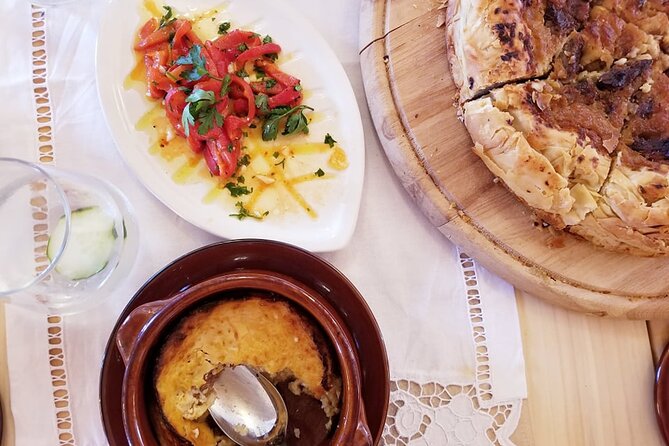
Gjirokastër has that old-town feel where food tells you the story faster than a museum text ever will. A cooking class changes your role from observer to participant. Instead of trying to remember flavors, you learn the steps and the logic behind them.
This experience also feels good value because the meal is part of the lesson. You do the prep, you cook, and then you eat what you made, plus the experience includes traditional appetizers and various drinks along the way. At $54.19 per person, you are paying for time, teaching, and ingredients bundled into one sitting, not just tasting bites.
The private format is the other reason I’d pick this over a generic tasting walk. You’re not squeezed into a schedule where you watch while someone else does the cooking. It’s built for questions, slower pacing, and clear guidance when you’re learning something new.
Finding Edua.gjirokastër in the bazaar without wasting time
The meeting point is Rruga Gjin Bue Shpata, Gjirokastër, Albania. The experience ends back at the meeting point, so you’re not hunting across town afterward.
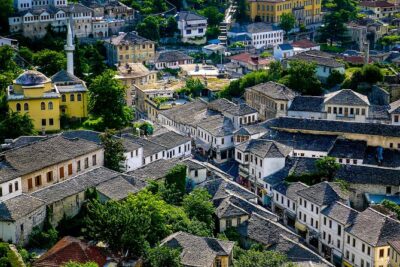
The class is in the heart of the medieval bazaar area, near public transport. That’s a plus if you’re traveling by bus or shared taxi, since you can get to Gjirokastër and still make it to the session without complicated logistics.
Still, bazaar navigation can be the only weak point. More than once, people have run into trouble because the address details can be confusing once you’re standing in the maze of shops. My advice is simple: before you leave your hotel, confirm the exact shop front name and look for the place run by Edua.gjirokaster in that bazaar section. If you arrive early, ask at the shop front nearby for the right doorway. It’s usually faster than wandering.
The 2-hour flow: from starter to dessert in one cooking session
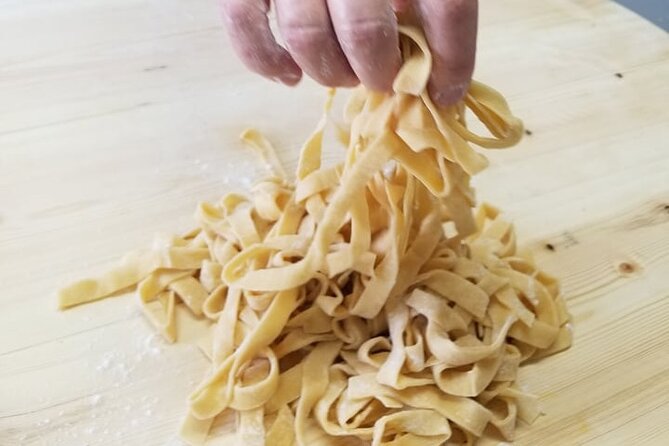
The duration is listed at about 2 hours, but the feel can be closer to 1. Some cooking classes move briskly because the goal is: make it, learn it, eat it. Either way, you should expect a tight rhythm.
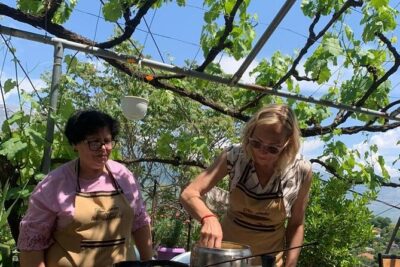
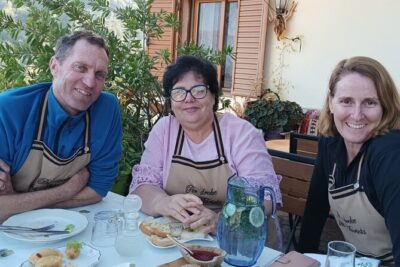
Stop 1 is the Gjirokastër Bazaar. That’s where you meet, settle in, and start the lesson with local food context. From there, the session runs like a guided kitchen workshop. You’ll learn step by step how to prepare traditional Gjirokastër dishes, then finish by sharing the meal you cooked.
The sample menu is a clear road map:
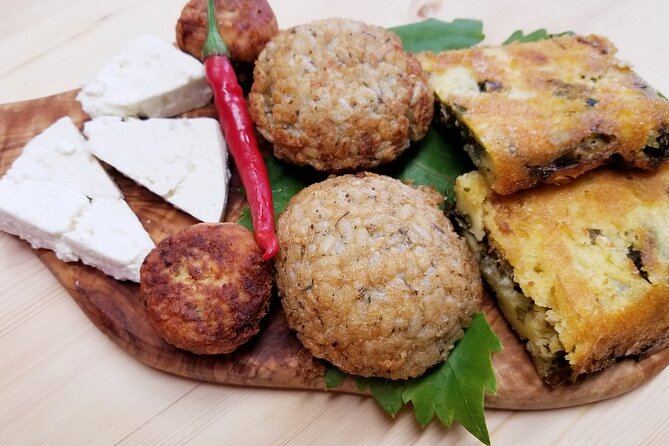
- Starter: Qifqi (riceballs)
- Main: Traditional Pasta OSA with lamb meat, plus artisanal pasta
- Dessert: Hasude, made with starch, butter, walnuts
Even if your final timing shifts slightly, the structure stays the same: savory first, then dessert. That makes it easy to plan your day. You can schedule it before dinner, because you’ll already be eating a full meal at the end.
Qifqi and OSA: the savory dishes you’ll actually make
If you’ve never had Gjirokastër food, this class gives you a quick way to understand what makes it recognizable. The cooking revolves around older, traditional recipes, the kind people keep because they taste right and because the steps make sense to repeat.
For the starter, you’ll work on Qifqi, riceballs. This is one of those dishes that makes you pay attention to texture and shaping. When you make it yourself, you stop thinking of it as just a snack and start recognizing how the ingredients behave together.
Then you move to the main, Traditional Pasta OSA with lamb meat, with additional artisanal pasta involved. OSA is one of those names that you’ll remember, because it’s not just pasta, it’s a local approach to pasta with a hearty lamb element. The teaching style here matters. One person described instruction as lead-and-follow, which is actually a good learning method when you’re surrounded by local cookware and not your own kitchen tools.
What I like about this setup is that it teaches you a pattern. You’re not only copying a recipe. You’re learning how to handle the work as it changes through mixing, assembling, and cooking. That makes it easier to recreate at home later without feeling lost.
And yes, you’ll eat the food you cook. That matters more than people expect. When you taste what you just made, you immediately understand what should be salty, what should be tender, and how spices read on the tongue in a real meal.
Hasude dessert: the sweet finish with walnuts and butter
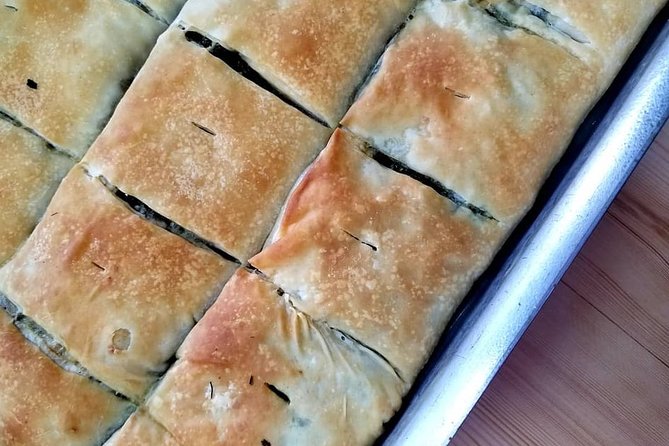
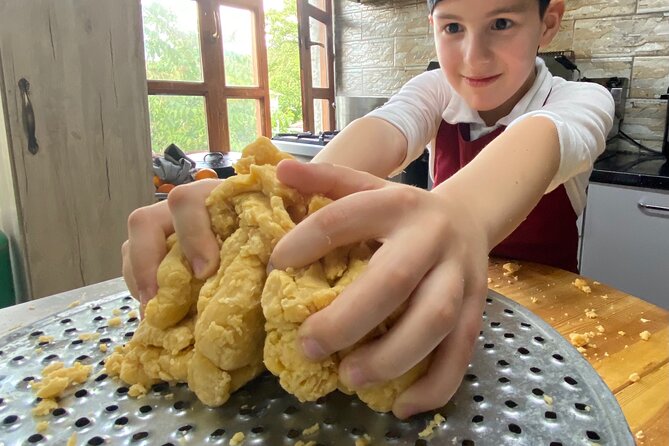
Dessert isn’t treated as an afterthought here. Hasude shows up as the planned ending, and it’s built on starch, butter, and walnuts. That combo tells you something about the local approach to sweetness: creamy, grounded, and not overly complicated.
A hands-on dessert lesson is a good way to separate this class from the very basic cook-and-watch options. It’s one more chance to learn texture and timing, because starch-based desserts can go from perfect to too thick if you lose attention.
If you love baking but don’t want a complicated, oven-heavy session, this is a nice middle ground. You get a real local dessert you can describe clearly later, because the ingredients are specific and the name is distinctly local to Gjirokastër.
Mountain spices, teas, and the family secret ingredient
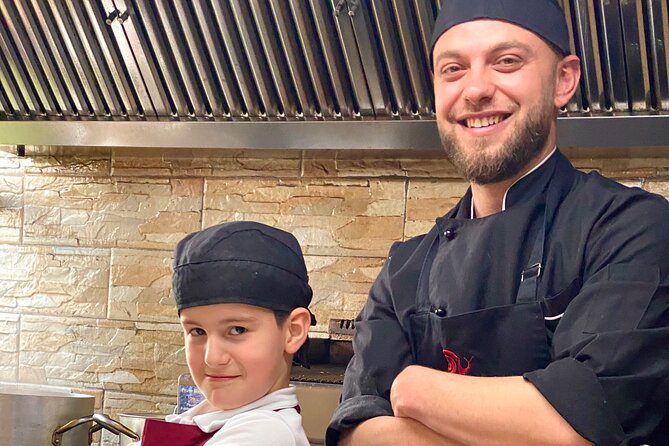
The description highlights spices and teas from the mountains, including how they’re used and any benefits they’re believed to bring. In practice, this is where the class connects food to place. Instead of treating spices like a mystery packet, you learn how people think about them, why they’re chosen, and how they belong to the region.
There’s also talk of a secret ingredient shared as inherited family tradition. Whether you take it as a literal ingredient reveal or as part of the family storytelling tradition, it does one useful thing: it gives you a reason to pay attention. When someone explains why a flavor matters, you remember it.
You’ll also enjoy traditional appetizers and various drinks during the tour. That helps break up the work so you don’t feel like you’re stuck doing one task for the entire session. It also means you’re tasting the broader meal experience, not only what lands on your plate at the end.
What you get at the end: recipes, leftovers, and real take-home value
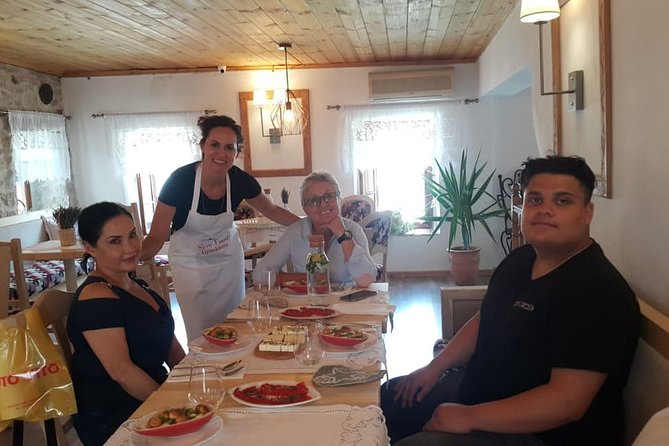
One of the best practical perks is the written recipe. You’ll take the recipe and what you cooked at home. That turns the class into an actual souvenir you can use, not just a memory.
For me, that’s where the value calculation gets interesting. Yes, $54.19 is not the cheapest possible cooking activity. But you’re paying for:
- a private teaching setting
- multiple dishes (starter, main, dessert in the typical plan)
- step-by-step guidance
- the meal you cook
- and take-home materials, including the recipe and your prepared food
If you’re the kind of traveler who cooks or snacks at home, this is a strong buy. You’ll be able to recreate Gjirokastër flavors and tell the story behind them, because you learned the steps while someone explained the regional context.
Price check: what $54.19 really buys you
$54.19 per person for a private, 2-hour cooking class is a midrange price. It can feel high compared with what you might pay for food in local restaurants, especially if you compare it only to ingredient costs. One person even pointed out that the class price can be somewhat high relative to typical Albanian food pricing.
But ingredient costs are not the full story. You’re paying for labor, teaching time, kitchen space, and the personal attention of a private session. You also eat during the class, and the menu includes multiple dishes plus drinks and appetizers. That’s different from a quick tasting.
So I’d frame the price this way: if you want cheap, this might not be your best move. If you want a meaningful hands-on food lesson that leaves you with recipes and something to cook again, it’s easier to justify.
Also note that the class is booked about 32 days in advance on average. That usually hints that people plan ahead for a specific day, which matters if your schedule is tight. It’s not a reason to panic, but it is a reason to book early if you can.
Language and teaching style: English offered, family does the connecting
The experience is offered in English. That said, cooking classes are not always perfectly scripted linguistically. In one case, the chef did not speak English, but a family member translated. You can use this as your mental model: you may rely on translation, gestures, and simple step instructions, but the cooking process itself should still be clear.
What helps is that the instruction is described as step-by-step. When you’re learning a dish like Qifqi or building up a pasta dish with lamb, the sequence matters. If the teaching is mostly lead-and-follow, you’re still learning the rhythm, which is what you need to repeat the dish later.
Also, expect friendliness. The tone described is warm and welcoming, the kind where you feel like you are visiting a family kitchen rather than attending a sterile demo.
Who should book this class, and who might not love it
This class is a great fit if you:
- want a private cooking experience rather than a group demo
- enjoy learning traditional recipes you can repeat later
- want a meal that you cook yourself, not just eat
- like food culture context, spices, and regional storytelling
You might think twice if:
- your travel schedule is extremely strict and you hate any chance of a timing hiccup
- you dislike classes that rely on translation or nonstandard communication styles
- you’re only interested in one dish, since the typical plan is starter, main, and dessert
One more consideration: some people found the meeting instructions hard to follow because the bazaar location is easy to confuse. If you’re the type who arrives late and hates asking for help, you’ll need to be organized. If you arrive a little early and communicate calmly, you’ll likely be fine.
Should you book this cooking class in Gjirokastër?
My take: yes, if your goal is real local food you can learn and recreate. The combo of two traditional savory recipes plus a dessert, private attention, and the fact you eat what you cook makes it more than a novelty. At $54.19, it’s priced for the whole experience, not only the ingredients.
Book it especially if you want something authentic in Gjirokastër that goes beyond photos and viewpoints. The bazaar setting gives you that old-town feel, and the cooking gives you a practical souvenir, a recipe sheet, and food you can take home.
Just do one smart thing before you go: confirm the exact meeting spot at the Edua.gjirokaster area in the bazaar. With that handled, you get a warm, teachable, satisfying meal lesson that you’ll remember long after dinner.
FAQ
Where is the cooking class meeting point in Gjirokastër?
The start point is Rruga Gjin Bue Shpata, Gjirokastër, Albania. The activity ends back at the same meeting point.
How long does the class last?
The cooking class duration is about 2 hours.
Is this a private cooking class?
Yes. It is listed as a private tour or activity, meaning only your group will participate.
What language is the class offered in?
The class is offered in English.
What dishes are included in the class?
The typical menu includes Qifqi (riceballs) as a starter, Traditional Pasta OSA with lamb meat as the main (along with artisanal pasta), and Hasude dessert made with starch, butter, and walnuts.
Will I receive a recipe to take home?
Yes. You will take the written recipe and what you cooked at home.
Do I get a mobile ticket?
Yes. A mobile ticket is included.
Is it near public transportation, and are service animals allowed?
It is near public transportation, and service animals are allowed.
What is the cancellation policy?
Free cancellation is available. You can cancel up to 24 hours in advance for a full refund. Cancellation within 24 hours of the start time is not refundable.
Hands On in Albania
Albania by the Glass and the Plate
Every Albania Review We Have

Latest Albania reviews off the desk
- Gjirokastra Private Half-Day Walking Tour
★ 5.0 · 3 reviews - Gjirokaster – The Stone City of UNESCO, Private Tour from Tirana
★ 4.5 · 4 reviews - Private Cold War City Tour in Gjirokaster
★ 4.5 · 4 reviews - 2-Hours Guided Drino’s Valley Ride
★ 4.5 · 5 reviews - Prepare Osa with Teta Marjeta
★ 4.5 · 7 reviews - Wood Crafting Experience in Gjirokastra
★ 4.5 · 10 reviews
Albanian Food, Wine & Raki, compared.
 ★ 5.0Cooking Classes and Traditional food tasting in TiranaFrom $49282 reviews
 ★ 5.0Local food experience & walking tour of TiranaFrom $60192 reviews
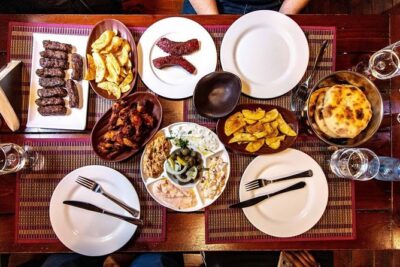 ★ 5.0Best of Local Food & City Tour of Tirana – Food & Drinks IncludedFrom $72160 reviews
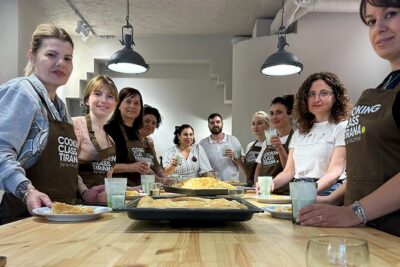 ★ 5.0Traditional Albanian Cooking Class in Tirana with Raki TastingFrom $53125 reviews
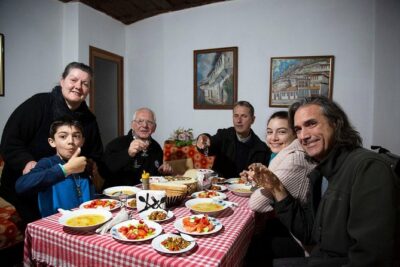 ★ 5.0Berat Cooking Class- Traditional Albanian Cooking Class /By VatoFrom $41120 reviews
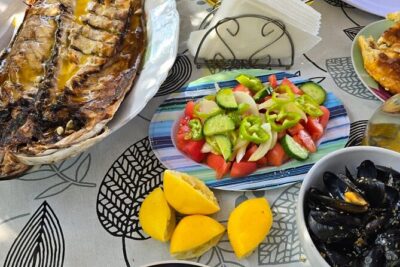 ★ 5.0Ksamil: Mussel Sailing Tour with Food and Drink in AlbaniaFrom $67102 reviews
 ★ 5.0Vineyards, Albanian Wine Tasting & Boat Tour from Tirana/DurresFrom $9564 reviews
 ★ 5.0Savor Albanian Cuisine Cooking Class with Mama Nina Berat CastleFrom $4855 reviews
Browse the lists this tour appears in