
REVIEW · COMMUNIST HISTORY & COLD WAR BUNKERS
The truest face of Communism
Communism has a face, and Tirana shows it. I love how Bunk’Art 1 makes the threat of nuclear war feel real, and I also like the easy, human stops for coffee and rakija. One possible drawback, plan for a fair amount of walking during the day, with comfortable shoes a must.
This is a private, English guided half-day to 5-hour experience in Tirana, starting at Skanderbeg Square around 9:00 am with hotel pickup and an air-conditioned vehicle. Most of the big sights you hit have no admission fee, and you only pay for museum time where it matters, so your money goes to the interpretation and the stories.
In This Review
- Key Highlights You Should Know Before You Go
- What $90.11 Buys You in Tirana
- Skanderbeg Square: Start Where Tirana Still Negotiates Its Identity
- The Enver Hoxha Pyramid: Propaganda Architecture With a Second Life
- Postbllok Checkpoint Monument: When Isolation Becomes Material Evidence
- Blloku: The Former Elite District, Now a Normal City Block
- Bunk’Art 1: The Underground Shelter Museum That Hits Hard
- How Guides Turn Facts Into a Story You Can Remember
- Coffee, Rakija, and a Short Food Stop That Feels Like Culture
- Pace, Walking, and What to Wear for a 4 to 5 Hour Day
- Who Should Book This Communism-Themed Tirana Tour
- Should You Book The Truest Face of Communism in Tirana?
- FAQ
- How long is the tour?
- How much does it cost?
- Do I get hotel pickup?
- What sights are included?
- Are tickets included for museum stops?
- What food and drinks are included?
- What if the weather is bad?
- Is there a cancellation deadline?
Key Highlights You Should Know Before You Go
- Bunk’Art 1 underground rooms: a labyrinth of shelter space built to survive nuclear attack, now turned into a museum
- Postbllok checkpoint monument: bunker pieces, Spaç labor camp material, and a Berlin Wall section in one chilling memorial
- Enver Hoxha Pyramid history: built as a museum and mausoleum complex, later reused as TV offices and a cultural site
- Blloku, the former elite district: the neighborhood of power that now feels like modern Tirana, including the villa you cannot enter
- Strong guide energy: multiple guides run this tour and the best sessions have personal family stories that make the facts stick
Other bunker and dictatorship-era tours in Albania
- A Communist Manifesto: Tirana before and after★ 5.0 · 50 reviews
- The truest face of Communism★ 5.0 · 18 reviews
- Full-Day Tour of Albania’s Bunkers and Beaches, from Tirana★ 5.0 · 16 reviews
- Communist History Tour Tirana & Street Food★ 5.0 · 15 reviews
- Bunkart 1 & Mount Dajti Tour – includes lunch★ 5.0 · 8 reviews
What $90.11 Buys You in Tirana
At about $90.11 per person for 4 to 5 hours, this is priced like a serious guided experience, not just a bus ride with a map. You get hotel pickup, an air-conditioned vehicle, coffee and/or tea, plus alcoholic beverages during the stops, and all fees and taxes are included. You also get private-tour treatment, meaning only your group is on the schedule.
You still need to be practical. The schedule is built around several key sights spread around central Tirana, and one review notes the day can become almost entirely walking, covering close to five miles. So, if you want a lot of quick trampling from one photo spot to the next, this might be your perfect kind of pace, but if you hate walking, plan to slow down and wear good shoes.
The value sweet spot here is the way the tour turns political architecture into something you can understand fast. You are not just seeing buildings. You are getting the logic behind them, from propaganda symbolism to the physical design of shelters.
Skanderbeg Square: Start Where Tirana Still Negotiates Its Identity
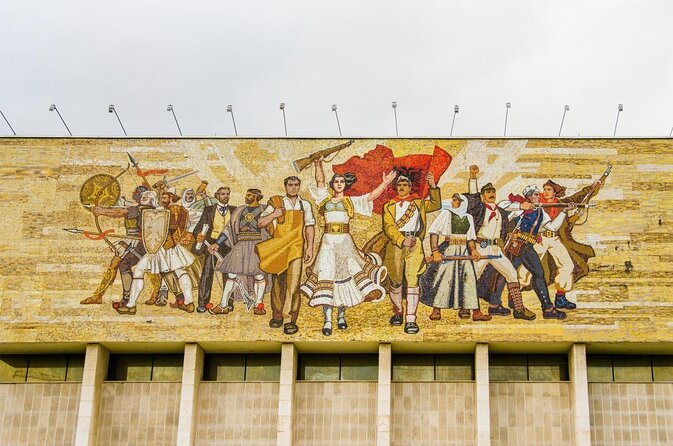
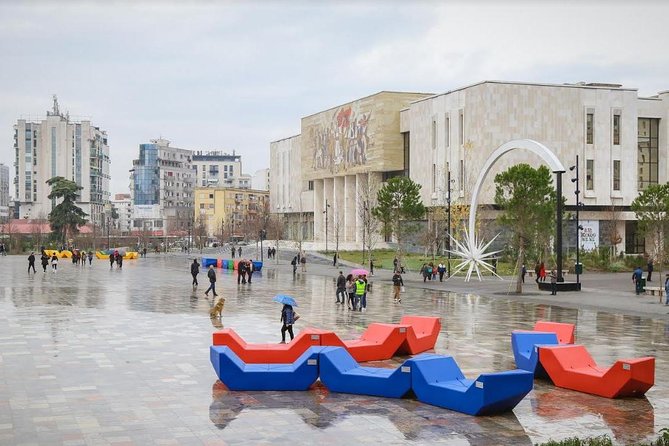
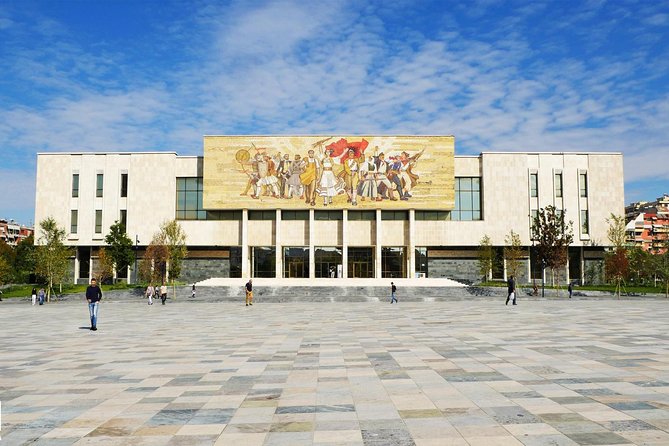
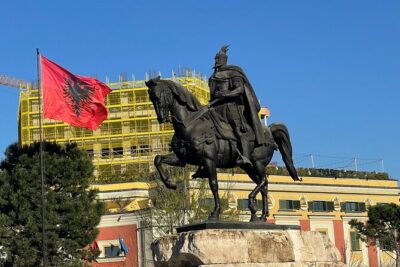
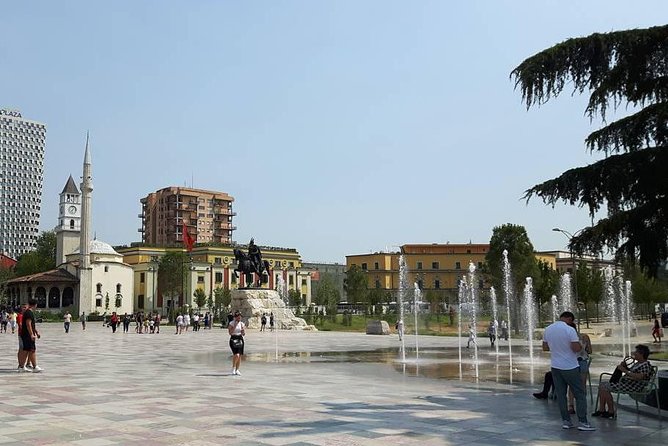
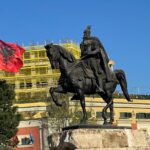
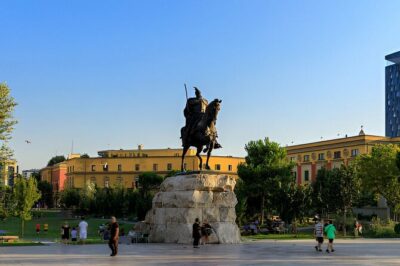
Skanderbeg Square is your opening act, and it matters because it sets the tone: Tirana is layered, not erased. Here you will see the Et’hem Bey Mosque, the clock tower, and the National Theater of Opera and Ballet. One detail worth paying attention to is that the first brick for the theater was placed by former Soviet Union President Nikita Khrushchev, which ties the city’s story to wider Cold War politics.
You will also look at prominent civic and financial buildings around the square, including the National Bank of Albania and major hotel landmarks, such as the Tirana International Hotel. The practical upside is that this is easy to locate and easy to reference later, since the whole tour loops back to this meeting point.
The potential downside is also practical. Because this is the start, you might feel like you are still waking up. Go in ready to listen for connections, like how foreign influence shows up in local monuments, even when the surface looks purely ceremonial.
The Enver Hoxha Pyramid: Propaganda Architecture With a Second Life
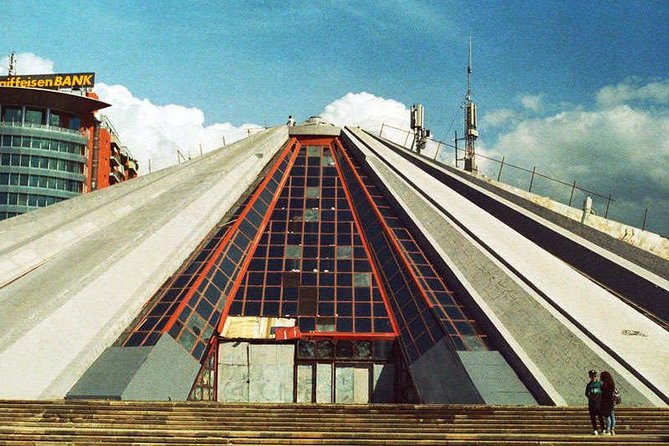
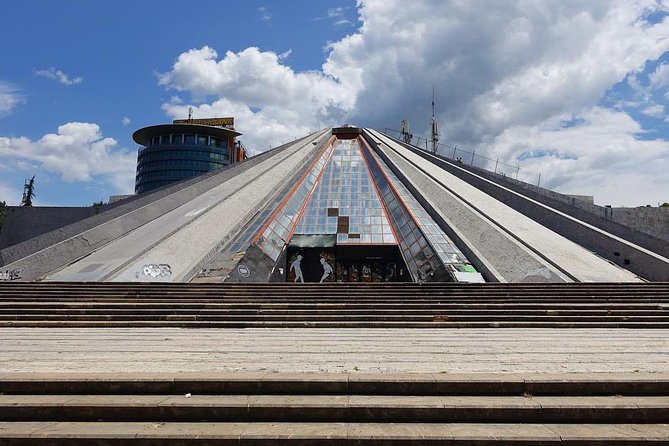
Next comes the Enver Hoxha Pyramid, one of Tirana’s most talked-about buildings because it was built for a regime message, then repurposed when the political story changed. The tour frames it as a symbol of the communist system, and you will learn that it began as a museum dedicated to Enver Hoxha and later expanded into a mausoleum complex. The mausoleum was opened in 1988, and it was co-designed by Hoxha’s daughter, a detail that adds an uncomfortable family angle to the official narrative.
After communism fell, the building did not vanish. It served different civic uses, including a cultural center and a National Television office. You will also hear how a project to destroy it failed, which helps explain why you still get to see it today.
What you should take from this stop is the idea that power can create structures that outlive the ideology that built them. Even when the building changes function, it still carries the physical language of the original message. If you like political symbolism and want your tour to answer what these forms were really meant to do, this is a must-see moment.
Postbllok Checkpoint Monument: When Isolation Becomes Material Evidence
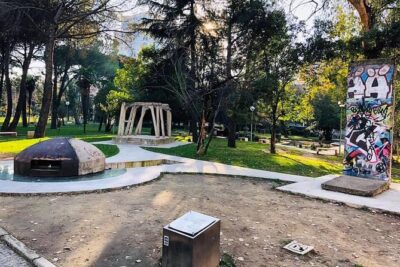
Postbllok is not just a viewpoint. It is a memorial built around the theme of enforced isolation, and it uses objects like they are witnesses. The memorial was built by dissident Fatos Lubonja and the artist Ardian Isufi, and it is designed with three main components.
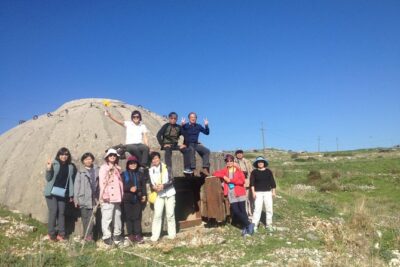
First, there is a concrete defensive bunker, recalling the dictatorship’s fear-driven obsession with preparedness, including the idea that each family would have a bunker in case of a nuclear or world war. Next, there are several concrete supports taken from the mine at Spaç labor camp, where political prisoners suffered between 1968 and 1990. Finally, there is a brightly painted section of the Berlin Wall from Postdamer Platz, reminding you that Albania’s story was part of a larger European divide.
This is one of those stops where your guide’s pacing matters. If you rush, you miss the way the materials connect: nuclear fear, forced labor, and political borders in one composition. If you slow down, the monument starts to make emotional sense, not just historical sense.
Blloku: The Former Elite District, Now a Normal City Block
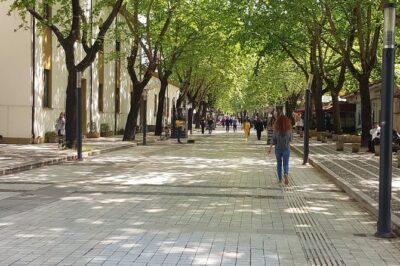
Blloku is the neighborhood stop that turns the day from grim symbolism into everyday contrasts. You will pass by the Block area, once restricted and essentially mapped around the political bureau and its circle, so much so that even maps sometimes missed it. Today, it is the heart of Tirana with boutiques, coffee shops, cocktail bars, pubs, and street art.
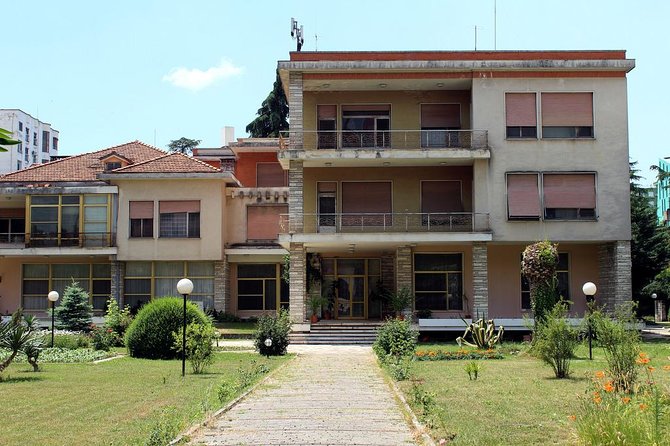
Here is the detail that makes Blloku more than a walk-through: the tour points out the former villa of Enver Hoxha. The villa is left untouched and unused, and you can only see it from the outside since entry is not allowed. That restriction keeps the site in the realm of political memory, even though the street life around it has moved on.
The tour also includes a short restaurant stop near the area where traditional food and rakija are served, along with the coffee or tea included in the experience. This is a good moment to ask your guide to connect the dots between propaganda spaces and private privilege. The story you hear here often lands harder because you can see both worlds at once, the old power and the new city rhythm.
Bunk’Art 1: The Underground Shelter Museum That Hits Hard
If you want one stop that explains why the tour’s theme works, it is Bunk’Art 1. This museum is built inside an extensive underground bunker system, with rooms, corridors, and container spaces spread over several floors. The tour notes it is nearly 3,000 square meters of underground space, and the layout is labyrinth-like, which is exactly what makes it memorable.
You will learn it was built in the 1970s and kept secret for much of its existence. The bunker was designed to survive nuclear attacks, using double concrete and space meant for more than 100 people. That is a lot of capacity, and it hints at how fear was treated as policy.
Inside, you are shown fragments of communist-era history. It is not just plaques and photos. The physical experience of moving through underground rooms helps you understand the core contradiction: a system that promised protection while building its society around repression and paranoia. Several guides described the day this way in practice, with one of the standout moments being how the museum becomes a place to learn through explanation rather than reading labels alone.
Practical note: underground spaces can feel cool compared with street level. Bring something light or be ready to adjust layers so you stay comfortable as you move.
How Guides Turn Facts Into a Story You Can Remember
The guides are consistently the reason this tour earns top marks. Different names lead the experience, including Leo, Dio, Mimi, DC, Aldo, and Eni, and the pattern is the same: they connect locations to what daily life felt like.
This is not a lecture-only approach. Some guides share personal family stories, which makes the timeline less abstract. If you care about understanding the human effect of policy, this is where the tour earns its price, because you are hearing cause and consequence from someone who can connect the dots.
I also like that the format is private for your group. That matters. You can ask why something was built a certain way, or you can request an extra minute at Bunk’Art to focus on a particular room. Your guide’s job becomes clearer, and your questions shape the day.
Coffee, Rakija, and a Short Food Stop That Feels Like Culture
One of the simplest joys here is that you are not stuck on water and waiting. Coffee and/or tea are included, and alcoholic beverages are included too, with rakija called out as the traditional choice. Just treat it like what it is, a strong local spirit, and pace yourself, especially after walking and standing in memorial spaces.
The short restaurant stop near Blloku is another good moment because it breaks up the heavier sites. Traditional food is available there, and in practice it can include snacks people enjoy while they talk with the guide. Even if you do not want alcohol, this stop gives you a chance to regroup and keep the day moving without losing momentum.
This part of the tour is also a reminder that culture survives regimes. You taste and drink the present while you learn the past.
Pace, Walking, and What to Wear for a 4 to 5 Hour Day
This tour is sold as half-day to 5 hours, and that time can add up fast. One review calls out that it can run like a mostly walking itinerary covering nearly five miles, even with air-conditioned transport provided.
So, plan for real walking. Wear comfortable shoes with grip, and bring a hat or sunscreen if the weather is bright. The tour also requires good weather, so on clear days you will likely spend more time outside and less time sheltering.
If you get tired easily, this is still workable, but it is better to go in with a flexible mindset. The route is designed around seeing specific points in central Tirana, so you will be stopping frequently and walking between them.
Who Should Book This Communism-Themed Tirana Tour
You should book if you want a guided, interpretive way to understand Tirana’s communist-era marks on the city. This fits especially well if you enjoy political history, Cold War context, memorial design, or architecture that carries ideology.
You will also like it if you appreciate a mix of exterior landmarks and museum time. Skanderbeg Square and the Pyramid give you the surface and symbolism. Postbllok and Bunk’Art 1 give you the physical reality behind the story.
If you prefer only light sightseeing with minimal political content, this might feel heavy. And if you cannot do a day with close to five miles of walking, you will need to manage expectations or consider a slower format.
Should You Book The Truest Face of Communism in Tirana?
My advice is yes, if your goal is to understand how Albania’s communist era shows up in real places you can stand in. The combination of Bunk’Art 1, the Postbllok checkpoint memorial, and the Blloku contrast gives you a fuller picture than any single museum visit.
If you book, do two things that make a real difference. First, show up ready to listen, especially at Bunk’Art where your guide’s explanations can transform the museum from text into meaning. Second, wear shoes you trust, because the day can be more active than it sounds on paper.
FAQ
How long is the tour?
It runs about 4 to 5 hours.
How much does it cost?
The price is $90.11 per person.
Do I get hotel pickup?
Yes. Hotel pickup is included, and pickup is arranged from your chosen place of stay in Tirana.
What sights are included?
You visit Skanderbeg Square, the Enver Hoxha Pyramid, the Postbllok checkpoint monument, Blloku, and Bunk’Art 1.
Are tickets included for museum stops?
Entrance tickets are listed as free for Skanderbeg Square, the Pyramid, and Postbllok. Admission tickets are included for Blloku and Bunk’Art 1.
What food and drinks are included?
Coffee and/or tea are included. Alcoholic beverages are also included, and rakija is mentioned as the local traditional option. Lunch is not included.
What if the weather is bad?
The tour requires good weather. If it is canceled due to poor weather, you will be offered a different date or a full refund.
Is there a cancellation deadline?
Yes. You can cancel up to 24 hours in advance for a full refund, and cancellations closer than that are not refunded.
Bunkers and the Dictatorship Years

Every Albania Review We Have

Latest Albania reviews off the desk
- UNESCO heritage in Albania – 4 days
★ 5.0 · 3 reviews - Transfers Tirana Airport – Sarande – Ksamil – Airport Tirana
★ 4.5 · 3 reviews - Private Transfers from Tirana International Airport to Sarandë
★ 4.5 · 3 reviews - Tirana’s Communist Past: A Tasting Tour with Traditional Lunch
★ 5.0 · 3 reviews - Tirana ⇔ Ohrid, North Macedonia
★ 5.0 · 3 reviews - Tirana and Kruja in a Day Trip
★ 5.0 · 3 reviews
Communist History & Cold War Bunkers, compared.
 ★ 5.0A Communist Manifesto: Tirana before and afterFrom $3450 reviews
 ★ 5.0Full-Day Tour of Albania’s Bunkers and Beaches, from TiranaFrom $14416 reviews
 ★ 5.0Communist History Tour Tirana & Street FoodFrom $12615 reviews
 ★ 5.0Bunkart 1 & Mount Dajti Tour – includes lunchFrom $1558 reviews
 ★ 4.5Private Cold War City Tour in GjirokasterFrom $754 reviews
 ★ 5.0Cultural Tour in Tirana including House of LeavesFrom $583 reviews
 ★ 5.0Tirana’s Communist Past: A Tasting Tour with Traditional LunchFrom $603 reviews
Browse the lists this tour appears in