
REVIEW · TIRANA CITY TOURS & EXPERIENCES
Tirana Walking Tour
Tirana can feel like a lot at first. A short, guided walk turns the city into a story you can actually follow, from Ottoman-era symbols to communist power corridors. I especially liked Aldo’s clear, connected explanations, and I loved that this is a small group tour, max 15 people, so questions do not get lost.
You’ll spend about 3 hours moving on foot, with most stops focused on what you can see outside the buildings. One thing to consider is the pace and walking time along major streets, plus the tour needs good weather to run smoothly.
If you’re trying to understand Tirana fast, this tour is a smart first step. It hits major landmarks like Skanderbeg Square, the Pyramid area, and the ex-Blloku district, while also pointing you to what to look for next on your own.
In This Review
- Key highlights you will feel on the street
- Getting your bearings at Sheshi Skënderbej 1
- Et’hem Bey Mosque and Clock Tower, the Ottoman-era anchor
- Rruga Murat Toptani, power in layers: bunkers to palaces
- Bulevardi Dëshmorët e Kombit, where government takes the spotlight
- Blloku, the ex-restricted zone that explains modern Tirana
- The pacing and the way the guide teaches (Aldo’s style)
- Price and value: $11.91 that actually adds up
- Logistics that can affect your day
- Who should book this walking tour
- Should you book this Tirana walking tour?
- FAQ
- What is the price of the Tirana Walking Tour?
- How long does the tour last?
- What language is the tour offered in?
- Where do I meet for the tour, and where does it end?
- What is the maximum group size?
- Are there admission fees for the sights on the route?
- What happens if the weather is bad or I need to cancel?
Key highlights you will feel on the street
- A guide who teaches the city, not just stops: Aldo connects the missing dots between eras.
- Small group size: up to 15 travelers means it stays easy to ask questions.
- The Et’hem Bey Mosque stop gets real attention: history plus decorations, not just a quick glance.
- Communist-era sights without the lecture vibe: Bunk Art 2 and Blloku are explained in context.
- Modern Tirana meets old Tirana: you pass key government buildings and the new Mosque under construction.
- Built-in orientation route: it ends where you start at Sheshi Skënderbej 1.
More of Tirana on foot, on two wheels and after dark
- Albanian Night Show: Traditional Music, Dance & Dinner in Tirana★ 5.0 · 431 reviews
- Cooking Classes and Traditional food tasting in Tirana★ 5.0 · 282 reviews
- Local food experience & walking tour of Tirana★ 5.0 · 192 reviews
- Tour a Piedi di Tirana★ 5.0 · 174 reviews
- Best of Local Food & City Tour of Tirana – Food & Drinks Included★ 5.0 · 160 reviews
Getting your bearings at Sheshi Skënderbej 1
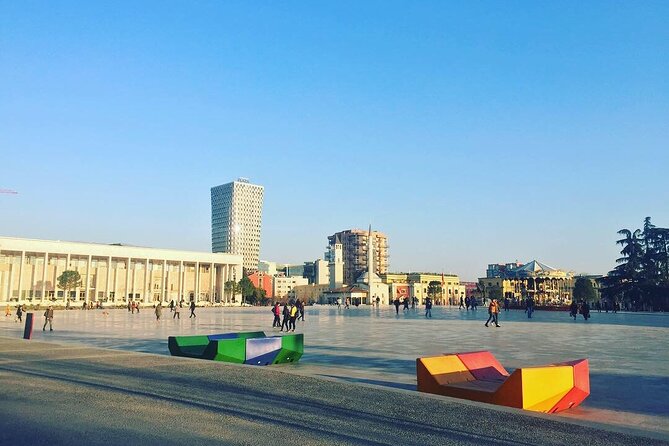
The tour begins at Sheshi Skënderbej 1, Tiranë 1000, Albania, and it also ends back at the same meeting point. That matters more than it sounds. When a walking tour returns you to your starting hub, it makes it easier to get dinner reservations, plan museums, or simply find your bearings on foot the same day.
This is the kind of route that works well early in a trip. Skanderbeg Square is a natural “center of gravity” for Tirana’s major changes, so you’re not walking into random streets with no sense of direction. You start with the city’s big symbols, then gradually move toward the areas tied to Albania’s political shifts.
Also, the tour notes you’ll be using a mobile ticket, and you receive confirmation at booking. That usually means less fuss when you show up, and it helps if you are switching plans based on the day’s weather.
Et’hem Bey Mosque and Clock Tower, the Ottoman-era anchor
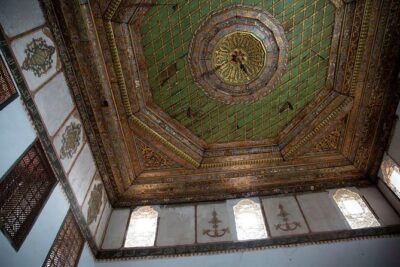
Your first stop is Skanderbeg Square, where the route focuses on Tirana’s older face. The highlight is a visit to Et’hem Bey Mosque, described as the oldest building in Tirana and one of its symbols. You’re not just looking at walls. The guide explains its history and you get to take in the beautiful decorations.
Right nearby is the Clock Tower, noted as a symbol of old Tirana and once the tallest building. Even if you have seen a clock tower before, this one gains meaning through the story you hear. In a city that went through intense political transformations, an older landmark like this is a clue to what was already present long before the modern era took over.
From there, the tour expands to other recognizable historic buildings you pass around the square area, including the National Bank of Albania, the National Museum, Hotel Tirana, the Palace of Culture, and Tirana Municipality. Even when you are not entering every building, it helps you learn what each one represents and why it sits where it does.
A practical note: the mosque stop is listed as 30 minutes with admission ticket free, which is a nice rhythm starter. You get depth right away without turning the first part into a long crawl.
Rruga Murat Toptani, power in layers: bunkers to palaces
Next you move along Rruga Murat Toptani, a street that feels like it holds multiple chapters in one row. The route includes a pass by Bunk Art 2, described as a museum connected to Communist atrocities. You do not need to be a history buff for this to land. The value here is how the guide frames what this place used to be, and how the memory of that period is handled now.
You also pass the Castle of Toptani and the prince Zogu Residence. These stops broaden the picture beyond one era. They help you see Tirana’s identity forming through shifting rulers and shifting power centers, not just through the communist period.
Then the route turns into a real “today vs. yesterday” moment. You pass the House of Parliament and also the new Mosque, described as the biggest in the Balkans and still under construction. That detail matters because it shows the city is not frozen in any single political chapter. New institutions keep shaping the skyline, even while older ones stand as reminders.
Admission is listed as free for this stop, and the time on this section is about 1 hour. Since most of what you are doing here is passing by, it’s a good fit if you prefer walking and looking rather than lengthy indoor time.
Bulevardi Dëshmorët e Kombit, where government takes the spotlight
The third main segment is the long walk on Bulevardi Dëshmorët e Kombit, the main boulevard of Tirana. This is where the city’s political geography becomes easier to understand. As you walk, you pass major institutions tied to the state, education, culture, and public life.
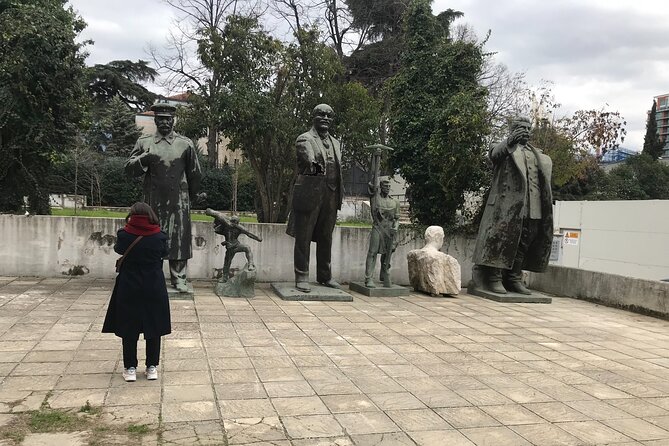
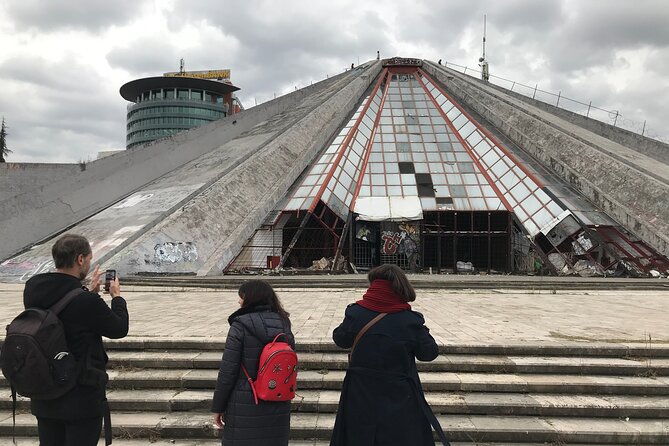
Among the sights mentioned on this stretch are the Pyramid and the Dictator Hoxha’s Museum after his death. You’ll also pass the Prime Ministry, the Presidency, Parliament Offices, the University, the Academy of Arts, and the National Stadium, plus other landmarks along the way.
What makes this part valuable is the way it turns architecture into context. Buildings that might look like just more concrete blocks become readable once you know what role they played and why they were positioned where they are. This is the kind of orientation that helps later when you are reading signs, planning museum visits, or trying to understand why Tirana looks the way it does.
The tour gives you about 1 hour for this segment, and again the listed admission is free. Since it’s a longer walk on a major boulevard, wear comfortable shoes. Plan on it taking some energy, but it’s also the easiest part to enjoy simply by watching how Tirana moves around these government-linked sites.
More of Albania taken at walking pace

Blloku, the ex-restricted zone that explains modern Tirana
The last major stop is Blloku, also referred to as ex-Blloku. This is one of those districts where the story changes your perspective the minute you enter the area. During the communist years, it was the residence area of the communist leaders, described as completely closed to normal citizens.
The tour focuses on what it meant to be excluded, then shows how that same space has become today’s most vibrant and impressive place in Tirana. You’re also guided to pass by Hoxha’s house during the time he ruled Communist Albania.
This is where the guide’s approach really matters. You can walk past a house and see walls and doors, but you will not automatically understand what access control felt like in daily life. When the guide explains what the area meant for ordinary people, the district becomes more than a photo stop. It becomes a lesson in power, fear, and change.
The Blloku segment is about 30 minutes. That’s enough time to absorb the meaning and still keep the tour moving at an easy, human pace.
The pacing and the way the guide teaches (Aldo’s style)
One of the biggest reasons this tour earns top marks is that it feels like a real conversation with direction. Aldo is described as well informed and delightful, and what stands out is not just facts, it’s how he organizes them. He’s also noted as on time, prepared, and willing to adjust pace based on your needs.
A useful perk from the reviews is that Aldo assesses what you already know and then connects the missing dots. That makes the tour work for a range of travelers, from first-time Albania visitors to people who already read a bit before arriving.
You’ll also hear that the tour stays easy to follow, with friendly stops and even a short coffee time mentioned by one of the reviewers. That kind of pause is not just comfort. It helps you process what you just learned, especially because the itinerary moves between different political eras.
Keep in mind the tour is built for small groups, max 15 travelers. That size usually means you get a more personal experience, not a rigid script where you wait for the guide to finish talking.
Price and value: $11.91 that actually adds up
At $11.91 per person, this tour is priced like an orientation you can afford even on a tight budget. The real value comes from what’s included, which is a licensed guide, plus the way the route combines several major city landmarks into one easy walking plan.
The stops are listed with admission ticket free where applicable, so you are not paying extra just to see the key places on the route. You also get a tour built around interpretation, not only sightseeing. That matters in Tirana. The city’s history is not always obvious at a glance, and a guide helps you understand what your eyes are catching.
Three hours is a practical chunk of time. It’s long enough to feel like you got something meaningful, but short enough that you still have plenty of energy to explore on your own later. If you are arriving for the first time, this is the kind of early tour that can save you time later, because you’ll understand what neighborhoods and landmarks matter.
Logistics that can affect your day
This is a walking tour, so plan around that. It runs about 3 hours, and it includes a long walk on the main boulevard. Good shoes are not optional, and it helps to carry a small water bottle even if the guide includes optional breaks.
The tour notes it requires good weather. If it’s canceled due to poor weather, you’ll be offered a different date or a full refund. That’s a reasonable tradeoff, because Tirana walking routes are much less enjoyable when rain changes the pace and visibility.
The route also notes service animals are allowed, and it is near public transportation. It says most travelers can participate, which suggests it is not designed as a hardcore hike. Still, you should mentally prepare for streets and sidewalks, not indoor museum comfort for the whole day.
Because it’s set up as a group experience with a maximum of 15 travelers, it’s best to show up ready to walk and ready to listen. If you want a totally silent, self-guided experience, this is not that. But if you like learning while you walk, this fits well.
Who should book this walking tour
This tour is a great fit if you want a first look at Tirana that goes beyond postcard landmarks. It’s also ideal if you care about understanding the communist era in a grounded way, since the route specifically references Bunk Art 2 and the Blloku district, and it connects those places to how the city functions today.
I would also point it out to people who like historical context but do not want a museum-only day. The tour uses outdoor landmarks to teach you how power shifted across time, then shows you what remains visible in the present.
If you are traveling with limited time in Tirana, it’s a strong choice. You get a lot of major sights in one guided loop that returns you to the meeting point.
On the other hand, if you prefer deep interior visits everywhere, you might want to pair this with separate museum or attraction visits after the tour. The route includes an actual mosque visit, but many other stops are passing by, so it’s more about orientation and interpretation than exhaustive entry everywhere.
Should you book this Tirana walking tour?
Yes, I think you should book it if your goal is to get your bearings fast and understand what you are seeing. For $11.91, you’re getting a licensed guide, a compact 3-hour route, and a clear explanation style that makes Tirana’s layered history easier to remember.
Book it especially if you like guides who can adapt and answer questions. Aldo’s teaching style, on-time start, and ability to connect your questions to the city are repeatedly highlighted, and that’s exactly what turns a walk into a real experience.
Only skip it if you hate walking, or if you are traveling at a time when weather is very uncertain. The tour itself calls for good weather, and the itinerary relies on you being comfortable on your feet.
If you want, tell me your travel dates and what you care about most, Ottoman history, communist-era stories, or modern Tirana, and I’ll suggest the best way to pair this walk with the next sights you should visit.
FAQ
What is the price of the Tirana Walking Tour?
The tour costs $11.91 per person.
How long does the tour last?
It runs for about 3 hours.
What language is the tour offered in?
The tour is offered in English.
Where do I meet for the tour, and where does it end?
You meet at Sheshi Skënderbej 1, Tiranë 1000, Albania, and the tour ends back at the same meeting point.
What is the maximum group size?
This tour has a maximum of 15 travelers.
Are there admission fees for the sights on the route?
The tour information lists admission ticket free for the stops included in the itinerary.
What happens if the weather is bad or I need to cancel?
The tour requires good weather. If it is canceled due to poor weather, you will be offered a different date or a full refund. For cancellations, you can cancel up to 24 hours in advance for a full refund.
More Albanian Tours, Rated
Still in Tirana? Keep Going


Every Albania Review We Have

Latest Albania reviews off the desk
- UNESCO heritage in Albania – 4 days
★ 5.0 · 3 reviews - Transfers Tirana Airport – Sarande – Ksamil – Airport Tirana
★ 4.5 · 3 reviews - Private Transfers from Tirana International Airport to Sarandë
★ 4.5 · 3 reviews - Tirana’s Communist Past: A Tasting Tour with Traditional Lunch
★ 5.0 · 3 reviews - Tirana ⇔ Ohrid, North Macedonia
★ 5.0 · 3 reviews - Tirana and Kruja in a Day Trip
★ 5.0 · 3 reviews
Tirana City Tours & Experiences, compared.
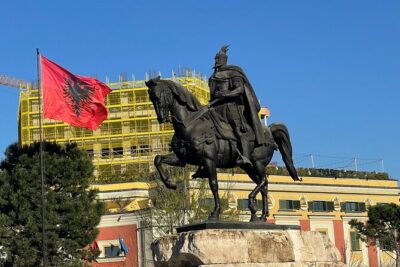 ★ 5.0Walking Tour of TiranaFrom $18646 reviews
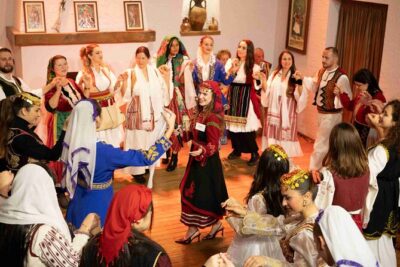 ★ 5.0Albanian Night Show: Traditional Music, Dance & Dinner in TiranaFrom $53431 reviews
 ★ 5.0Cooking Classes and Traditional food tasting in TiranaFrom $49282 reviews
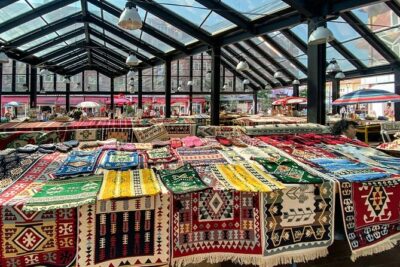 ★ 5.0Local food experience & walking tour of TiranaFrom $60192 reviews
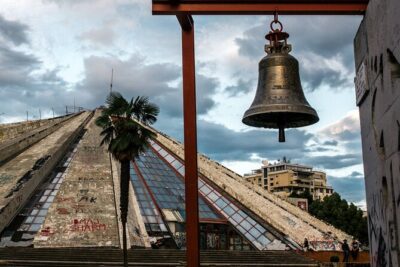 ★ 5.0Tour a Piedi di TiranaFrom $20174 reviews
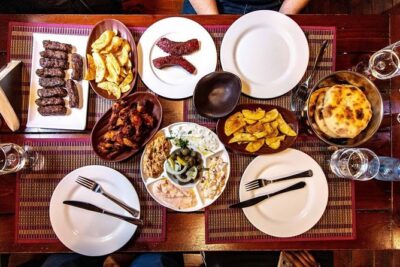 ★ 5.0Best of Local Food & City Tour of Tirana – Food & Drinks IncludedFrom $72160 reviews
 ★ 5.0Traditional Albanian Cooking Class in Tirana with Raki TastingFrom $53125 reviews
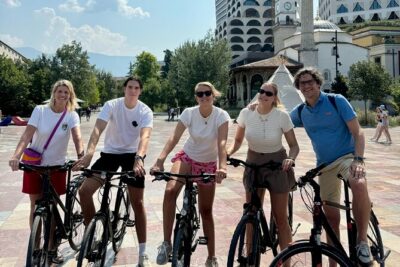 ★ 5.0Bike or E-Bike Tour Tirana: Highlights & Grand Park Guided CycleFrom $42124 reviews
Browse the lists this tour appears in