
REVIEW · TIRANA CITY TOURS & EXPERIENCES
Tirana Walking Tour around the Historic Centre
Tirana changes fast when you walk it. In this 2.5-hour route through the historic centre, you hop between eras, from Ottoman Tirana to communist memory, with an English guide and lots of quick photo moments.
I love that you get inside real religious spaces, including Et’hem Bej Mosque and the Orthodox Resurrection Cathedral, not just photos from the street. I also like the value, because most stops are free and the pacing is built for orientation, with guide context at each landmark.
One possible drawback is time. With so many stops in about 2 hours 30 minutes, you will move on before you can linger for long reads in museums or soak up details at your own pace.
In This Review
- Key Highlights Worth Booking For
- A Tight 2.5-Hour Loop Through Tirana’s Identity
- National History Museum: Start With the Big Picture
- Skanderbeg Square and the Opera House: Tirana’s Main Stage
- Et’hem Bej Mosque and the Clock Tower: Ottoman-Era Detail You Can Feel
- The Cloud Art Piece, Bunk’Art 2, and Murat Toptani: Modern Culture With Political Memory
- Tirana Castle (Fortress of Justinian) and Saint Paul Cathedral: Byzantine Roots and a Modern Church Face
- Enver Hoxha Pyramid: One Building, Several Regimes
- Boulevard of the Martyrs of the Nation and Blloku: Power, Prestige, and Everyday Life
- Rinia Park and the Orthodox Resurrection Cathedral: Breathing Space and Inside Views
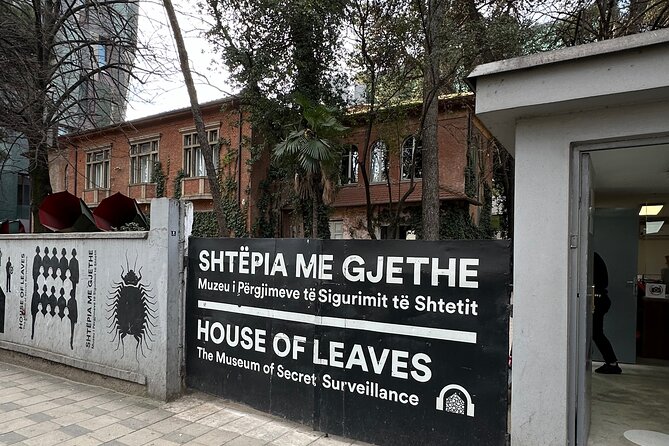
- Museum of Secret Surveillance (House of Leaves): Ending With a Sharp Memory
- Price and Value for Your 2.5 Hours
- Who This Walk Fits Best
- Should You Book This Tirana Walking Tour?
- FAQ
- What is the duration of the Tirana Walking Tour around the Historic Centre?
- How much does the tour cost?
- Is the tour offered in English?
- What ticket type do I need?
- Where does the tour start and end?
- Is there free cancellation?
Key Highlights Worth Booking For
- Inside visits to churches and a mosque, so you see Tirana’s living faith, not only exteriors
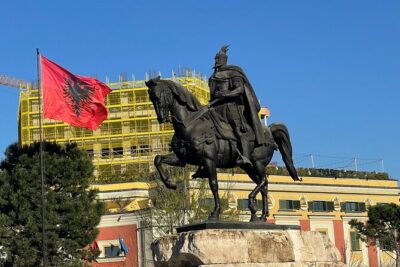
- Skanderbeg Square photo stop, with the monument that anchors the city’s national identity
- The Pyramid climb for top views, capped with a sunset-style photo stop
- Cold-war memory stops, including Bunk’Art 2 (outside) and the House of Leaves end point
- Small group size (max 20), which helps keep the walk from feeling chaotic
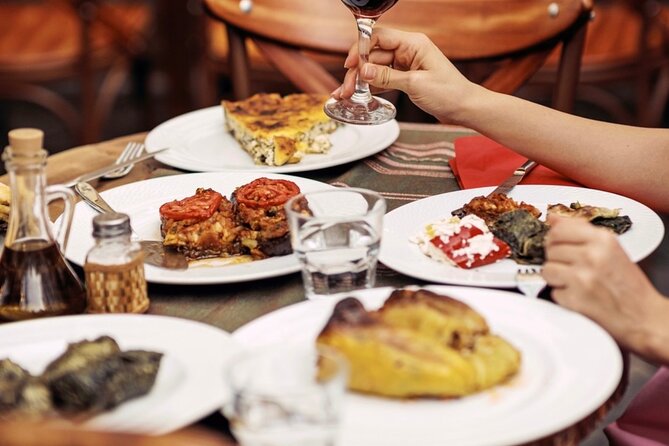
- Restaurant tips for your next meal, including dietary considerations
More of Tirana on foot, on two wheels and after dark
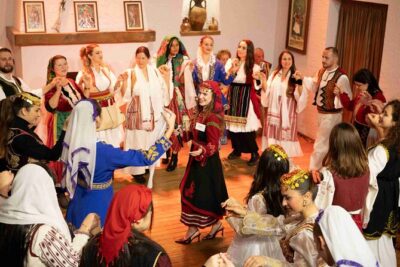
- Albanian Night Show: Traditional Music, Dance & Dinner in Tirana★ 5.0 · 431 reviews
- Cooking Classes and Traditional food tasting in Tirana★ 5.0 · 282 reviews
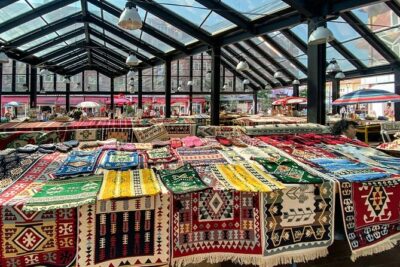
- Local food experience & walking tour of Tirana★ 5.0 · 192 reviews
- Tour a Piedi di Tirana★ 5.0 · 174 reviews
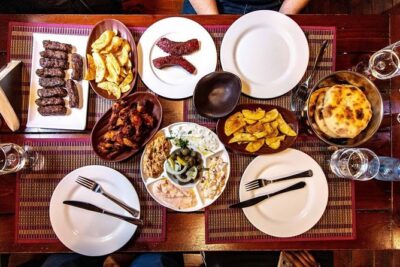
- Best of Local Food & City Tour of Tirana – Food & Drinks Included★ 5.0 · 160 reviews
A Tight 2.5-Hour Loop Through Tirana’s Identity
This tour is for people who want Tirana’s main landmarks without spending an entire day hopping between neighborhoods. The route is designed as a walkable circuit through the historic core, with the guide keeping the story straight while you cover major sights in a short window.
You also get the practical stuff that makes group walking tours worth it: an experienced certified guide, an English format, and photo stops at monuments. And because there is no private transportation included, the walk itself is the point, letting you watch how the center shifts from grand squares to quieter religious streets.
National History Museum: Start With the Big Picture
You begin at the National History Museum, a large museum opened on October 28, 1981. It is a serious building, with big exhibition space and a huge mosaic mural above the entrance called The Albanians, showing figures from ancient to modern Albanian history.
Even if you do not plan to read every exhibit, the museum works as a strong starter. It frames how Tirana thinks about identity: history first, then the monuments outside. The entrance ticket is free on the tour, so you are not forced to decide between paying or rushing.
What to watch for: the mural mosaic above the entrance. It is the kind of visual that gives you context before you move into the city’s public monuments.
Skanderbeg Square and the Opera House: Tirana’s Main Stage
Next comes Skanderbeg Square, Tirana’s central plaza named for Gjergj Kastrioti Skënderbeu, Albania’s national hero resisting the Ottomans. The square is huge, around 40,000 square meters, and the Skanderbeg Monument dominates the space.
This is the classic “get your bearings” moment. When you stand here, you understand why so many key buildings and streets funnel into this center. You then walk past the National Theatre of Opera and Ballet of Albania, described as the largest theatre in the country, with performances year-round.
A quick note for your expectations: the stops are brief. That is not a problem here, as the point is to see the symbols and get the guide’s meaning behind them. If you fall in love with the square and want to stay longer, you can always come back later on your own.
Et’hem Bej Mosque and the Clock Tower: Ottoman-Era Detail You Can Feel
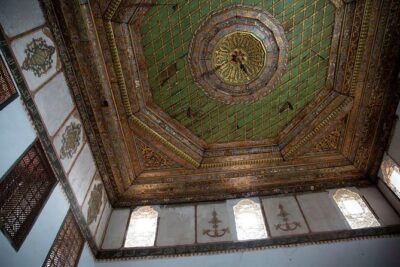
From the monument-heavy square, the tour shifts toward the older urban fabric. You visit Xhamia Et’hem Bej, the Et’hem Bey Mosque, reopened for worship in 1991 after being closed under communist rule. The mosque is known for frescoes outside and inside the portico, depicting trees, waterfalls, and bridges.
This is one of the strongest reasons to book. The tour includes an inside visit to a mosque that is described as authentic and old. You get a sense of continuity after decades of disruption, and you see religious art that does not feel like a staged theme.
You then move to the Clock Tower, built in 1822 by Et’hem bey Mollaj. The clock mechanism was assembled by watchmaster Ismail Tufina in the same year. The tower is recognized as a cultural monument, approved on May 24, 1948.
Even at a fast stop, it gives you something useful: it ties the city’s religious architecture to the timeline of civic development. Tirana’s center is not one era, it is a layer cake.
More of Albania taken at walking pace

The Cloud Art Piece, Bunk’Art 2, and Murat Toptani: Modern Culture With Political Memory
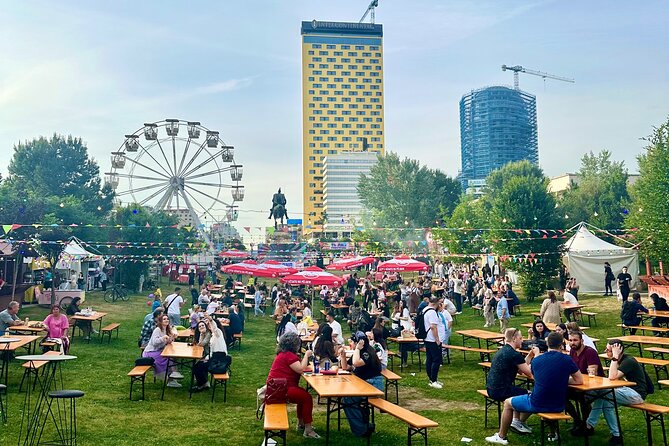
After the Ottoman-era touchpoints, the walk turns toward post-communist Tirana. You stop at Reja The Cloud, an art installation placed in front of the National Gallery of Arts. Designed by Japanese architect Sou Fujimoto, the Pavilion has been used since 2016 as a modern art space for cultural events.
This stop is short, but it matters because it shows how Tirana is using contemporary design in the middle of older streets. You see the city trying to look forward without erasing its past.
From there, you visit Bunk’Art 2, a museum and art space created from a Communist-era nuclear bunker. The tour includes an outside visit, which can still be meaningful if you are curious about how Tirana processes its Cold War mindset through repurposed space.
You then walk down Rruga Murat Toptani, a popular pedestrian street named for the Toptani family during Ottoman rule. It is the kind of street that helps you transition from “tour mode” to “wander mode,” because it feels built for strolling and lingering.
Tirana Castle (Fortress of Justinian) and Saint Paul Cathedral: Byzantine Roots and a Modern Church Face
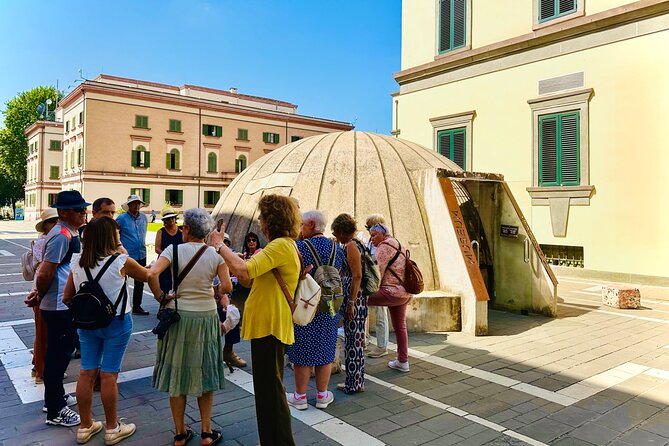
The route brings you to the Fortress of Justinian, also called Tirana Castle. Its history dates back before 1300, with Byzantine-era roots. The fortress is described as the place where the main east-west and north-south roads crossed, essentially forming the heart of earlier Tirana.
This is a different kind of landmark. Instead of a single monument, you get the idea of urban planning and movement. It also makes you think about why the center keeps getting rebuilt, because the same crossroads kept pulling people in.
You then stop at Saint Paul Cathedral, part of the Roman Catholic Archdiocese of Tiranë-Durrës. The building is modern in look, and the tour notes stained glass connected to Pope John Paul II and Mother Teresa, plus a Mother Teresa statue at the entrance.
I like this stop for one reason: it prevents the tour from becoming only about monuments and communist-era structures. It shows the current religious presence and a faith tradition that is visibly active in the city center.
Enver Hoxha Pyramid: One Building, Several Regimes
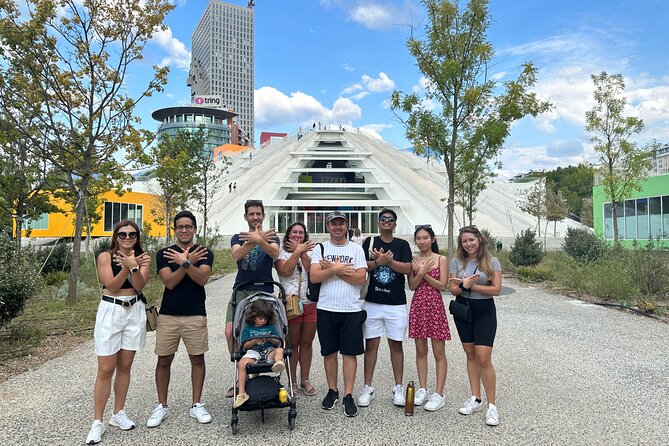
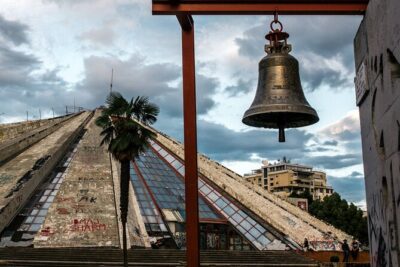
Next is the Enver Hoxha Pyramid, a former museum and later a conference center for the dictator Enver Hoxha. It opened as a museum in 1988, became a conference center in 1991 after the collapse of Communism, and was used as a NATO base during the Kosovo War.
Today, you are going to a renovated version. The 2018 project planned to turn the pyramid into a youth IT center under the TUMO Center Tirana name, focused on programming, robotics, and startups. The renovated structure, redesigned by MVRDV, opened to the public in May 2023.
This stop is not just architectural. It is an instant lesson in how Albania reuses symbols after political upheaval.
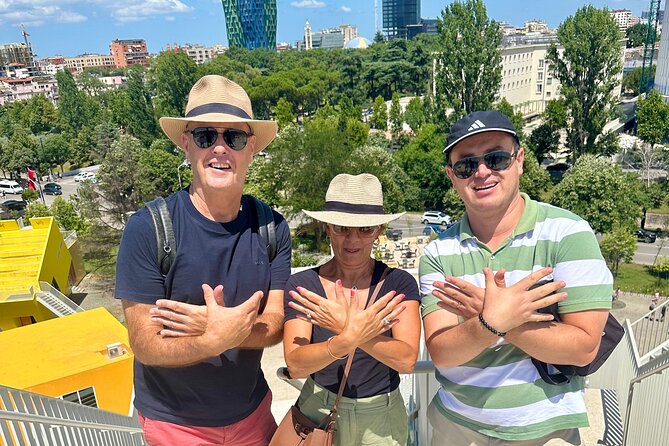
The tour also includes climbing up to the top of the pyramid for views and a sunset view photo stop. That is the kind of included extra that turns a “look at a building” stop into a memory you can keep. If you are the kind of traveler who enjoys city viewpoints, this is likely your highlight.
Boulevard of the Martyrs of the Nation and Blloku: Power, Prestige, and Everyday Life
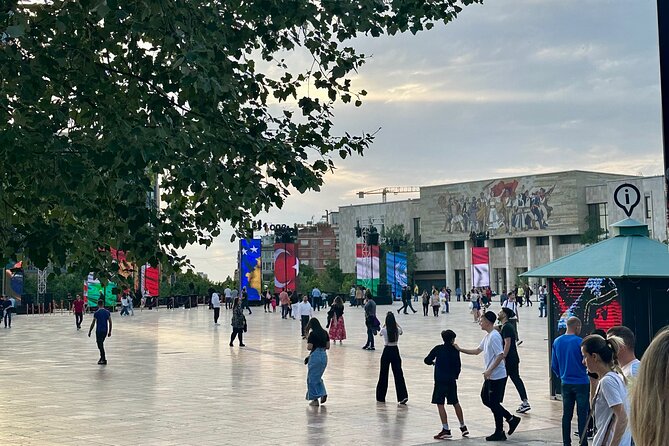
You then walk along Dëshmorët e Kombit Boulevard, the Boulevard of the Martyrs of the Nation. The tour notes it is a major thoroughfare with buildings like the Presidential Palace, Prime Minister’s Office, Palace of Congress, and Rogner Hotel, plus the University of Tirana.
Even if you are not trying to visit government buildings, the boulevard gives you scale. It shows how the center organizes around authority and public institutions.
After that comes Blloku, described as Tirana’s most famous neighborhood. It is leafy, residential, and also an upscale nightlife and shopping hotspot, with modern cafes and global restaurants next to luxury boutiques. During communist rule, Blloku was a closed-off precinct for the party elite, and Enver Hoxha’s villa still stands.
This is where you feel a big shift in tone. The tour helps you connect the dots between the past and the present: same area, different power structure, different daily rhythm.
Rinia Park and the Orthodox Resurrection Cathedral: Breathing Space and Inside Views
You take a break at Rinia Park, also called Youth Park and Taiwan Park. Built in 1950 during the communist era, it covers about 2.98 hectares. It is a central public park, which makes it useful in a walking tour context, because it gives you a pause between intense history stops.
From the park, you visit the Orthodox Autocephalous Church of Albania, the Resurrection Cathedral. The tour describes it as among the largest Eastern Orthodox churches in the Balkans, and you will visit from inside.
This inside access is again key. It is not a quick exterior glance. It is a chance to see how a major church space feels once you are inside, which is something many city walking routes skip.
Museum of Secret Surveillance (House of Leaves): Ending With a Sharp Memory
The last stop is the Museum of Secret Surveillance, also known as House of Leaves. The tour says it opened May 23, 2017, in the former Sigurimi headquarters during communist rule. It is dedicated to the innocent people spied on, arrested, prosecuted, convicted, and executed during the communist regime.
The tour includes an outside visit, and the meeting point location is the House of Leaves Museum address, specifically as the best place to end the walk because you can enter the museum. That ending choice is practical: you finish right where you can continue on your own if the topics hit you.
This is the point where Tirana stops being only a list of sights. You are left with a place that explains how surveillance shapes lives. If you are sensitive to heavy history, it is better to know that this is not a light finale.
Price and Value for Your 2.5 Hours
At $18.06 per person for about 2 hours 30 minutes, this tour is priced like a classic “maximum sights for a short day” option. The value is not only the price tag. It is that you are paying for an English guide, a curated walk, and included entrances to churches and mosques.
Most stops are listed as free, which matters. You are not stacking costs on top of the tour, and you can spend your money on food instead. Also, the group size maxes out at 20 travelers, which usually helps the guide keep the pace under control.
If you want a relaxed walking day, you might find the schedule a bit brisk. But if you want a smart introduction to Tirana’s center, this is a solid deal.
Who This Walk Fits Best
I think this works best if you:
- Want a structured route through Tirana’s most important landmarks in a half-day window
- Like history that connects to real places, especially churches, mosques, and political-era structures
- Enjoy viewpoint moments, particularly the pyramid top climb
It might not be ideal if you:
- Want slow, open-ended museum time
- Prefer fewer stops with longer hangs at each site
Should You Book This Tirana Walking Tour?
Yes, if you want a high-impact first look at Tirana. The combination of inside religious visits, an orientation-friendly route, and the pyramid top viewpoint makes it a strong “start here” option.
I would book it with one mindset: treat it as your guided foundation. Then, if a place grabs you, you will have the motivation to return on your own, especially the areas tied to the heavier memory stops at the end.
FAQ
What is the duration of the Tirana Walking Tour around the Historic Centre?
It lasts approximately 2 hours 30 minutes.
How much does the tour cost?
The price is $18.06 per person.
Is the tour offered in English?
Yes, it is offered in English.
What ticket type do I need?
You get a mobile ticket.
Where does the tour start and end?
It starts at Karuseli8RH9+42R, Tiranë, Albania and ends at House of Leaves Museum, Rruga Ibrahim Rugova 12, Tiranë 1001, Albania.
Is there free cancellation?
Yes, you can cancel for free up to 24 hours in advance for a full refund.
More Albanian Tours, Rated
Still in Tirana? Keep Going


Every Albania Review We Have

Latest Albania reviews off the desk
- UNESCO heritage in Albania – 4 days
★ 5.0 · 3 reviews - Transfers Tirana Airport – Sarande – Ksamil – Airport Tirana
★ 4.5 · 3 reviews - Private Transfers from Tirana International Airport to Sarandë
★ 4.5 · 3 reviews - Tirana’s Communist Past: A Tasting Tour with Traditional Lunch
★ 5.0 · 3 reviews - Tirana ⇔ Ohrid, North Macedonia
★ 5.0 · 3 reviews - Tirana and Kruja in a Day Trip
★ 5.0 · 3 reviews
Tirana City Tours & Experiences, compared.
 ★ 5.0Walking Tour of TiranaFrom $18646 reviews
 ★ 5.0Albanian Night Show: Traditional Music, Dance & Dinner in TiranaFrom $53431 reviews
 ★ 5.0Cooking Classes and Traditional food tasting in TiranaFrom $49282 reviews
 ★ 5.0Local food experience & walking tour of TiranaFrom $60192 reviews
 ★ 5.0Tour a Piedi di TiranaFrom $20174 reviews
 ★ 5.0Best of Local Food & City Tour of Tirana – Food & Drinks IncludedFrom $72160 reviews
 ★ 5.0Traditional Albanian Cooking Class in Tirana with Raki TastingFrom $53125 reviews
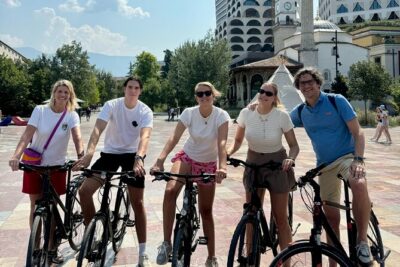 ★ 5.0Bike or E-Bike Tour Tirana: Highlights & Grand Park Guided CycleFrom $42124 reviews
Browse the lists this tour appears in