
REVIEW · DURRES & THE ADRIATIC COAST
Durrës: Walking tour with Roman Amphitheater
This Roman Amphitheater stop in Durrës is built for quick understanding. You start in the center at Sheshi Liria, then get guided time at one of the city’s biggest ancient landmarks without getting lost or swallowed by a huge group. I like that this is a focused visit with the entrance ticket included, so you’re not juggling separate purchases.
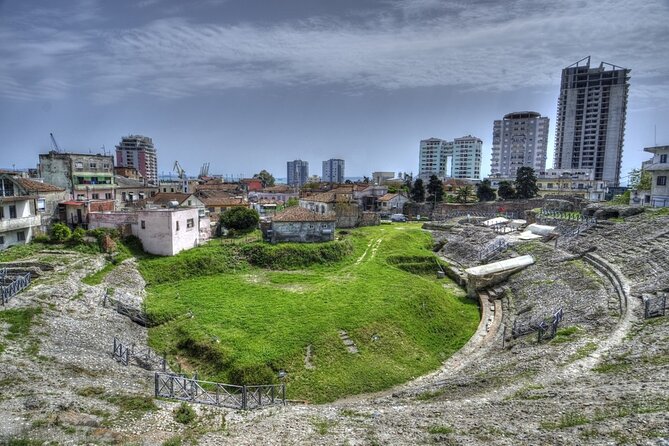
What I especially like here is the pacing: about 1 hour 30 minutes for a real look at Durres Amphitheatre from street level. There’s also a small group cap of 15, which keeps the experience from feeling rushed or anonymous. One drawback to plan for, though, is that the site can feel less dramatic than the photos suggest, since parts may be under the ground and some informational details on-site may be missing or poorly maintained.
In This Review
- Key highlights before you go
- Sheshi Liria to the Roman Amphitheatre: how you’ll find it
- The 90-minute format: what actually happens on the walk
- Trajan’s amphitheatre story, and why it still matters
- What you’ll see on-site, plus the reality check
- Making the most of your 30-minute amphitheatre time
- Price and value: is $40.65 for a short tour fair?
- Who this Durrës amphitheatre tour fits best
- Should you book the Durrës Roman Amphitheater walking tour?
- FAQ
- How long is the Durrës walking tour to the Roman Amphitheater?
- What is the price per person?
- Where do I meet for the tour?
- Does the tour include entrance to the amphitheatre?
- Do I get a mobile ticket?
- What is the maximum group size?
- Is there a minimum number of travelers required?
- When will I receive confirmation after booking?
- What if the weather is bad or I need to cancel?
Key highlights before you go
- Sheshi Liria start and finish: easy to locate, no complicated end point
- Small group size (max 15): a calmer pace at the ruins
- Entrance ticket included: you walk in without extra steps
- Trajan-era Roman scale: built in the 2nd century, tied to Emperor Trajan
- What remains above ground: you will need to imagine the rest, since portions are still underground
- Weather matters: the tour expects good conditions for a walk
Durres and the Adriatic shoreline, tour by tour
- Berat-Durres and Belsh Lake, day tour from Tirana★ 4.5 · 274 reviews
- Gjirokastra UNESCO & Ksamil Beach – From Tirana/Durres/Golem★ 5.0 · 117 reviews
- From Tirana/Durres/Golem: Prizren and Prishtina Full-Day Tour★ 5.0 · 67 reviews
- Durres: Off Road ATV Kallmi Tour★ 4.5 · 51 reviews
- Gjirokastra & Bylis Illyrian City Day tour Tirana/Durres/Golem★ 5.0 · 36 reviews
Sheshi Liria to the Roman Amphitheatre: how you’ll find it
You meet at Sheshi Liria, in Durrës, and the tour ends right back there. That matters more than it sounds, because Durrës can feel spread out once you step away from the center, and it’s nice to not have to figure out a second pickup or a long trek at the end.
The area is also listed as near public transportation. So if you’re arriving by bus or a shared ride, you should be able to get yourself to the start without a whole day of logistics. And since the whole experience runs roughly 1 hour 30 minutes, you’re not committing to half a day of moving around town.
If you’re the type who likes to get oriented fast, this is a good format. You get one clear target, one starting point, and a guide to help you make sense of what you’re looking at.
The 90-minute format: what actually happens on the walk
This is a short guided experience with one main stop: Durres Amphitheatre. The timing is listed as about 1 hour 30 minutes total, with around 30 minutes at the amphitheatre itself, plus time for getting organized, walking, and listening while you’re there.
It’s a good setup if you want Roman context without turning your schedule into a full history marathon. A big plus is that the tour includes the guide and the entrance ticket. In practical terms, you get somebody helping you read the site while you’re standing in front of it, instead of only relying on a few photo captions later.
There’s also a mobile ticket. If you like not carrying printouts and you can keep your phone charged, this is a smooth way to go. Just make sure your phone battery is decent, because you’ll want the ticket ready when the group gathers.
Group size is capped at 15 travelers. That’s small enough to ask questions, but large enough that you’ll likely have a lively group atmosphere. The overall feel is closer to a guided walk than a lecture, especially since the itinerary is built around one place.
Trajan’s amphitheatre story, and why it still matters
Here’s the Roman backstory you’ll want in your head before you look around. The amphitheatre’s origin is tied to Emperor Trajan, who in the 2nd century ordered what would become the larger amphitheatre of the Balkans. One provided note also points to a capacity around 20,000 people, which gives you a mental scale you can use while you stand there.
Then comes the part that makes ruins feel real. The same information notes that the amphitheatre’s glory faded around 350 AD, with a violent earthquake mentioned in the description you were given. That shift helps explain why what you see now can feel incomplete or less polished than modern visitors expect.
When you’re at the site, don’t just scan for the biggest visible structure. Instead, try to think in layers. You’re looking at a place designed for crowds, noise, spectacle, and movement, but you’re experiencing it from a modern angle, often from areas that show only what survived above ground.
And that’s where the reviews-style observations become useful even without repeating them. Some people found the amphitheatre not especially imposing compared with bigger Roman arenas elsewhere. Others noted that a large portion may still be under the ground. That doesn’t make it less important. It just means the place works best when you let your imagination fill in the missing geometry, guided by what you’re told while you’re there.
What you’ll see on-site, plus the reality check
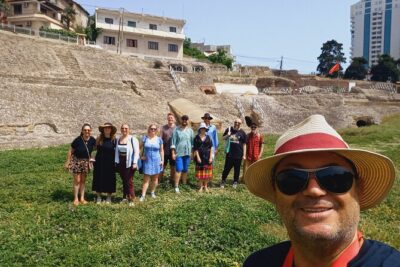
You’re there for the Roman Amphitheater in Durrës, so you should expect stone and ruins that read differently depending on maintenance and signage. One key theme from the info provided is that the site condition and interpretation aids can be inconsistent. In plain language, some explanatory inscriptions may be missing or not kept up, and the place might not feel “tour-ready” the way you’d expect in major heritage hubs.
So here’s the reality check: you may not get a dramatic, Instagram-ready view at every angle. You might see a more fragmented picture than you hoped for. And because portions could be underground, you might feel like you’re looking at the edge of something bigger.
That doesn’t mean you’re wasting time. It just means you should adjust expectations. Think of this as a guided way to understand the amphitheatre’s role, scale, and why it looks the way it does now, not as a fully reconstructed monument.
If you want to enjoy it, show up mentally ready to interpret. Pay attention to the surviving sections. Listen for the guide’s explanations about the structure and the timeline. If you’re the kind of person who likes asking questions, this tour format helps, because it’s built around one stop and a short time window.
More of Albania taken at walking pace



Making the most of your 30-minute amphitheatre time
Your schedule gives you about 30 minutes at the amphitheatre. That’s short, but it’s enough if you use it well. Here’s how I’d handle it so you don’t end up just “standing and hoping.”
First, choose a couple of viewpoints. Don’t rush through the whole site hoping it will reveal itself. Pick where you can see the most structure, then reposition once after the guide points out what to notice. When a site is partially underground, the best angles are often the ones that help you understand what remains and what likely used to rise higher.
Second, treat the Trajan and 20,000-seat detail as a visualization tool. Use it like a mental ruler. Even if you don’t see the full seating layout, that capacity number helps you picture how the space worked.
Third, ask one or two focused questions. If you’re curious about how the earthquake affected the amphitheatre, ask. If you wonder why certain parts feel hard to read, ask. This is a small group tour, so you’re not fighting for attention.
Fourth, accept that informational signage might be incomplete. If you’ve relied on boards at other ruins, you may find fewer or less helpful inscriptions here. That is exactly why the guide matters for a short visit. Use the guide as your moving reference library.
Finally, keep your time boundaries. If the site feels underwhelming at first glance, stay for the explanation before judging. Many ancient places look flat until someone gives you the context of layout, function, and the reason certain features are missing.
Price and value: is $40.65 for a short tour fair?
The price is listed at $40.65 per person. For a 1 hour 30 minute tour, you’re paying for two things that aren’t free: a guide and an entrance ticket to the Roman Amphitheatre.
So the value question is simple. If you would otherwise wander Durrës on your own and pay entry without guidance, this can be a cost-effective way to get more meaning per hour. If you only want a quick look and you’re confident reading ruins on your own, you might wonder whether the guide fee is worth it.
Here’s how I’d decide based on how you travel:
- If you like short, targeted tours, where you trade a small fee for clarity, this is a strong fit.
- If you prefer self-guided wandering and you always pack your own research, you may find this more optional.
Also remember the minimum requirement: the tour requires at least 2 persons to run. That can affect solo travelers who want a guaranteed departure.
Bottom line: at this price, you’re not buying a long day. You’re buying a short, guided interpretation plus entry. If you want that combo, it’s a reasonable deal.
Who this Durrës amphitheatre tour fits best
This is best for people who want an efficient hit of Roman-era context without a big schedule. If you’re in Durrës for a day or two and you want one solid ancient site, the single-stop format keeps things clean.
It’s also a good choice if you:
- prefer small groups (max 15)
- like walking tours that start and end in a clear central spot
- care about understanding what you’re seeing, not just ticking a box
On the other hand, it may not satisfy you if you’re chasing the kind of awe you get from fully restored monuments. The information provided hints that the site may not be as imposing as you’d expect, and that parts are likely underground. If your idea of fun is polished ruins with lots of signage, this could feel a bit rough around the edges.
Still, even if it’s not your favorite stop, it’s the kind of visit that can connect the dots. Trajan-era scale, the earthquake damage, and the partially hidden structure all add up to a place that’s worth understanding.
Should you book the Durrës Roman Amphitheater walking tour?
I’d book it if you want a guided, efficient way to understand a major Durrës landmark, especially since the entrance ticket is included and the tour is compact. It’s also worth it if you’d rather ask a guide questions than guess your way through what parts of the amphitheatre are missing or underground.
I would skip or wait if you’re traveling solo and cannot meet the minimum of 2 travelers, or if you strongly prefer heavily maintained sites with tons of interpretive signage. In that case, you might leave feeling the site is less dramatic than you hoped.
If you go in with realistic expectations, though, this is a solid way to see the Roman Amphitheatre with context in hand, and to get back to Sheshi Liria without any extra hassle.
FAQ
How long is the Durrës walking tour to the Roman Amphitheater?
It lasts about 1 hour 30 minutes.
What is the price per person?
The price is $40.65 per person.
Where do I meet for the tour?
You meet at Sheshi Liria, Durrës, Albania.
Does the tour include entrance to the amphitheatre?
Yes. The entrance ticket for the Roman Amphitheater is included.
Do I get a mobile ticket?
Yes, the tour uses a mobile ticket.
What is the maximum group size?
The tour has a maximum of 15 travelers.
Is there a minimum number of travelers required?
Yes. To make this tour is required a minimum of 2 persons.
When will I receive confirmation after booking?
Confirmation will be received at the time of booking.
What if the weather is bad or I need to cancel?
The tour requires good weather. If it is canceled due to poor weather, you’ll be offered a different date or a full refund. You can cancel up to 24 hours in advance for a full refund.
More Albanian Tours, Rated

Durres and the Adriatic


Every Albania Review We Have


Latest Albania reviews off the desk
- UNESCO heritage in Albania – 4 days
★ 5.0 · 3 reviews - Transfers Tirana Airport – Sarande – Ksamil – Airport Tirana
★ 4.5 · 3 reviews - Private Transfers from Tirana International Airport to Sarandë
★ 4.5 · 3 reviews - Tirana’s Communist Past: A Tasting Tour with Traditional Lunch
★ 5.0 · 3 reviews - Tirana ⇔ Ohrid, North Macedonia
★ 5.0 · 3 reviews - Tirana and Kruja in a Day Trip
★ 5.0 · 3 reviews
Durres & the Adriatic Coast, compared.
 ★ 4.5Berat-Durres and Belsh Lake, day tour from TiranaFrom $22274 reviews
 ★ 5.0Gjirokastra UNESCO & Ksamil Beach – From Tirana/Durres/GolemFrom $58117 reviews
 ★ 4.2From Durrës/Golem: Saranda, Ksamil, and Blue Eye Day Trip113 reviews
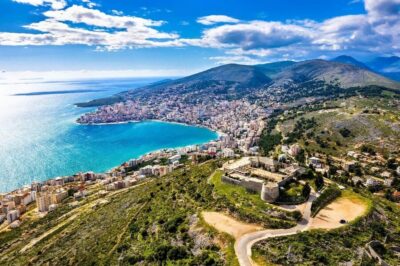 ★ 4.5From Durrës or Golem: Ksamil, Saranda and Blue Eye TourFrom $52111 reviews
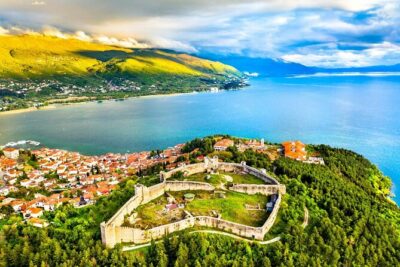 ★ 4.0Ohrid – North Macedonia Full Day Tour from Tirana & Durres/GolemFrom $6484 reviews
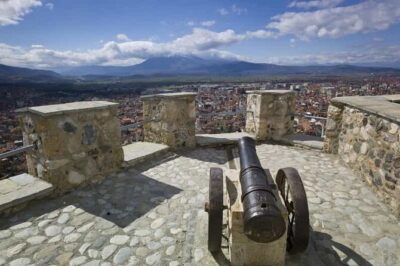 ★ 5.0From Tirana/Durres/Golem: Prizren and Prishtina Full-Day TourFrom $6767 reviews
 ★ 4.5Durres: Off Road ATV Kallmi TourFrom $8451 reviews
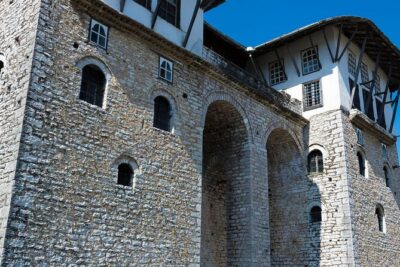 ★ 5.0Gjirokastra & Bylis Illyrian City Day tour Tirana/Durres/GolemFrom $6536 reviews
Browse the lists this tour appears in