
REVIEW · TIRANA CITY TOURS & EXPERIENCES
Tirana Walking Tour, Extra Virgin Olive Oil and Raki Tasting
Food and history walk together in Tirana. This 2 to 3-hour Tirana stroll blends major landmarks like Skanderbeg Square and the Enver Hoxha Pyramid with a tasting stop for extra-virgin olive oil and raki.
I especially like the way the guide, including locals like Taulant, turns street corners into clear, real-world context. One watch-out: it is a walking tour, so wear comfy shoes, and plan around good weather since the tour depends on it.
In This Review
- Key highlights to look for
- Skanderbeg Square to the Clock Tower: getting your bearings fast
- Murat Toptani pedestrian street: a walk through institutions, bridges, and memory
- Tirana Castle and the tasting: where the break has meaning
- Blloku after communism: an entertainment district with a memory
- Enver Hoxha Pyramid: a symbol you cannot ignore
- Price and logistics: does $22.69 feel fair?
- Who this Tirana walk suits best
- Should you book this Tirana walking tour?
- FAQ
- How long is the Tirana Walking Tour with olive oil and raki tasting?
- What is the price per person?
- What is included in the tour?
- Are meals or drinks included?
- What sights are part of the walk?
- Where do we meet?
- How many people are in the group?
- FAQ
- What if the weather is bad?
- What is the cancellation policy?
- What language is the tour offered in?
Key highlights to look for
- Extra-virgin olive oil and raki tasting as a built-in break, not an afterthought
- Skanderbeg Square and the Clock Tower for a fast timeline of changing Tirana
- Murat Toptani pedestrian area connecting old institutions, memorial sites, and newer sights
- Tirana Castle stop where the flavors and the views come together
- Blloku’s pre- and post-communist story, plus what you can still see today
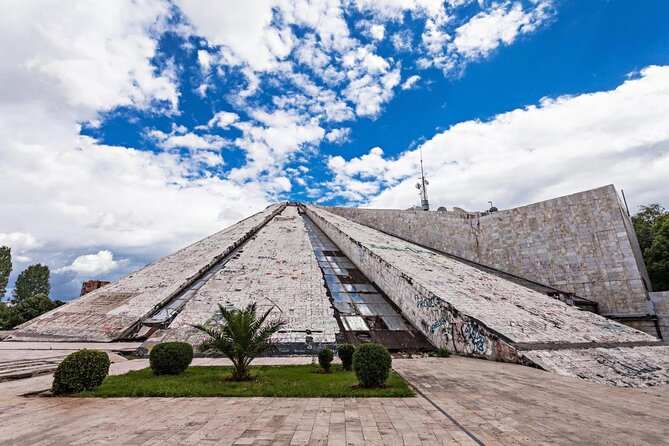
- Enver Hoxha Pyramid for a powerful look at how symbols get reused over time
More of Tirana on foot, on two wheels and after dark
- Albanian Night Show: Traditional Music, Dance & Dinner in Tirana★ 5.0 · 431 reviews
- Cooking Classes and Traditional food tasting in Tirana★ 5.0 · 282 reviews
- Local food experience & walking tour of Tirana★ 5.0 · 192 reviews
- Tour a Piedi di Tirana★ 5.0 · 174 reviews
- Best of Local Food & City Tour of Tirana – Food & Drinks Included★ 5.0 · 160 reviews
Skanderbeg Square to the Clock Tower: getting your bearings fast
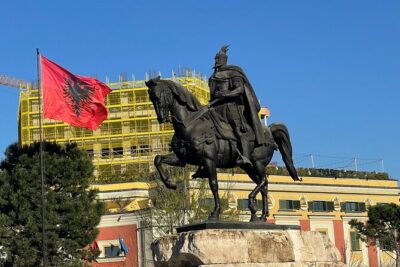
Most people hit Tirana’s center and move on. This tour does the opposite. You start at the equestrian statue of Skanderbeg in Sheshi Skënderbej, which makes sense because it is one of those places where the city’s political layers are visible even if you do not know the details yet.
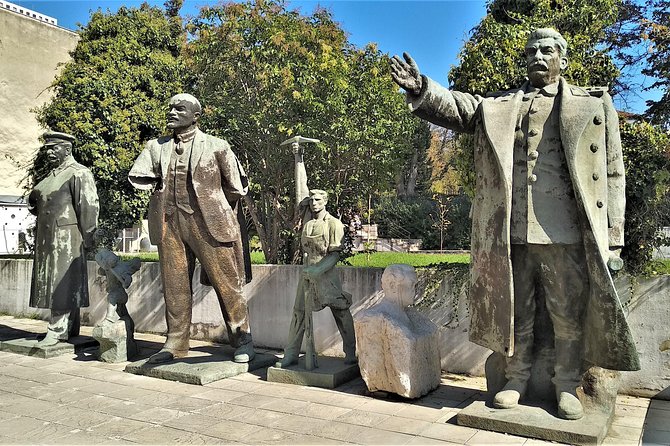
Skanderbeg Square has seen a lot of changes. The square was designed before World War II by Italian architect A. Brasini, and at one point it was associated with Stalin-era statues alongside figures like Skanderbeg and Enver Hoxha. Today, the setting is calmer and the Skanderbeg Statue is the one you will still see.
Then you get one more early anchor: the Tirana Clock Tower, completed in 1822 during the late Ottoman period. It is a short stop, but it helps you understand the city is not just one era. Tirana keeps rebuilding itself, often with the same sites doing new jobs.
For your time on the ground, this opening is smart. In about 20 minutes, you get orientation, plus a basic “how we got here” story that makes every later stop easier to follow. If you like history, you will also appreciate that the guide keeps it grounded in what stands in front of you.
Murat Toptani pedestrian street: a walk through institutions, bridges, and memory
After Skanderbeg Square, the tour heads into the pedestrian area called Murat Toptani. Think of it like a guided corridor where the city shows you layers in sequence.
This trail is described as having historical value, almost like an outdoor museum. Along the route, you pass several major references, including the Fortress of Tirana, the headquarters of the Academy of Sciences, and a park that can be considered the country’s first national park. You also see the old National Library and the former Political Persecutor’s Building, followed by Tanners Bridge.
The useful part for you is not memorizing every name. It is learning how one path connects very different kinds of places: military, education, public space, and detention and persecution sites. That combination can be heavy, so a good guide matters, and the tour is built around that explanation.
You also get modern sight hits mixed into the same corridor. Depending on what is happening on your day, you may notice newer attractions referenced along the route, like Kalaja e Tiranes, the National Gallery of Arts, and the Residence of the Albanian Royal Family.
If you have only a short time in Tirana, this section helps you feel like you are actually moving through the city’s story, not just circling a few landmarks.
Tirana Castle and the tasting: where the break has meaning
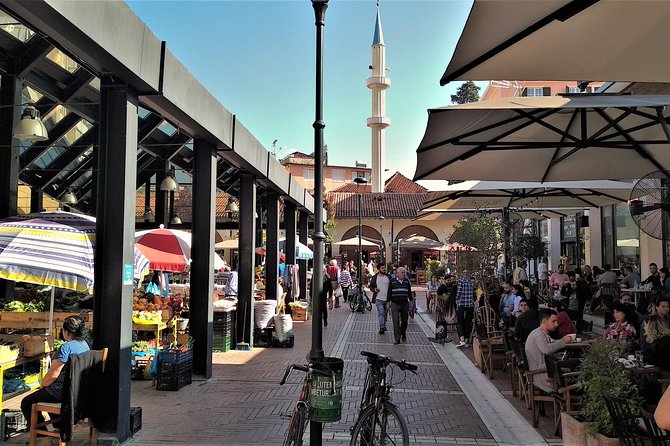
Next comes Tirana Castle, known as Kalaja e Tiranës. The tour treats the castle stop as both a scenic pause and a cultural one, and that is where the included food part clicks into place.
Tasting is included here, with extra-virgin olive oil and different types of raki, distilled from flavors like blackberries and plums. Even if you do not consider yourself a food person, this is a valuable stop because it teaches you what to pay attention to with Albanian staples. Olive oil tasting can be more educational than it sounds, since your guide can point out what different oils feel like and how raki flavors come across.
You also get the castle context: it is placed on the Toptani Pedestrian Street area, so it feels connected to everything you walked through earlier. You are not just eating, you are physically positioned above the city, which makes it easier to understand why people settled where they did and how Tirana’s focal points connect.
One practical note: tastings take time, so even though the castle itself is listed as a brief stop, you still want to keep your attention steady. If you rush through, you miss the point of the tasting.
Blloku after communism: an entertainment district with a memory
Blloku, also called Ish-Blloku, is an upmarket neighborhood and a major nightlife and dining area. You will pass spots that fit the modern vibe, like boutiques, restaurants, trendy bars, pubs, and cafes.
But what makes Blloku worth a guided walk is its shift after the fall of communism. During the communist period, Blloku was restricted residential space for members of the Albanian politburo. Ordinary people were not allowed there. After the political system changed, the area opened up and became attractive in a completely new way, described as a playground of the young Albanian elite.
The tour gives you a key lingering detail: you can still find the residence of Enver Hoxha in Blloku. That matters because it shows how physical places outlast political eras. A neighborhood can become a party hub, yet the address still ties back to the old regime.
This stop is also great if you want a break from heavy monuments. You get atmosphere without losing context. Even if your focus is sightseeing, I find Blloku one of the better places to understand how Tirana rebuilt social life after isolation.
Where else to eat well and pour raki in Albania
Enver Hoxha Pyramid: a symbol you cannot ignore
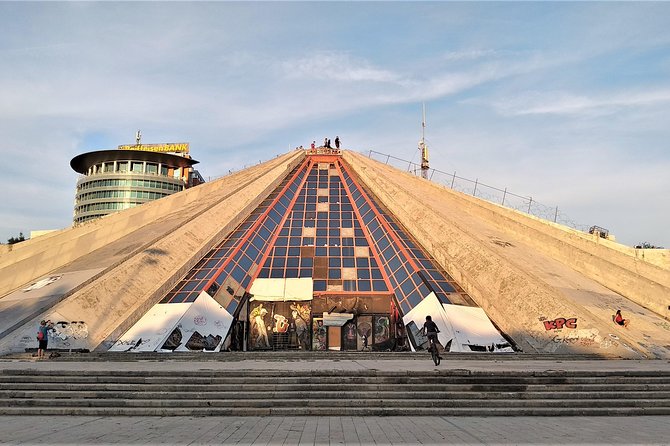
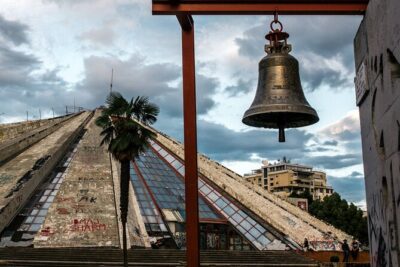
The last major stop is the Enver Hoxha Pyramid. It used to be called the Enver Hoxha Museum and opened in 1988. It served as a museum heritage site until 1991.
From a distance, it looks like an Egyptian-style pyramid dedicated to pharaohs. Then the guide points out a key detail: from above, it reveals the shape of a communist star spreading its rays. That blend of global influence and local propaganda is exactly the kind of symbolism that makes this building more than an odd shape on the skyline.
Today, you will also notice that renewed construction is part of its current story, and the tour description suggests the changes will surprise you. The practical value here is that the guide helps you interpret what you are seeing rather than leaving you with only confusion.
It is one of those sites where you might feel a bit of emotional whiplash, depending on your background. That is normal. If you want to understand Albania beyond headlines, this stop is one of the clearest windows into how political power tries to engineer meaning.
Price and logistics: does $22.69 feel fair?
The price is $22.69 per person for about 2 to 3 hours, and the big reason it can feel like good value is what you get included. You are not just buying a walking route. You get a professional certified guide plus the tasting of extra-virgin olive oil and multiple rakis.
If you break it down by time, you are getting a guided day component that includes several major stops. The tour also runs in a group format with a maximum of 30 travelers, which can affect how much attention your guide can give you, but the described experience includes the idea of going at your own pace for your group.
For logistics, the tour ends back at the meeting point, and it is near public transportation. You are also offered the tour in English, and confirmation is sent at booking time. Since admission to the listed sights during stops is noted as free for the square and clock tower, and the castle and pyramid stops also note free admission, you are not likely to face surprise ticket costs for the key photo stops.
One practical consideration: the tour requires good weather. If rain or wind hits, the schedule may change or the operator may offer a different date or a refund, depending on the situation.
Who this Tirana walk suits best
This is a strong fit if you want:
- A clear overview of Tirana in a short window, without the “hop, photo, leave” feeling
- A guide-led explanation of how communist and post-communist Tirana coexist in the same streets
- A food break that actually connects to local culture, not just a random snack stop
- A way to see both major landmarks and the quieter historical corridor along Murat Toptani
I would also recommend it if you enjoy small details. This tour is made of them: Brasini and later architectural influences, how certain statues disappeared while Skanderbeg remained, why a clock tower matters for the timeline, and how a pyramid becomes a symbol in more than one way.
If you dislike walking, or you are traveling with limited mobility, you might find the route challenging. The tour does say most travelers can participate, but comfort comes down to footwear and your personal stamina.
Should you book this Tirana walking tour?
I think this is a book-worthy choice if you like city walks with context and you want an included cultural tasting. The combination of major landmarks with olive oil and raki tasting makes it feel worth the time, and the guide can turn what could be just buildings into a story that makes the city make sense.
Book it if you want a guided introduction to Tirana that balances monuments with neighborhood life. Skip it only if you are mainly chasing long museum time, because this is designed as a moving, explanation-heavy walk rather than a sit-and-read museum day.
If you do book, do one simple thing: bring comfortable shoes and come with a curiosity about how Tirana keeps changing while still pointing to earlier eras.
FAQ
How long is the Tirana Walking Tour with olive oil and raki tasting?
It runs about 2 to 3 hours.
What is the price per person?
The price is $22.69 per person.
What is included in the tour?
You get a professional certified guide, plus an extra-virgin olive oil and different rakis tasting (including flavors such as blackberries and plums).
Are meals or drinks included?
No. Snacks, meals, and drinks are excluded.
What sights are part of the walk?
The tour includes Skanderbeg Square, the Tirana Clock Tower, the Murat Toptani pedestrian route, Tirana Castle (Kalaja e Tiranës), Blloku, and the Enver Hoxha Pyramid.
Where do we meet?
You meet at the equestrian statue of Skanderbeg, Sheshi Skënderbej, Tiranë, Albania.
How many people are in the group?
The maximum group size is 30 travelers.
FAQ
What if the weather is bad?
This experience requires good weather. If it is canceled due to poor weather, you will be offered a different date or a full refund.
What is the cancellation policy?
Free cancellation is available. You can cancel up to 24 hours in advance for a full refund.
What language is the tour offered in?
The tour is offered in English.
Albania by the Glass and the Plate



Still in Tirana? Keep Going

Every Albania Review We Have

Latest Albania reviews off the desk
- UNESCO heritage in Albania – 4 days
★ 5.0 · 3 reviews - Transfers Tirana Airport – Sarande – Ksamil – Airport Tirana
★ 4.5 · 3 reviews - Private Transfers from Tirana International Airport to Sarandë
★ 4.5 · 3 reviews - Tirana’s Communist Past: A Tasting Tour with Traditional Lunch
★ 5.0 · 3 reviews - Tirana ⇔ Ohrid, North Macedonia
★ 5.0 · 3 reviews - Tirana and Kruja in a Day Trip
★ 5.0 · 3 reviews
Tirana City Tours & Experiences, compared.
 ★ 5.0Walking Tour of TiranaFrom $18646 reviews
 ★ 5.0Albanian Night Show: Traditional Music, Dance & Dinner in TiranaFrom $53431 reviews
 ★ 5.0Cooking Classes and Traditional food tasting in TiranaFrom $49282 reviews
 ★ 5.0Local food experience & walking tour of TiranaFrom $60192 reviews
 ★ 5.0Tour a Piedi di TiranaFrom $20174 reviews
 ★ 5.0Best of Local Food & City Tour of Tirana – Food & Drinks IncludedFrom $72160 reviews
 ★ 5.0Traditional Albanian Cooking Class in Tirana with Raki TastingFrom $53125 reviews
 ★ 5.0Bike or E-Bike Tour Tirana: Highlights & Grand Park Guided CycleFrom $42124 reviews
Browse the lists this tour appears in