
REVIEW · TIRANA CITY TOURS & EXPERIENCES
TIRANA Walking Tour: Discover the ever-changing capital city
Tirana changes fast, and walking is the best way to notice it. This half-day Tirana walking tour connects the city’s layers, from Ottoman-era landmarks to Communist-era neighborhoods, with a guide who puts the pieces together as you go. I like that it stays practical and compact, so you get real context without spending your whole day trapped on a bus.
Two things I especially like are the tight mix of major sights you can actually reach on foot, and the included visits that make the tour feel worth it even if you are only in town for a few hours. The itinerary is paced so you get short stops with meaning, not a long slog with nothing to show for it.
One consideration: this is weather-dependent and it is a walking route through the center. If you hate heat or you’re limited with walking time, plan for that, because you will spend a lot of time outdoors.
In This Review
- Key highlights worth planning around
- Price and what your 3 to 4 hours is really buying
- Starting at Tirana International Hotel on Sheshi Skënderbej
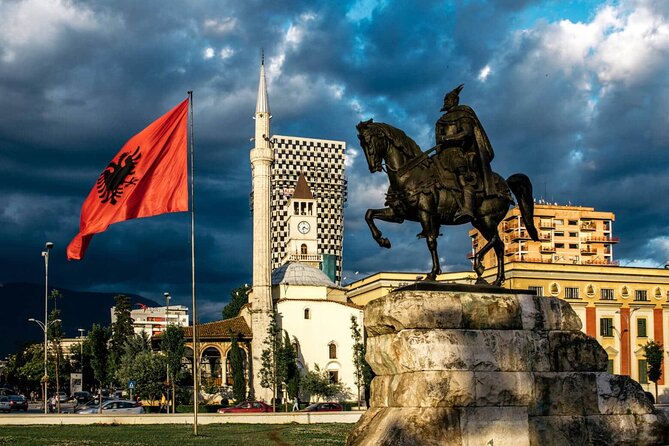
- Skanderbeg Square: Tirana’s history lesson in the open air
- Clock Tower after 90 steps: a city view that still feels rare
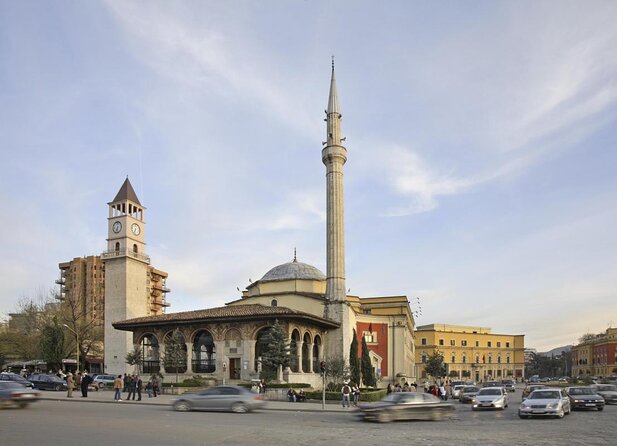
- Et’hem Bej Mosque: Ottoman survival plus restored art
- Rruga Murat Toptani toward Tirana Castle: traces over hype
- Tanners’ Bridge near the Parliament: Ottoman stone and pedestrian ponds
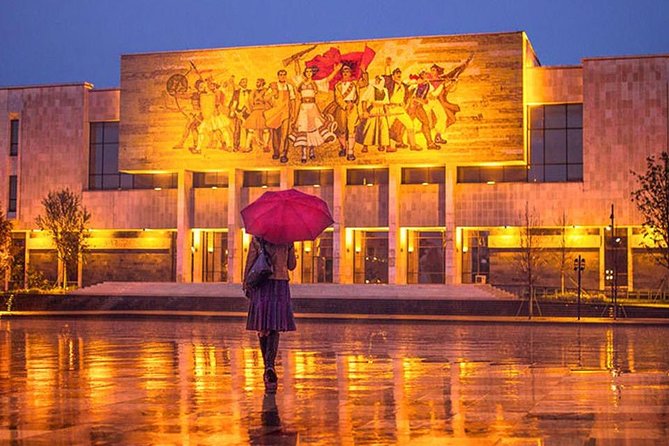
- National Gallery of Art GKA: what you see outside still tells a story
- Blloku: from party elite district to cafe-and-cocktail magnet
- How to get the most out of this walking route
- Should you book this Tirana walking tour?
- FAQ
- How long is the Tirana walking tour?
- What time does the tour start, and where do we meet?
- Is hotel pickup and drop-off included?
- What does the tour price include?
- Are tickets included for the Clock Tower and Et’hem Bej Mosque?
- Is the National Historical Museum ticket included?
- What is included or not included at the National Gallery of Art?
- How many people are in a group, and is the tour in English?
- What if weather is bad or I need to cancel?
Key highlights worth planning around
- Skanderbeg Square first, with context for Tirana’s 20th-century shifts
- Clock Tower climb (90 steps) for a rare view over the center
- Et’hem Bej Mosque for preserved Ottoman religious art and restoration details
- Tanners’ Bridge by the Parliament, a pedestrian-friendly link to Ottoman-era Tirana
- Blloku history plus today’s cafes and nightlife vibe
More of Tirana on foot, on two wheels and after dark
- Albanian Night Show: Traditional Music, Dance & Dinner in Tirana★ 5.0 · 431 reviews
- Cooking Classes and Traditional food tasting in Tirana★ 5.0 · 282 reviews
- Local food experience & walking tour of Tirana★ 5.0 · 192 reviews
- Tour a Piedi di Tirana★ 5.0 · 174 reviews
- Best of Local Food & City Tour of Tirana – Food & Drinks Included★ 5.0 · 160 reviews
Price and what your 3 to 4 hours is really buying
At $42.10 per person for a 3 to 4 hour walk, the price is not just about movement. You are paying for an English-speaking guide, plus time-saving organization and several included admissions. The tour is designed for a small group, with a maximum of 15 people, so you are not fighting a crowd for the guide’s attention.
Value-wise, the included stops matter. You get tickets for the Clock Tower and Et’hem Bej Mosque, and the National Historical Museum ticket is included as part of the tour experience. Meanwhile, not everything is included. The National Gallery of Art is a quick outside look, and its admission is not included.
Also, no hotel pickup or drop-off means you should be ready to meet on time. The good news is you start and end at the same place, at Tirana International Hotel on Sheshi Skënderbej, so you can fold the rest of your day around it easily.
Starting at Tirana International Hotel on Sheshi Skënderbej
You begin at Tirana International Hotel, right by Sheshi Skënderbej. It is a smart start because this is the center of the city’s story, and it gives you instant orientation. If Tirana is new to you, this kind of location is a gift. You spend your first hour learning the geography of the place you will keep seeing all day.
The walk is guided in English, and the tour ends back at the meeting point. That matters because it reduces stress. After the tour, you can pick a nearby lunch spot or head out to another attraction without worrying about where your route will dump you.
Start time is 9:30 am. If you want photos without harsh sun, this early start helps. Bring water and wear comfortable shoes, since you will cover multiple blocks and several steps.
Skanderbeg Square: Tirana’s history lesson in the open air
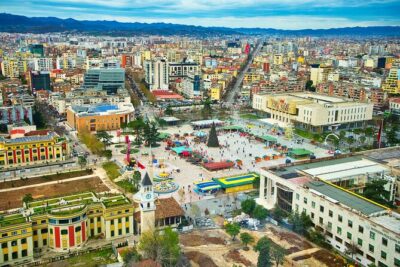
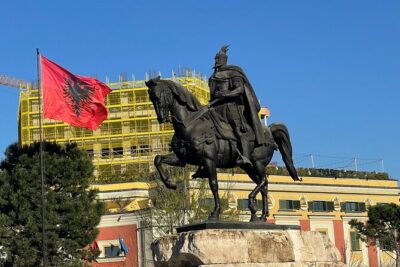
Your first stop is Skanderbeg Square, named for Albania’s medieval national hero. This square is more than a landmark. It is a compact way to understand how Tirana keeps reinventing itself while still carrying older layers.
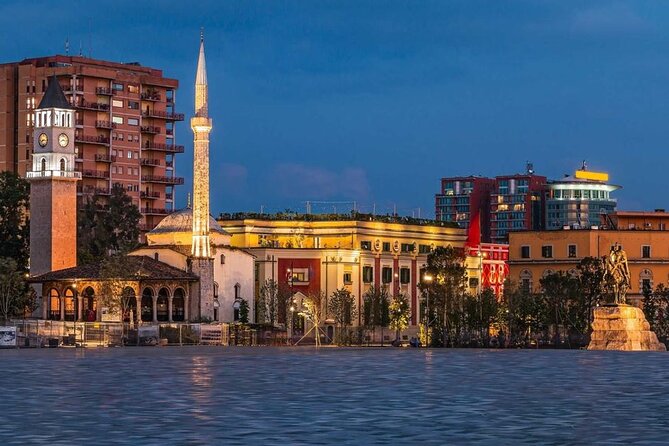
You will focus on the buildings that ring the square, including the National Historical Museum and the National Opera House. You will also hear about the Old Clock Tower and the Et’hem Bej Mosque as key visual anchors for the center of the city.
What makes this stop work is the way it is framed. Instead of treating monuments like random “photo backdrops,” the guide connects them to how Albania’s history shifted during the 20th century. If you like history, you will appreciate the push to look up at architecture and then understand why it is there.
Time at this stop is about 30 minutes. If you arrive early, use that moment to take a slow look around, then you will get much more out of the guide’s explanations.
Clock Tower after 90 steps: a city view that still feels rare
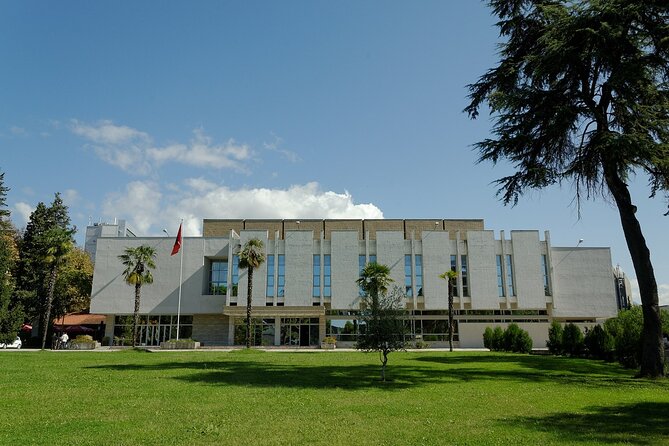
Next you climb the Clock Tower, a landmark built in 1840 during Ottoman times. The math is simple: 90 steps to reach the top, and then you get a panoramic view over the city center. It is 35 meters tall, and it used to be the tallest building in Tirana until 1970.
One practical point: the area around it has ongoing construction, so the view may not be postcard perfect. But that is part of why the stop is interesting. You are seeing a living city that keeps adding new layers, even while a historic monument remains.
The admission ticket for the Clock Tower is included. That means you do not lose tour time to figuring out ticket rules or paying separately, which is one less annoyance on a short day.
Plan for the climb. If stairs are an issue, you will want to mention that to your guide early so you can decide how to handle it comfortably.
More Albanian towns covered in a morning
Et’hem Bej Mosque: Ottoman survival plus restored art
The next stop is Xhamia Et’hem Bej, built in 1823. This mosque is especially notable because it is described as the only religious monument preserved through the Albanian Cultural Revolution. That single line gives the stop weight. You are not only looking at a beautiful building, you are seeing a rare survivor from a period when many religious sites were targeted.
The visit includes admission. Inside, you will have a chance to appreciate newly restored floral patterns and vivid frescoes. The guide also shares insider context on the history of Islam in Albania, which helps you connect the art and the architecture to the broader story.
Time is short, about 15 minutes, so treat this as a focused look rather than a long worship visit. If you want deeper time, you could always come back later on your own. For most people, though, the guided context makes these 15 minutes feel efficient.
Rruga Murat Toptani toward Tirana Castle: traces over hype
From here, you walk along Rruga Murat Toptani, a route that points toward Tirana Castle. This is one of those “don’t expect miracles, do expect atmosphere” stops. Excavations in 2001 and 2008 uncovered traces of the castle walls dating back to the period associated with Emperor Justinian, roughly 4th to 6th centuries.
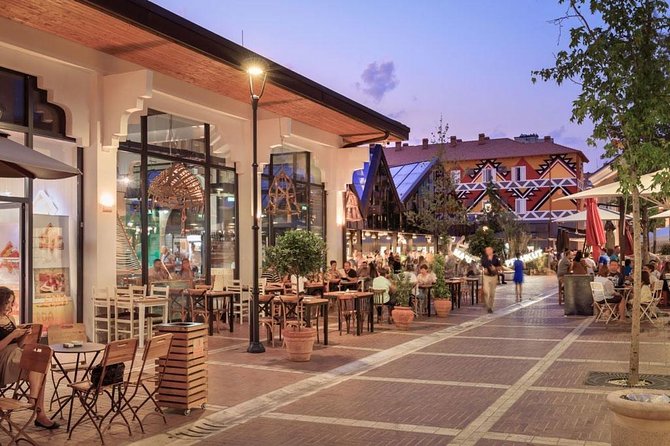
Yet, little remains visible today because the site has endured wars and destruction. So what do you get? You get a sense of place, plus the modern uses that have grown around the area. Today, the castle zone is frequented by all ages, with cafés, restaurants, and art galleries creating a lively hangout area.
Time here is about 20 minutes, and the stop is more about walking the right streets and understanding what you are seeing, even when the physical ruins are minimal. If you love archaeology, you might wish for more time. If you prefer city texture and storytelling, you will probably enjoy it.
Tanners’ Bridge near the Parliament: Ottoman stone and pedestrian ponds
After the castle area, you head to Tanners’ Bridge, also known as Ura e Tabakëve. This 18th-century Ottoman stone footbridge is near the Albanian Parliament, and it is one of those stops that feels quietly important because it is functional and photogenic.
The name tabakë connects to the profession of tanning and butchering. The bridge helped farmers link Tirana with the eastern highlands, crossing the Lana stream until changes around the 1930s. After that, the bridge fell into disrepair.
What I like about this stop is that restoration is not treated as a footnote. It underwent serious restoration in the 1990s, including cleaning and restoring original stones. An artificial pond was also recreated on both sides, and now the bridge is for pedestrians.
Time is about 10 minutes. It is short, but it is a great palate cleanser after bigger monuments, because the bridge is human-scale. You see the details up close, and you get a better feeling for the way the center used to connect to outlying areas.
National Gallery of Art GKA: what you see outside still tells a story
Next is the Albanian National Gallery of Arts (GKA). The building was established in 1954 and is known for social realism works and figurative art. However, the gallery is temporarily closed for expansion. That means this stop is mostly about design, context, and the view from the outside.
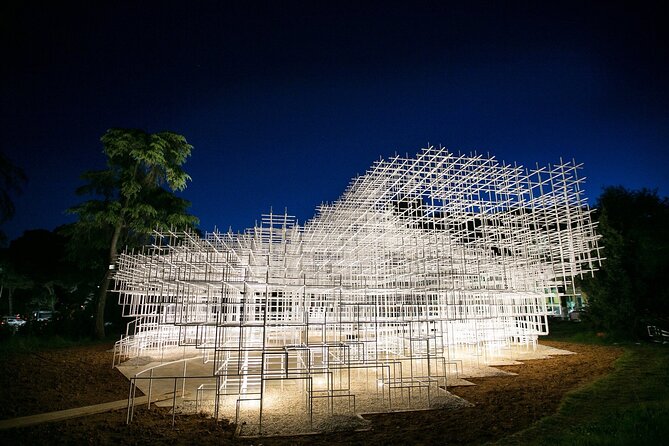
Still, there is a payoff. The guide points out the building’s minimalist design cues, and there are social realist statues of Communist leaders like Stalin and Lenin nearby that you can try to spot from the exterior area. The stop is paired with a look at REJA, also called The Cloud, by Japanese architect Sou Fujimoto.
REJA is used for late night film screenings, performative arts festivals, and live concerts. Even if you do not catch an event, the structure gives you a different kind of city history. It shows how Tirana mixes old politics, post-Communist public space, and contemporary architecture in one small area.
Time at this point is about 10 minutes, and admission is not included. If you want to go inside, you can plan that separately on another day when the museum reopens.
Blloku: from party elite district to cafe-and-cocktail magnet
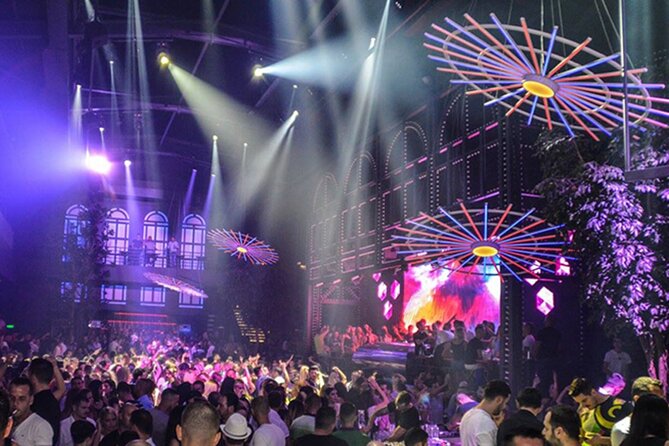
Your final big neighborhood stop is Blloku, Tirana’s modern magnet for bars and cafes. Today, the area feels polished, with trendy restaurants, luxury boutiques, and upscale residential units. But the guided angle is what makes Blloku more than a nightlife label.
During Communist rule, Blloku was a closed precinct for the party elite. The neighborhood included Enver Hoxha’s modern villa, with the office of the Albanian president nearby at Presidenca e Republikës.
This is where the tour earns its title, ever-changing capital city. You are walking through a place that shifted from restricted political power into a public leisure district. Seeing that change on foot makes it harder to forget.
Time here is about 15 minutes. It is enough to grasp the story and find a good spot for a future return. If your schedule allows, you can extend the evening in Blloku after the tour, since it is built for lingering.
How to get the most out of this walking route
This is a short, efficient city walk, so your preparation matters. I suggest you do three things.
First, wear shoes that handle cobblestones and steps. The route includes a stair climb at the Clock Tower, and you will keep moving between stops.
Second, plan for heat. The tour lasts 3 to 4 hours, and you are outdoors for most of it. Bring water. If it is a hot day, I like knowing that some guides may make room for a refresh break, and in one case a guide offered a cafe alternative when the museum access did not work out as expected.
Third, treat tickets as part of the pacing. Since Clock Tower and Et’hem Bej Mosque admission are included, you can budget your energy around those stops and keep your day moving.
One more small tip: you start at 9:30 am and finish back at the meeting point. If you want lunch soon after, choose something nearby so you are not rushing across town.
Should you book this Tirana walking tour?
I think you should book this if you want a high-impact introduction to Tirana in just a few hours. It works well for first-timers because the guide ties monuments to real history, and the route hits major stops without wasting time. The included visits to the Clock Tower and Et’hem Bej Mosque make the price easier to justify, especially when you add the National Historical Museum ticket angle.
I would skip it or at least plan carefully if you cannot handle outdoor walking or stair climbing. This is not a sit-down tour, and it does depend on good weather. Also, if you already know Tirana deeply and want long museum time, this may feel too brief, since the National Gallery is exterior-focused while the interior is closed for expansion.
If you want a smart first day plan, this tour is a strong bet. You will leave with a clearer map of central Tirana and a better sense of how the city’s political eras left visible marks on streets, buildings, and public space.
FAQ
How long is the Tirana walking tour?
The tour lasts about 3 to 4 hours.
What time does the tour start, and where do we meet?
It starts at 9:30 am. The meeting point is Tirana International Hotel, Sheshi Skënderbej 8, Tiranë 1001, Albania.
Is hotel pickup and drop-off included?
No, hotel pickup and drop-off are not included. The tour starts and ends back at the meeting point.
What does the tour price include?
The tour includes a city tour of Tirana and a qualified guide. Some admissions are included during the walk, while other activities like National Gallery admission are not included.
Are tickets included for the Clock Tower and Et’hem Bej Mosque?
Yes. Admission tickets for the Clock Tower and Xhamia Et’hem Bej Mosque are listed as included.
Is the National Historical Museum ticket included?
Yes. The tour summary states that the National Historical Museum visit includes an admission ticket.
What is included or not included at the National Gallery of Art?
The National Gallery of Art stop is an outside visit opportunity, and admission is not included.
How many people are in a group, and is the tour in English?
The tour has a maximum of 15 travelers and is offered in English.
What if weather is bad or I need to cancel?
The tour requires good weather. If it is canceled due to poor weather, you are offered a different date or a full refund. Free cancellation is available up to 24 hours in advance for a full refund.
More Albanian Tours, Rated
Still in Tirana? Keep Going


Every Albania Review We Have
Latest Albania reviews off the desk
- UNESCO heritage in Albania – 4 days
★ 5.0 · 3 reviews - Transfers Tirana Airport – Sarande – Ksamil – Airport Tirana
★ 4.5 · 3 reviews - Private Transfers from Tirana International Airport to Sarandë
★ 4.5 · 3 reviews - Tirana’s Communist Past: A Tasting Tour with Traditional Lunch
★ 5.0 · 3 reviews - Tirana ⇔ Ohrid, North Macedonia
★ 5.0 · 3 reviews - Tirana and Kruja in a Day Trip
★ 5.0 · 3 reviews
Tirana City Tours & Experiences, compared.
 ★ 5.0Walking Tour of TiranaFrom $18646 reviews
 ★ 5.0Albanian Night Show: Traditional Music, Dance & Dinner in TiranaFrom $53431 reviews
 ★ 5.0Cooking Classes and Traditional food tasting in TiranaFrom $49282 reviews
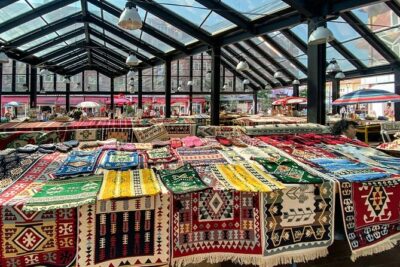 ★ 5.0Local food experience & walking tour of TiranaFrom $60192 reviews
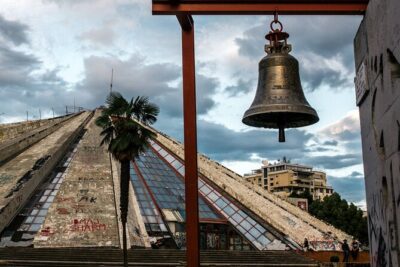 ★ 5.0Tour a Piedi di TiranaFrom $20174 reviews
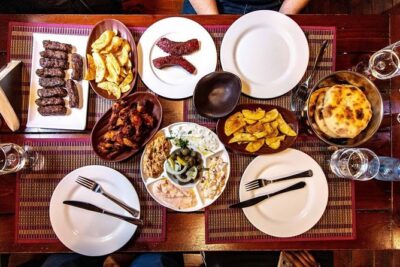 ★ 5.0Best of Local Food & City Tour of Tirana – Food & Drinks IncludedFrom $72160 reviews
 ★ 5.0Traditional Albanian Cooking Class in Tirana with Raki TastingFrom $53125 reviews
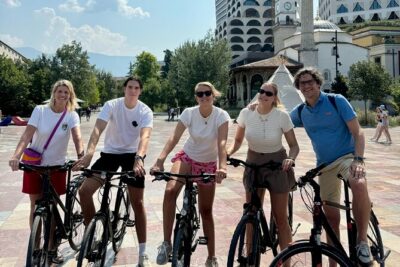 ★ 5.0Bike or E-Bike Tour Tirana: Highlights & Grand Park Guided CycleFrom $42124 reviews
Browse the lists this tour appears in