
REVIEW · TIRANA CITY TOURS & EXPERIENCES
Tirana by locals
A city can be read in 2 hours. This Tirana walking tour connects major landmarks with the daily feel of modern Albania, from the grand center to the leftovers of communism. You’ll move with a local guide through the spaces locals use, not just the postcard stops.
I really like that it gives you two kinds of context at once. You get the big-square landmarks at Skanderbeg Square, and then you get the human-scale story at places like the House of Leaves Museum.
One thing to keep in mind: you’re walking for around 1 to 2 hours, and the tour requires good weather. If Tirana is rainy or too hot for you, plan accordingly.
In This Review
- Key points to know before you go
- Tirana by locals: the short route that actually makes sense
- Skanderbeg Square: power, religion, and Soviet fingerprints
- Enver Hoxha Pyramid: a stubborn symbol in the middle of change
- House of Leaves Museum: the intelligence-era reality check
- Blloku: from restricted villa area to coffee shops and cocktails
- Polytechnic University of Tirana: youth, study, and a younger future
- Why the guide makes the difference (Eri, Leo, and Mimmi)
- Price and what $17.36 really buys you
- Timing, meeting point, and how to plan your day
- Should you book this Tirana walk?
- FAQ
- How long is the Tirana by locals walking tour?
- Where do I meet, and where does the tour end?
- What time does the tour start?
- What stops are included on the itinerary?
- Is the price all-inclusive?
- Does the tour operate in bad weather?
Key points to know before you go
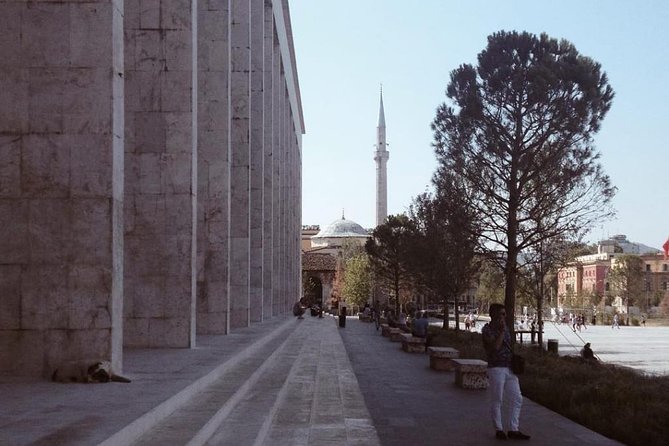
- Skanderbeg Square in a short time: Et’hem Bey Mosque, Clock Tower, National Theater, and more, explained in plain language
- Enver Hoxha Pyramid with context: you’ll see how it survived attempts to be destroyed, still un-restored
- House of Leaves Museum’s real spine: it’s tied to the National Intelligence Agency and the espionage years
- Blloku shift from gated power to coffee culture: former restricted villa area now full of shops and bars
- Polytechnic University stop: founded in 1951, with about 10,000 students from Albania, Kosovo, Macedonia, and Montenegro
- Small group size: max 15 people, which keeps questions and pacing manageable
More of Tirana on foot, on two wheels and after dark
- Albanian Night Show: Traditional Music, Dance & Dinner in Tirana★ 5.0 · 431 reviews
- Cooking Classes and Traditional food tasting in Tirana★ 5.0 · 282 reviews
- Local food experience & walking tour of Tirana★ 5.0 · 192 reviews
- Tour a Piedi di Tirana★ 5.0 · 174 reviews
- Best of Local Food & City Tour of Tirana – Food & Drinks Included★ 5.0 · 160 reviews
Tirana by locals: the short route that actually makes sense
Tirana can feel like it’s changing every year. New cafés show up beside older government-era bones. This tour is a good way to sort out what you’re looking at, without feeling like you need a week of reading first.
The format is simple: you start at Skanderbeg Square at 9:00 am, then walk through a sequence of stops that map the city’s biggest themes. History, ideology, and everyday life all show up, one after another. It’s also timed for real sightseeing, not a long bus day.
The price, at $17.36 per person, is also easier to swallow than many “big highlights” tours, because the core sites include admission tickets (at least for stops 1 and 2). That matters in a city where you might otherwise spend time and money lining up separate tickets.
Skanderbeg Square: power, religion, and Soviet fingerprints
Skanderbeg Square is the city’s main stage. Even if you’ve never been to Tirana before, you’ll recognize it fast: it’s where the major landmarks cluster and where the city’s public life spills out.
This stop is about 10 minutes, and you’ll cover a lot of “what is that?” moments in a tight window. Here’s what you’ll see:
- Et’hem Bey Mosque
- The Clock Tower of Tirana
- The National Theater of Opera and Ballet
- The National Bank of Albania
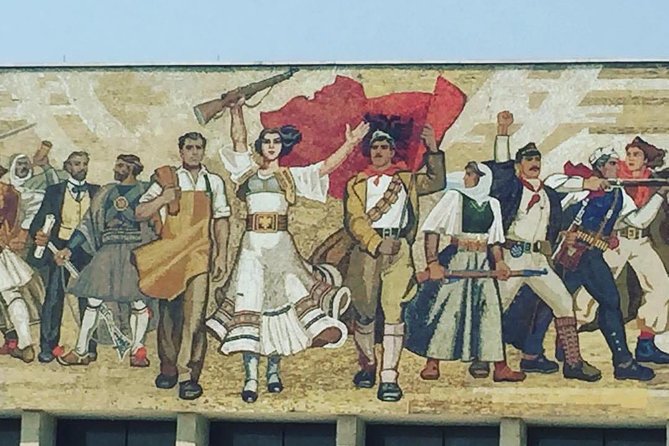
The National Theater detail is a great example of why a local guide helps. You’ll hear that the first brick was put in place by former Soviet Union President Nikita Khrushchev. That kind of fact gives the building a layer beyond architecture. It also explains why certain styles and symbols appear in unexpected places.
A small consideration: because the stop is short, you’ll want to keep your camera ready and your questions focused. If you’re the type who likes to linger for 20 minutes per landmark, this first stop may feel like a quick taste.
Enver Hoxha Pyramid: a stubborn symbol in the middle of change
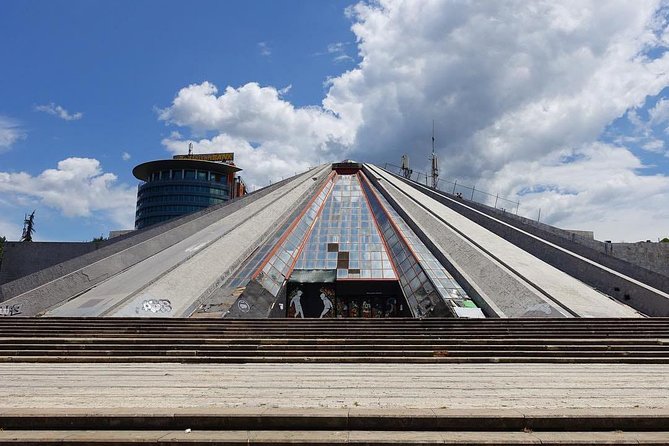
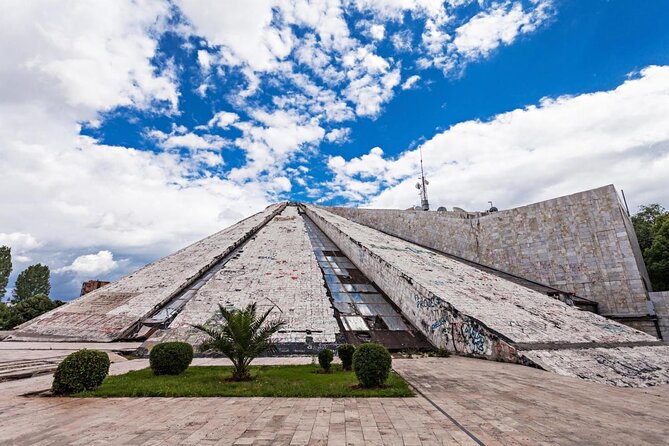
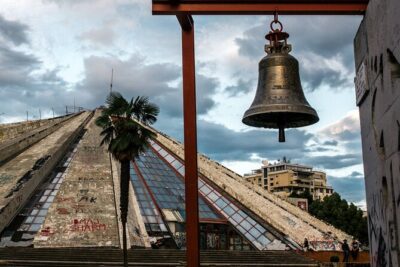
Next up is the Enver Hoxha Pyramid, set up as a symbol of the communist years. The key story you’ll hear here is that it resisted attempts to be destroyed by previous governments. It’s still there, and importantly, it’s described as un-restored.
That single detail helps you understand Tirana’s approach to history. Some places get rebuilt into something “new.” Others remain, even if they’re uncomfortable or outdated. Standing in front of the pyramid, you’re basically looking at a physical argument about memory.
This stop runs about 20 minutes, with admission tickets included. That’s a decent chunk of time for both photos and explanation, and it usually gives you room to understand what you’re seeing before you move on.
The practical downside is also simple: you’ll be outside for part of it. Since the tour requires good weather, this is a stop where rain can be annoying if you’re stuck rushing for shelter.
House of Leaves Museum: the intelligence-era reality check
Then you’ll shift from public monuments to a darker, more personal kind of history: the House of Leaves Museum.
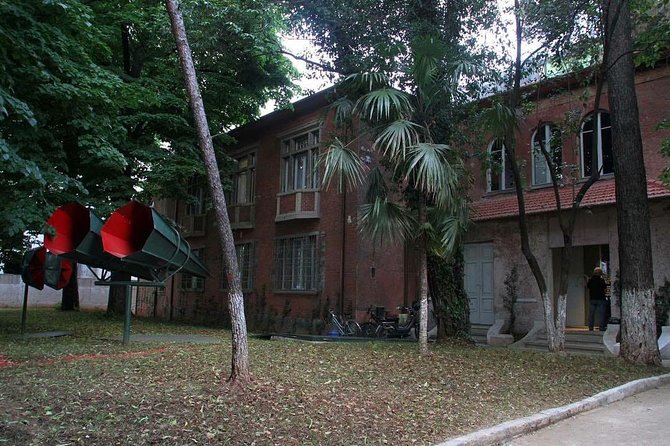
The core fact you’ll learn is that it used to be the National Intelligence Agency, an espionage house. This is not presented as trivia. It’s built to show the harsh communism reality, using the building itself as evidence of how surveillance and control worked.
It’s also set up as a story for both young people and foreigners, which changes the tone. Instead of assuming you already know the vocabulary of Albania’s communist era, the museum aims to explain the stakes in a way you can follow.
Time-wise, this stop is part of the walking route (the itinerary lists it between the pyramid and Blloku), but the admission format is not clearly stated in the provided information. So if you’re the type who likes certainty, confirm whether House of Leaves entry is included in what you pay, or whether it’s handled separately.
Value-wise, this stop is usually where the tour becomes more than “see these places.” It’s where you start connecting the city’s big symbols to the daily consequences behind them.
Blloku: from restricted villa area to coffee shops and cocktails
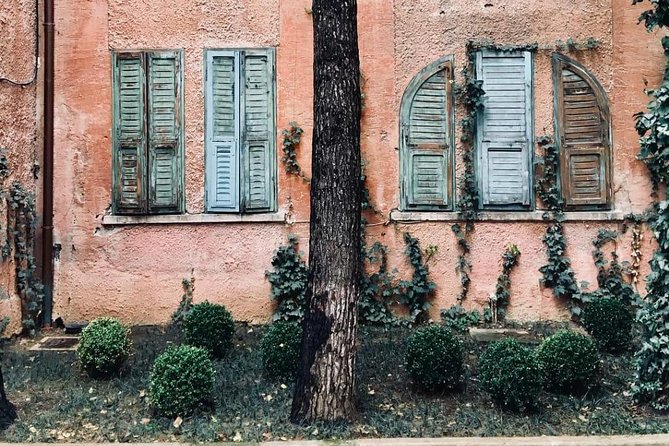
After the museum, the mood changes quickly in the best way. You’ll walk into Blloku, a neighborhood that used to be reserved for government officials, specifically tied to Enver Hoxha’s villa.
Back then, the general public couldn’t enter. Now the area is full of shops and nightlife: coffee shops, boutiques, cocktail bars, and pubs. That shift is one of the most useful “then and now” lessons you can get in Tirana because it’s visible right in the streets you’ll walk.
This stop is about 25 minutes, and admission is free for the Blloku portion. That makes it a good place to slow down a bit, look at storefronts, and get a feel for modern Tirana’s style.
One thing to consider: Blloku is more of an experience neighborhood than a “one-stop landmark.” You’ll get the story, but you should expect it to feel more like walking through a lively quarter than doing a timed museum visit.
If you want to remember what you learned earlier, watch how the guide links the old restrictions to today’s relaxed public life. It’s the same lesson as before, but expressed in daily habits.
Polytechnic University of Tirana: youth, study, and a younger future
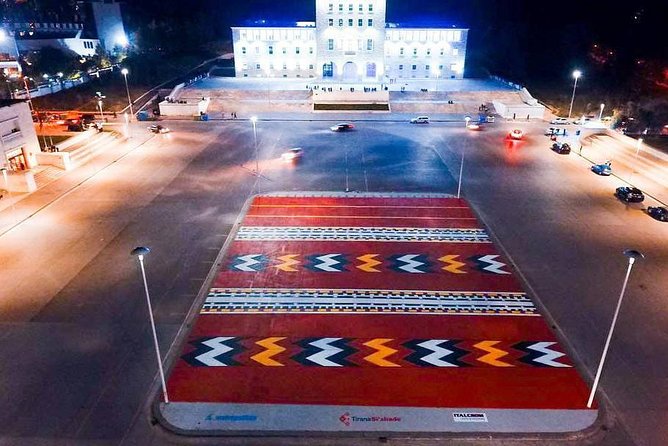
The final stop is at the Polytechnic University of Tirana, about 15 minutes. This isn’t just a photo stop. It’s included because the tour is trying to show Tirana as a living city, not a museum of its own past.
A few facts you’ll hear:
- It’s the oldest and the second largest university in Albania after the University of Tirana
- It was founded in 1951
- It has about 10,000 students
- Students come from Albania, Kosovo, Macedonia, and Montenegro
This matters because it changes your perspective. After seeing communist-era power structures and intelligence history, the university stop adds a different kind of continuity: education and movement of people across borders.
As with Blloku, the entry is free for this stop, and the time is tight. You’ll likely get just enough context to notice the campus atmosphere and understand why it’s included in a local-by-local tour.
Why the guide makes the difference (Eri, Leo, and Mimmi)
This tour’s quality depends heavily on the guide, and the names you’ll see associated with it give you a clue about the style.
I like tours where the guide doesn’t just recite facts. This one aims for that more human feel. For example:
- Eri is noted for patience with photos and video, which sounds small until you’re the one traveling with a phone full of half-finished shots.
- Leo is described as kind, bright, and highly professional, with explanations that made the whole experience feel worth the money.
- Mimmi is described as more than just a guide, almost like a friend who walks you through the Tirana people actually live.
Even if your guide is different, look for the same pattern: a guide who connects the buildings to meaning, and who makes it easy to ask questions. In a small group setting, that matters a lot.
The tour caps at 15 travelers, which usually keeps it from turning into a race. You’re more likely to get tailored explanations, and your guide can actually respond instead of shouting over the group.
Price and what $17.36 really buys you
Let’s talk value in real terms. At $17.36 per person, you’re not only paying for walking and a route. You’re paying for:
- A professional guide
- Admission ticket inclusion for Skanderbeg Square and Enver Hoxha Pyramid
- Free stops at Blloku and Polytechnic University of Tirana
So the money is weighted toward the parts where ticketing or guided context typically matters most. That’s good planning, especially in a country where public spaces and state-linked buildings can feel similar until someone explains what’s what.
You will not get:
- Alcoholic beverages
- Lunch
- Personal expenses
- Optional activity costs
That’s normal for a 1 to 2 hour walking tour. The practical move for you is to treat it like a morning orientation. Use it to learn what to do after, not to rely on it as your full-day program.
Also, the tour tends to be booked about 70 days in advance on average. That’s a soft signal of popularity. If you’re going at a busy time, booking early can save stress.
Timing, meeting point, and how to plan your day
You start at Skanderbeg Square (Sheshi Skënderbej, Tiranë, Albania) at 9:00 am and end back at the meeting point. That round-trip layout is convenient. It means you don’t have to figure out transit from one end of the city to the other.
The total duration is listed as 1 to 2 hours (approx.), which fits well into travel days. It’s long enough to learn the main stories, short enough that you can still explore independently afterward.
A good strategy is to pair this with your afternoon plans in the same neighborhoods. After Blloku, you’ll already have a mental map of what’s where. If you head out later, you’ll recognize more than you would after just arriving.
The tour also notes it’s near public transportation and that service animals are allowed. It says most travelers can participate, but remember the core requirement: good weather. If you’re sensitive to rain or slippery sidewalks, plan your clothing accordingly.
Should you book this Tirana walk?
If you want Tirana’s story in a clean, logical order, I’d say this tour is worth booking. It’s especially strong if you care about the “why” behind landmarks, not just the “what.” The mix of Skanderbeg Square, the Enver Hoxha Pyramid, the House of Leaves Museum, and the shift into Blloku makes the city feel understandable fast.
I would skip or rethink it if you want lots of free time to linger at each site, or if weather is unpredictable for your dates. The schedule is tight by design, and the tour runs on the assumption that you’ll be walking outside.
If you’re traveling solo, with friends, or with a small group, the max 15 format keeps it personal. And if you like guides who explain history in human terms, you’re likely to get exactly that.
FAQ
How long is the Tirana by locals walking tour?
It runs about 1 to 2 hours.
Where do I meet, and where does the tour end?
You meet at Skanderbeg Square, Sheshi Skënderbej, Tiranë, Albania. The tour ends back at the same meeting point.
What time does the tour start?
The start time listed is 9:00 am.
What stops are included on the itinerary?
The tour includes stops at Skanderbeg Square, Enver Hoxha Pyramid, the House of Leaves Museum, Blloku, and Polytechnic University of Tirana.
Is the price all-inclusive?
You get a professional guide. Admission tickets are specifically listed as included for Skanderbeg Square and Enver Hoxha Pyramid, while Blloku and Polytechnic University of Tirana are listed as ticket free. Alcoholic beverages, lunch, and personal expenses are not included.
Does the tour operate in bad weather?
The tour requires good weather. If it is canceled due to poor weather, you’ll be offered a different date or a full refund.
Still in Tirana? Keep Going


Every Albania Review We Have

Latest Albania reviews off the desk
- UNESCO heritage in Albania – 4 days
★ 5.0 · 3 reviews - Transfers Tirana Airport – Sarande – Ksamil – Airport Tirana
★ 4.5 · 3 reviews - Private Transfers from Tirana International Airport to Sarandë
★ 4.5 · 3 reviews - Tirana’s Communist Past: A Tasting Tour with Traditional Lunch
★ 5.0 · 3 reviews - Tirana ⇔ Ohrid, North Macedonia
★ 5.0 · 3 reviews - Tirana and Kruja in a Day Trip
★ 5.0 · 3 reviews
Tirana City Tours & Experiences, compared.
 ★ 5.0Walking Tour of TiranaFrom $18646 reviews
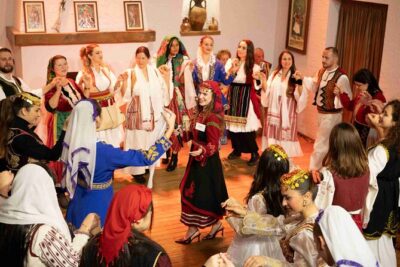 ★ 5.0Albanian Night Show: Traditional Music, Dance & Dinner in TiranaFrom $53431 reviews
 ★ 5.0Cooking Classes and Traditional food tasting in TiranaFrom $49282 reviews
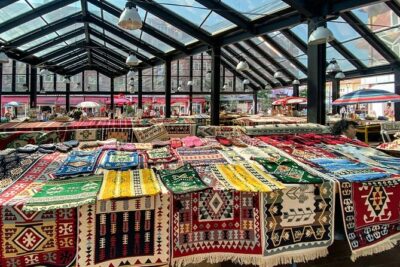 ★ 5.0Local food experience & walking tour of TiranaFrom $60192 reviews
 ★ 5.0Tour a Piedi di TiranaFrom $20174 reviews
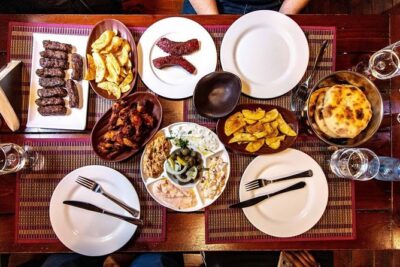 ★ 5.0Best of Local Food & City Tour of Tirana – Food & Drinks IncludedFrom $72160 reviews
 ★ 5.0Traditional Albanian Cooking Class in Tirana with Raki TastingFrom $53125 reviews
 ★ 5.0Bike or E-Bike Tour Tirana: Highlights & Grand Park Guided CycleFrom $42124 reviews
Browse the lists this tour appears in