
REVIEW · THE ALBANIAN RIVIERA
The Albanian Riviera, Porto Palermo, Qeparo Village, And A Big Ol’ Kalaja.
Fortresses, tunnels, and Ottoman tales. This guided Albania Riviera outing gives you Porto Palermo Castle history tied to the Soviet era, then swings into Qeparo Village with cobbled lanes, old churches, and the Ali Pasha fortress story. I love how you can connect French and Ottoman influences to real buildings you can stand in, not just trivia on a screen. I also love that the schedule is structured enough to fit a lot of viewpoints without feeling rushed.
One consideration: the tour is weather dependent, and you’ll be outdoors near old fortifications. If conditions are bad, expect the plan to shift or dates to change.
In This Review
- Key things I’d watch for
- Where Porto Palermo and Qeparo Fit on the Albanian Riviera
- Porto Palermo Castle: the Soviet submarine base story
- Qeparo Village: cobbled lanes and old churches after the bay
- Ali Pasha Tepelena and the French Ottoman mix you can trace
- Timing: what 2 to 8 hours really means on the ground
- Price value: is $98 worth it?
- Practical tips before you go
- Who this tour suits best
- Should you book this Porto Palermo and Qeparo day tour?
- FAQ
- What languages is the tour offered in?
- Is pickup included?
- How long is the experience?
- Do I need to bring an admission ticket?
- How big is the group?
- What kind of ticket do I get?
- What is the cancellation policy?
- What if the weather is bad?
- Where does the tour start and end?
Key things I’d watch for
- Porto Palermo Castle tunnels and barracks linked to a Soviet submarine base
- Qeparo cobbled alleys and old churches, right after the Palermo Bay
- Ali Pasha Tepelena’s fortress and the French Army architect connection
- English and Italian guide options, so you can follow the story closely
- Small-group feel with a maximum of 20 travelers, restricted to your group
- Admission ticket free for the stops on this outing
Other Albanian castles that repay the climb
- Butrint, Ksamil, Blue Eye, Lekuresi Castle. All-in-one daytrip.★ 4.5 · 125 reviews
- Butrint, Blue Eye, Ksamil and Lekuresi Castle Tour From Saranda★ 4.0 · 102 reviews
- 1-Day Tour in Blue Eye, Monastery, Gjirokaster and Lekursi Castle★ 5.0 · 76 reviews
- Tour to Butrint Antic City/Blue Eye Spring/Lekursi Castle★ 5.0 · 43 reviews
- Tour Gjirokaster,Blue Eye & Lekursi Castle★ 4.5 · 39 reviews
Where Porto Palermo and Qeparo Fit on the Albanian Riviera
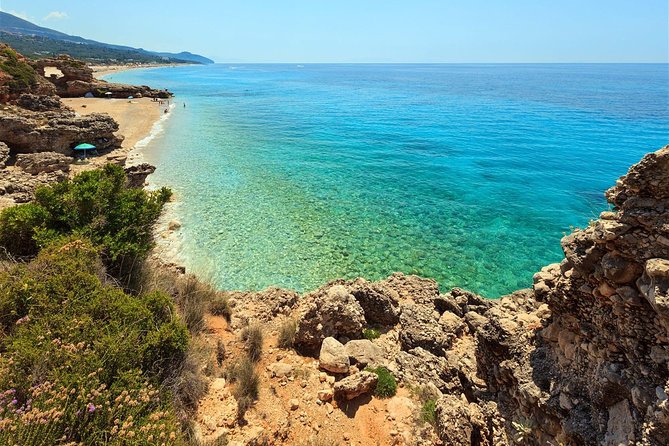
Saranda is a good base for exploring southern Albania, because you can reach dramatic coastlines fast. This specific tour focuses on the area near Porto Palermo and the village of Qeparo, both around the Palermo Bay region.
What I like about this layout is the mix. You get one stop built for conflict and control, then one village stop built for everyday life, with its own layers of power and style. It is not a museum crawl. It is more like walking through chapters of the region’s past.
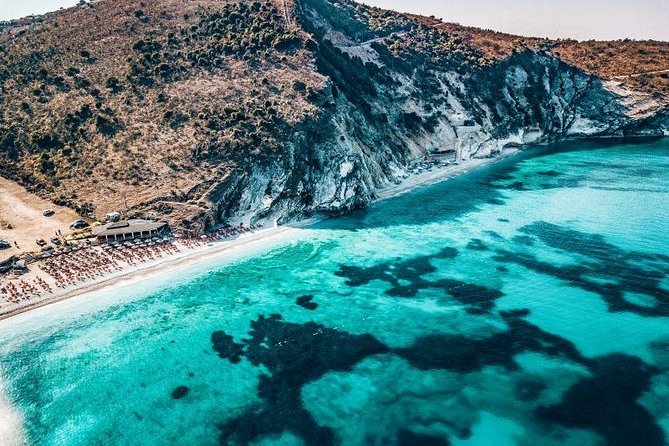
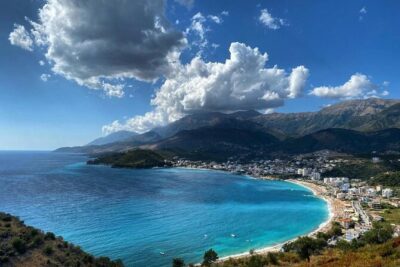
The views matter too. Porto Palermo sits in a closed bay, and the fortress is tied to the shoreline in a way that makes it feel half-connected, half-contained. If the day is clear, the setting makes the history easier to picture.
Porto Palermo Castle: the Soviet submarine base story
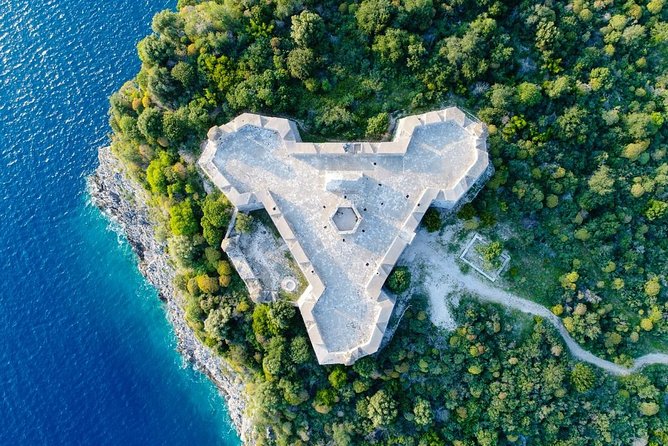
Porto Palermo Castle is the reason many people book. The fortress sits near Himarë on the Ionian coast and is tucked into a bay setting with beaches nearby. The bay and the narrow land strip create a kind of natural boundary around the area, which helped with defense and secrecy.
Here is the core historical hook: during Albania’s communist regime, Porto Palermo served as a former Soviet submarine base. That means the ruins and the surviving structures are not just old stone. They come with a Cold War mood, even if the place is now semi-abandoned in parts.
When you visit, plan to spend real time around:
- semi-abandoned tunnels
- barracks and other fortress structures
- the stronger edges like walls and gates connected to Ali Pasha of Ioannina
The tunnel parts are especially memorable because they explain why this location mattered. A guided walkthrough helps you understand how a closed bay could support military logistics, and how the Soviet presence shaped the site’s purpose. Even if you are not a history person, you’ll still get the practical story: who needed what, and why this coastline worked.
One thing to keep in mind: fortresses can be uneven and a bit damp or gritty around entrances. You are outdoors near old military infrastructure, so give yourself time and stay steady.
Qeparo Village: cobbled lanes and old churches after the bay
After Porto Palermo, you shift from fortress thinking to village life. Qeparo sits right after the Palermo Bay, and its appeal is the built environment: traditional architecture, cobbled alleys, and old churches.
This is the part of the day where you can slow down. The village setting is made for wandering, and the cobblestones change the pace. Instead of big viewpoint platforms, you get small turns, old stone details, and church structures that make the village feel anchored in time.
This stop also connects back to the tour’s big theme: layers of influence. You do not just see Ottoman-flavored and French-influenced references in theory. You see how they show up in the village’s strongest landmark structure, the Ali Pasha fortress element.
A practical note for your expectations: this is not a curated shopping street tour. It is more about walking and learning the story behind the place. If you want photos with dramatic angles, you will find them, but you’ll also get the quieter textures, like alley proportions and church exteriors.
Ali Pasha Tepelena and the French Ottoman mix you can trace
The tour’s storyline keeps circling a key name: Ali Pasha Tepelena. He is tied to the fortress structures you’ll hear about in both locations, which makes the day feel connected instead of random.
The Ali Pasha fortress element in Qeparo has an extra detail that makes this more than a basic “old fort” visit. It is described as being designed by a French Army architect, and it is valued for its special architectural and touristic qualities.
That French connection is your clue that this region is not stuck in a single influence. It sits at a cultural crossroads, shaped by Ottoman power and European military engineering. Your guide’s job is to connect those dots, so look for the moment when architectural descriptions turn into history.
Then there is the Soviet era piece. Porto Palermo’s former Soviet submarine base is the second major layer, and it contrasts sharply with older fortifications tied to Ali Pasha. If you like seeing how one power era overwrote another, you’ll enjoy how the day forces that comparison.
In other words: this tour works best when you treat it like a story with repeated characters. Ali Pasha gives you continuity. The Ottoman and Soviet chapters give you contrast.
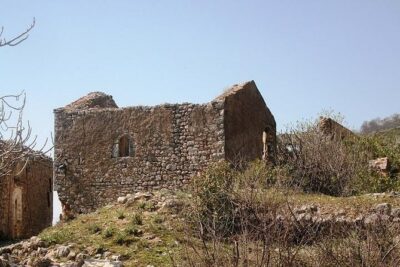
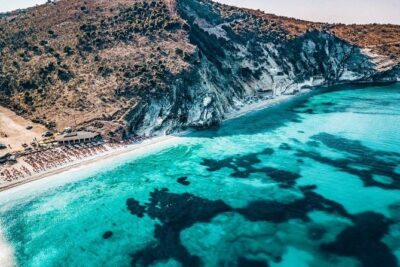
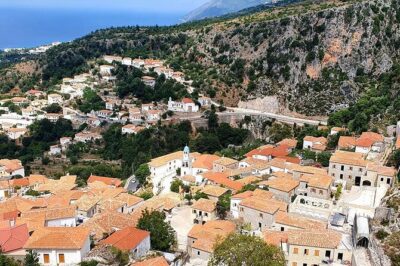
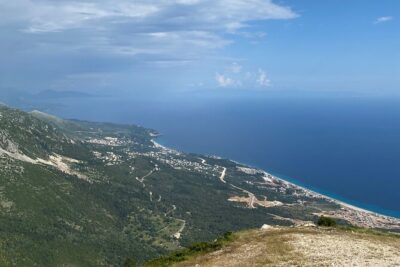
Further down the Riviera: Dhermi, Himara, Qeparo and the rest
Timing: what 2 to 8 hours really means on the ground
The tour is listed as 2 to 8 hours (approx.), with two main blocks: about 2 hours at Porto Palermo and about 4 hours in Qeparo. In practice, your exact day length can vary based on how the group moves and how much time you spend on each site.
Plan for the day to be at least half-day. Porto Palermo is not just a quick stop, because the tunnels and buildings need explanation, and the setting takes time to absorb. Qeparo also deserves time because cobbled alleys and church exteriors are best experienced at walking speed.
Group size matters here. The tour is restricted to your group and has a maximum of 20 travelers. That is a sweet spot for a guided outing: big enough that you will still see other people, small enough that you can hear the guide and keep moving without feeling lost in a crowd.
Pickup is offered, so you might not spend your energy figuring out logistics at the start. But still, treat this as an outdoor day. Wear shoes that handle rough surfaces and uneven steps.
Price value: is $98 worth it?
For $98, you’re paying for more than transportation between two points. You’re buying a guided interpretation of three strong themes:
1) Porto Palermo’s Soviet submarine base history
2) fortress architecture linked to Ali Pasha
3) Qeparo’s traditional village layout and old churches
Also, the admission ticket is free for both stops. That matters for value because it reduces the “surprise costs” feeling that can happen with tours built around attractions.
Compared to an unguided self-drive day, the biggest value is story. Old fortifications and villages can look similar across countries, but a guide helps you read what you are seeing. Here, the tour’s strongest assets are the historical layers tied to the buildings: Soviet use at Porto Palermo, and the French Army architect detail tied to Ali Pasha’s fortress element in Qeparo.
If you like your travel to have a narrative, this fits. If you only want scenery with minimal explanations, you might feel the cost more, because the tour is clearly built around guided learning.
Practical tips before you go
A few things will help you get a smoother day with less stress:
Go prepared for weather. The tour requires good weather. If the forecast looks rough, build in flexibility. A change in date is not a failure. It is part of protecting the experience.
Dress for outdoors and old stone. Fortified sites and village lanes can mean uneven footing. Wear comfortable walking shoes and plan for sun or shade depending on the time of day.
Bring patience for history stops. Porto Palermo’s tunnels and structures are where the story comes alive. That takes time. The same goes for Qeparo, where the best experience is slow wandering through cobbled alleys and churches.
Double-check the meeting point details. The tour starts at Leka Tours & Rent a Car in Saranda, then ends back at the meeting point. If you are booking more than one itinerary in the region, confirm you selected the correct Saranda experience before you show up.
Language choice matters. The tour is offered in English and Italian. If you’re comfortable in one of those, choose the language you want for the history parts, because the meaning will come through more clearly.
Who this tour suits best
This is a strong fit if you:
- like history you can physically see in stone and tunnels
- enjoy learning how multiple powers influenced one region
- want a guided day without managing driving and navigation
- prefer smaller-group pacing (up to 20) over huge tour buses
It is also a good choice if you want variety in a single outing. You get a fortress stop, then a village stop with architecture and churches.
If your goal is purely relaxation on a beach day, this may feel too structured. If your goal is “stand somewhere scenic and move on,” you might prefer a lighter route. But if you enjoy the blend of place and story, you’ll likely find the pacing satisfying.
Should you book this Porto Palermo and Qeparo day tour?
I’d book it if you want an organized way to connect the Albanian Riviera coastline to real historical layers. Porto Palermo’s Soviet submarine base connection is the kind of detail that turns ruins into something you can understand. Qeparo then gives you the human-scale side of the region, with cobbled lanes, old churches, and the Ali Pasha story tied to a French Army architect connection.
I would think twice if you hate weather-driven changes, or if your travel style struggles with walking on old stone and uneven paths. Also, since pickup and meeting point logistics matter, confirm you’re in the right place in Saranda.
If you like tours that teach you how to read a place in an afternoon, this one has the right ingredients.
FAQ
What languages is the tour offered in?
The tour is offered in English and Italian.
Is pickup included?
Pickup is offered.
How long is the experience?
It runs approximately 2 to 8 hours, with around 2 hours at Porto Palermo and about 4 hours at Qeparo.
Do I need to bring an admission ticket?
Admission ticket is listed as free for both stops.
How big is the group?
This experience has a maximum of 20 travelers and is restricted to your group.
What kind of ticket do I get?
You receive a mobile ticket.
What is the cancellation policy?
Free cancellation is available. You can cancel up to 24 hours in advance of the experience for a full refund.
What if the weather is bad?
The tour requires good weather. If it’s canceled due to poor weather, you’ll be offered a different date or a full refund.
Where does the tour start and end?
It starts at Leka Tours & Rent a Car in Saranda and ends back at the same meeting point.
Further Along the Riviera
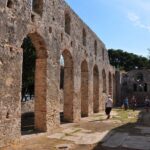
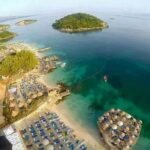
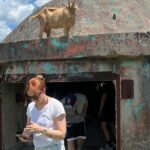
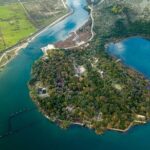
Albanian Castles Worth the Steps
Every Albania Review We Have
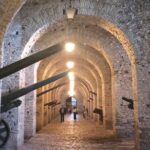
Latest Albania reviews off the desk
- Visit Kroreza Beach by Boat
★ 4.5 · 3 reviews - Daily tour
★ 4.5 · 3 reviews - Sarande: Private transfers from/to Tirana. 4,8 and 20pax groups.
★ 5.0 · 4 reviews - Boat Trip Around the Hidden Gems of Saranda
★ 4.0 · 4 reviews - Full Day Tour from Albanian Riviera/Borsh to Dhermi and Llogara
★ 5.0 · 4 reviews - Riviera Tour Borsh-Qeparo-Himare-Porto Palermo-Vuno-Dhermi
★ 5.0 · 5 reviews
The Albanian Riviera, compared.
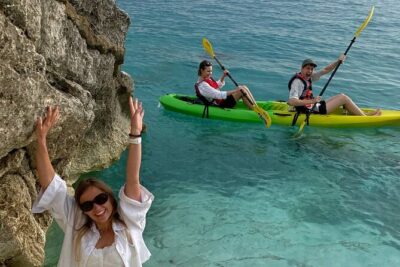 ★ 5.0Kayak Sup Tours Lukova Caves – KrorezaFrom $4249 reviews
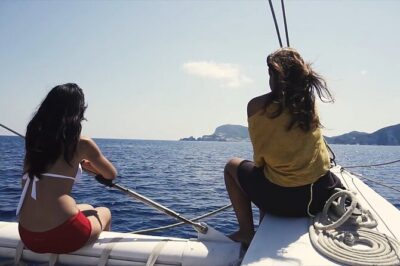 ★ 4.5Saranda Catamaran VIP to Krorez and Kakome Beach with LunchFrom $10641 reviews
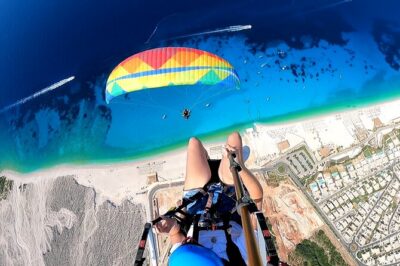 ★ 4.0Tandem paragliding Albania (Llogara)From $14022 reviews
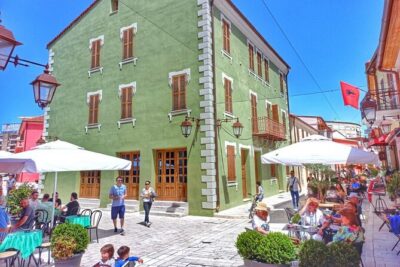 ★ 5.0Albanian Riviera in 3 Days;Semi–Private Tour with Tour Leader&CarFrom $1,21316 reviews
 ★ 4.5Visit Vlore & Himare Beaches includes lunchFrom $21513 reviews
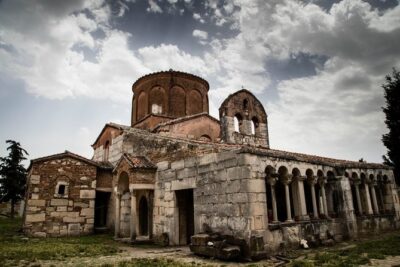 ★ 5.04-Days UNESCO Towns and Albanian Riviera TourFrom $80610 reviews
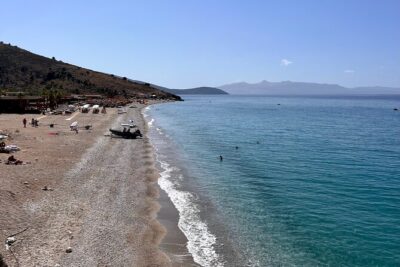 ★ 5.0Private Tour from Tirana, Gjirokastër , Saranda and South RivieraFrom $15610 reviews
 ★ 5.02 Day Tour of the Riviera, Gjirokastra UNESCO city and Blue Eye,From $39110 reviews
Browse the lists this tour appears in