
REVIEW · TOURS
Small Group Tour; The Balkans & Central Europe – Tirana to Vienna
This route strings together Europe’s forgotten corners. I love the on-the-ground storytelling, like the way Kruja Castle’s hilltop position shaped local escape routes. I also love the contrast in Sarajevo, where Ottoman and Austria-Hungarian quarters sit a few steps away from bullet-scarred reminders.
You’ll get a steady rhythm of guided time plus breathing room. I like that this is small-group travel, capped at 10 travelers, and that you’re not left to scramble for logistics. Most of the big sights come with included entry, and breakfast is handled every morning for your 3-star hotel stays.
One thing to think about: this is a lot of ground to cover, with frequent long drives and border days. If you dislike sitting in a van for hours, plan for breaks, snacks, and a flexible attitude.
In This Review
- Key highlights in plain language
- Why Tirana to Vienna feels smarter than picking one country
- Day 1: Kruja bazaar and the hilltop castle story
- Day 1 continues: Prizren, mosque color, and the fortress panorama
- Day 2: Gjakova’s bazaar, Decan’s UNESCO frescoes, and Rahovec wines
- Day 3: slow-food farm time near Mrizi i Zanave, then Rozafa views in Shkodra
- Day 4: Montenegro’s coast stops, Budva old town, and Kotor UNESCO maze streets
- Day 5: Mostar’s Old Bridge, the bazaar lanes, and Blagaj spring water
- Day 6: Sarajevo walk with ruins, Latin Bridge, and the WWI origin context
- Day 7: Drina River stop in Zvornik, then Belgrade Fortress and Kalemegdan
- Day 8 and 9: Sremski Karlovci and Novi Sad on the Austro-Hungarian and Ottoman border
- Day 10: Subotica architecture and a first taste of Budapest’s grand scale
- Day 11: Budapest highlights, St. Stephen’s Basilica, and Buda Castle UNESCO
- Day 12 and 13: Győr, Baross Gábor street, Bratislava, and the Danube view climb
- Day 14: Vienna hotel drop-off, and how to use your last day well
- Price and logistics: what $4,876.33 is buying you
- Who should book this small-group tour, and who should skip it
- Should you book this Tirana to Vienna tour?
- FAQ
- Where does the tour start and end?
- How long is the tour?
- What is the group size?
- What time does the tour begin each day?
- Are hotel stays included?
- Is transportation included?
- Are attraction entry tickets included?
- Are lunches and dinners included?
- Do I need my own travel or health insurance?
- Is the tour refundable if plans change?
Key highlights in plain language
- Small-group cap of 10 means quieter questions and less crowd pressure at sights
- 3-star hotels with breakfast keeps mornings simple and cost predictable
- Major faith and fortress stops (Sinan Pasha Mosque, Prizren Fortress, Belgrade Fortress) give clear “why this place matters” context
- Multiple UNESCO moments across Montenegro, Bosnia, and beyond, without full-day theme-park intensity
- Danube cities linked together makes Budapest, Novi Sad, and Subotica feel like a single arc
- Guides who know how to pace the day, with past departures praised for tour leaders like Sokol and Mandi
Still weighing it up? These are the Albanian trips people book most often after reading this one.
- Hike Gamti Mountain with Bovilla lake view & canyon- From Tirana★ 5.0 · 1,280 reviews
- Berat city UNESCO tour, the Castle & Belshi lake- From Tirana★ 5.0 · 804 reviews
- Walking Tour of Tirana★ 5.0 · 646 reviews
- Kruja castle, the old Bazaar & Sarisalltik- Departure from Tirana★ 5.0 · 592 reviews
- Albanian Night Show: Traditional Music, Dance & Dinner in Tirana★ 5.0 · 431 reviews
Why Tirana to Vienna feels smarter than picking one country
Most Balkans trips force you to choose between “history” or “scenery.” This one tries to do both, and it does it by stitching together cities that share layers of empires. You’ll see Ottoman influence, Austro-Hungarian architecture, and local Balkan traditions side by side, often in the same day.
The practical win is that you are not driving or planning every border crossing. You’re in a small group with private transportation and a professional tour leader, so your time goes to walking, looking, and asking good questions.
And yes, the route ends in Vienna, so you get a natural finish point in a city that’s easy to keep enjoying after the tour ends.
Day 1: Kruja bazaar and the hilltop castle story
Your first day starts with Kruja, a mountain-set town tied to Albanian resistance against Ottoman expansion in the 15th century. You climb into the feel of the place fast, because Kruja is literally built on dramatic terrain, around Sarisalltik Mountain.
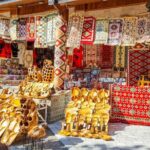
Kruja’s Medieval Old Bazaar is where you’ll get your bearings. The narrow lanes and wooden houses give you that “the past is still in the street layout” feeling. It’s also a solid place to shop for souvenirs, from carpets and jewelry to handmade items, with free time to browse without a hard sell.
Then comes Kruja Castle. The best part is not just the views, it’s the guided historical detail about hidden paths locals used to slip out during siege periods. That kind of story helps the stone walls make sense, instead of feeling like a museum set.
Drawback to keep in mind: castles on rocky hills mean uneven ground and stairs. Comfortable shoes are non-negotiable.
Day 1 continues: Prizren, mosque color, and the fortress panorama
After crossing toward Kosovo, Prizren lands in your lap like a living postcard. It’s often described as a cultural capital, and the setting supports that claim: the river runs through the old town, with bridges feeding a layered street maze.
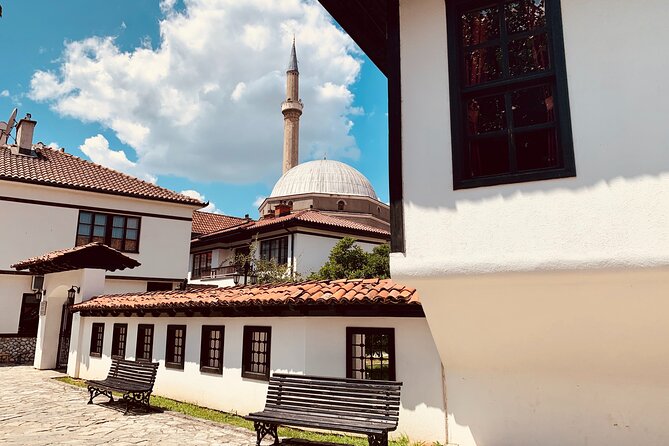
I love the way Prizren balances religious tolerance with old-world architecture and everyday life. You’ll spend time around the Sinan Pasha Mosque, known for its patterned arabesques and strong color presence. It’s the kind of stop that makes you slow down even if you normally rush.
Then you go up to Prizren Fortress for a hilltop overview. From there, you understand how the town’s layout works, and why the city has long mattered strategically. You’ll also get some free afternoon time, which is a rare gift on a busy multi-country day.
Bonus seasonal note: if you travel in August, Prizren’s medieval lanes can connect to Dokufest, a well-known short film festival. Even if you’re not there then, it helps to know the city has a lively calendar beyond tourist season.
Day 2: Gjakova’s bazaar, Decan’s UNESCO frescoes, and Rahovec wines
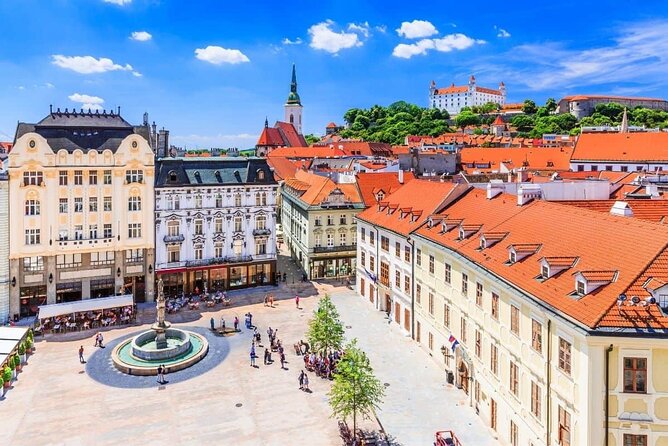
Day 2 turns the volume up on cultural variety. In Gjakova, you’ll see the oldest and largest bazaar of Kosovo. Even with the scars of wars and destruction, the bazaar was rebuilt to look like its earlier form, so you get resilience plus craft in the same place.
Next is Decan Monastery, where the visit focuses on art and living traditions. The monastery’s frescoes are UNESCO listed since 2004, and you can also see that Orthodox monks still inhabit and maintain the place. That combination, art history plus current everyday monastic life, makes the stop feel more real than a strictly static monument.
Then you swing toward Rahovec, the viticulture area tied to Prizren. The land here is described as supporting grape cultivation since Illyrian times, and the vineyards sit in rolling hills at a mid-altitude range. If you’re a wine person, this is where you can understand why the region has an annual festival in September.
A practical note: this day is about absorbing details fast, because you’re moving through very different places. Pace yourself with water and snacks, especially if your group tends to walk briskly.
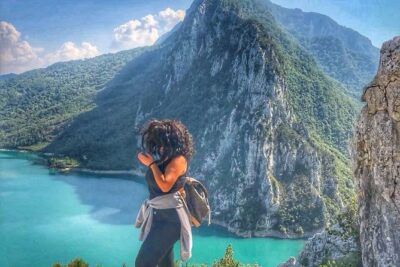
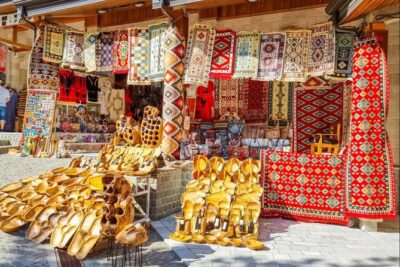
Day 3: slow-food farm time near Mrizi i Zanave, then Rozafa views in Shkodra
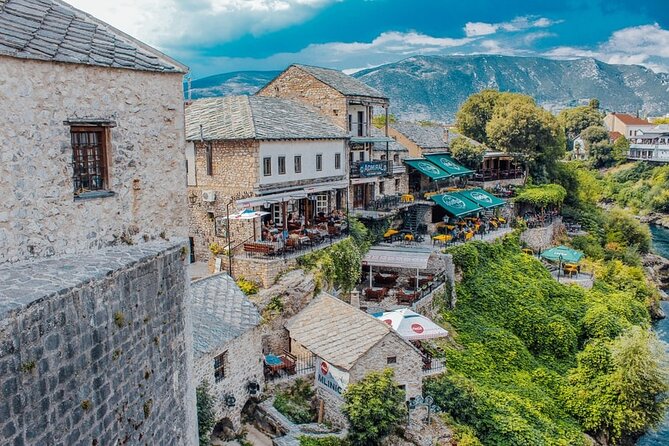
Day 3 has a smart reset built in. The stop at Mrizi i Zanave is framed as slow-food agro-tourism, with a working farm tour and time to learn how the business supports jobs in the surrounding area. You’ll also get a look at how the farm collects, preserves, and sells regional bio produce, including local cheeses.
What I like most here is that it’s not just “look at animals” tourism. It’s a story about people, land, and older buildings repurposed for modern food production, so you’re tasting a place through its economic reality.
From there, you drive to Shkodra. The city is tied to a long habitation timeline, and you’ll visit Rozafa Castle with views over the lake and the river meeting at the Adriatic. The tour also mentions Venetian influence in the architecture, which fits nicely since this whole region has traded styles across centuries.
If you’re there around February, the Shkodra carnival festival connects to the tradition that many Venetian masks were handmade there. Even if your trip timing is different, it’s a useful cultural thread to keep in your head while you walk.
Day 4: Montenegro’s coast stops, Budva old town, and Kotor UNESCO maze streets
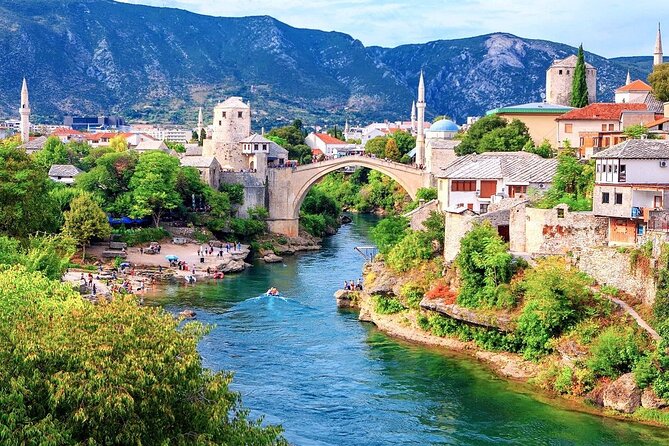
Montenegro’s day starts with a photo-and-view stop near Sveti Stefan, historically a fishing town on an island. The island itself can’t be visited anymore because it became an exclusive residential resort, so adjust expectations: this is for coast views and photos, not island wandering.
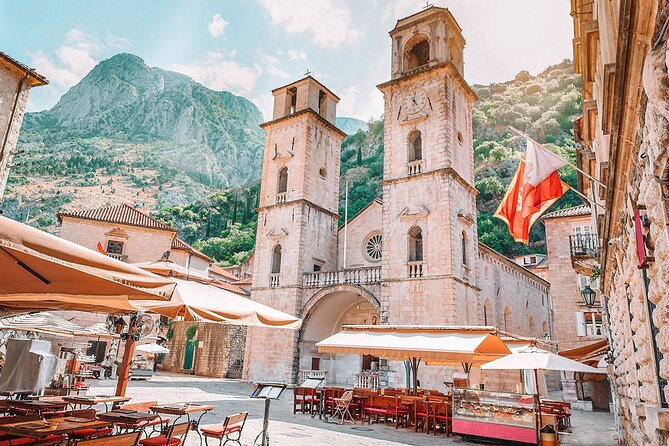
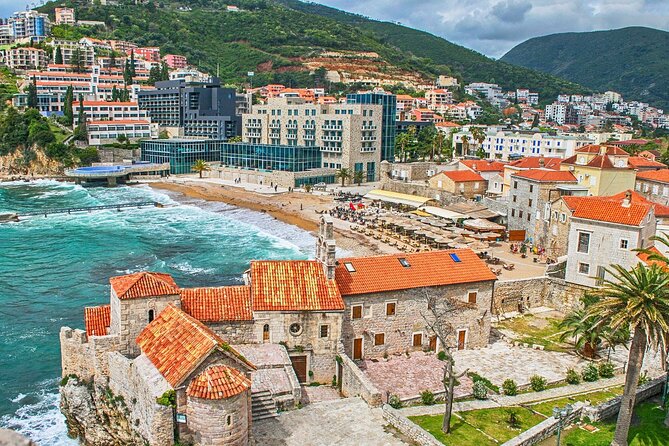
Then you head to Budva, divided into New Budva and Old Budva. The old quarter is where you’ll focus, including medieval old town sights and churches like St. Ivan and St. Mary. I like that the tour frames the split clearly, because it helps you avoid feeling like you’re comparing two unrelated cities.
Finally, you arrive in Kotor, UNESCO listed and famously easy to get oriented in the wrong way, because the streets are tight and twisty. That’s part of the design story, too. The visit covers Saint Luke’s church, and you’ll also enjoy the feel of plaques and dates that help you read the town like a timeline.
Drawback to plan for: old towns mean cobblestones. If your feet get grumpy easily, bring good insoles or blister care.
Day 5: Mostar’s Old Bridge, the bazaar lanes, and Blagaj spring water
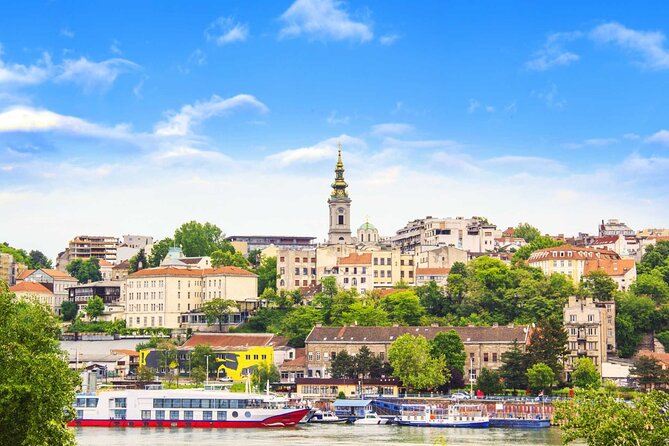
Crossing into Bosnia and Herzegovina brings you straight to Mostar. The headline is the Old Bridge, Stari Most, part of UNESCO heritage and built in typical Islamic architectural style in the 16th century. Seeing it with the water below gives you instant context for why this spot mattered for trade and movement.
Then you wander the Old City area, including the Old Bazaar with colorful lanes and a lively mix of old and new. The tour also points out stones with Don’t Forget markings around town, which adds a grounded layer to what could otherwise be pure sightseeing.
The second stop is Blagaj tekija, just outside Mostar, where the monastery sits by blue waters at the foot of a cliff. You also get the story of Blagaj as an Ottoman medieval town and the spring of the Buna river. This is one of those stops where the setting does some of the storytelling for you.
Practical consideration: you’ll likely do more walking here than you expect, because the best views need short, steady climbs and turns.
Day 6: Sarajevo walk with ruins, Latin Bridge, and the WWI origin context
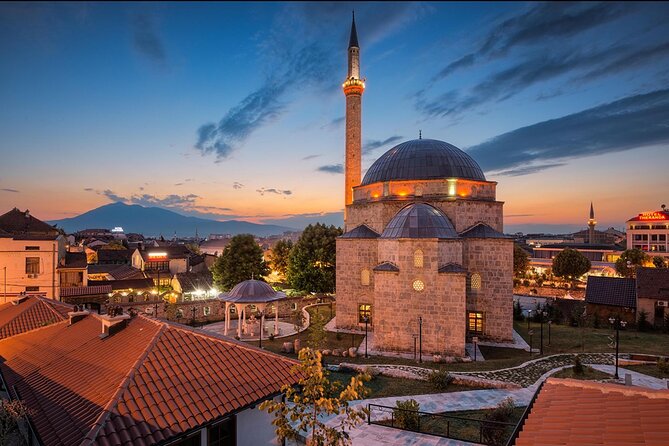
Sarajevo is emotionally heavy and historically complex, and this tour handles it by focusing on visible traces and layered quarters. After breakfast, you drive from Mostar and spend time walking over uneven terrain while visiting ruins tied to the Yugoslav War era. You’ll see reminders in bullet holes and cannon marks around town.
The tour also covers origins tied to medieval Bosnian kingdoms and highlights Ottoman and Austria-Hungarian parts of Sarajevo, described as markets, bazaars, mosques, churches, and synagogues. That “European Jerusalem” framing is meant to help you understand Sarajevo as a meeting point, not a single-note city.
Then comes Latin Bridge, tied to the story of how WWI was triggered. The bridge name connects to the Catholic quarter connection, and learning that makes the location feel more precise than just a landmark photo.
You’ll also get free time for Sarajevo’s food culture, since the tour notes local meat dishes and desserts. If you like tasting your way through history, this is a good moment to slow down and eat without rushing.
Day 7: Drina River stop in Zvornik, then Belgrade Fortress and Kalemegdan
Belgrade is next, but you break the ride with Zvornik on the banks of the Drina River. This town is framed as a mix of history, culture, and natural beauty, with time to have lunch, try local dishes, and simply walk the streets.
Then you continue to Belgrade, where the focus is on the fortress and park views. You’ll visit Belgrade Fortress and Kalemegdan Park, built at the confluence of the Sava and Danube rivers. The view from the fortress is described as breathtaking, and you’ll also see Pobednik monument, dated to 1913, in the Upper Town area.
After that, you walk through Knez Mihailova, a local social center historically, and reach Republic Square. It’s a good transition from “big view” to “street life.”
Practical note: fortress walks can be tiring in the heat. Go slower than your instincts.
Day 8 and 9: Sremski Karlovci and Novi Sad on the Austro-Hungarian and Ottoman border
Day 8 centers on Sremski Karlovci, a Baroque-feeling “museum town” with wine cellars and a long 18th-century Serbian cultural identity. You’ll see the Four Lions fountain in the center, tied to a legend that if you drink there, you’ll return and get married in Karlovci. Legends aside, the town’s architecture helps you feel how empires shaped everyday urban design.
Then you move to Novi Sad on Day 9 for a longer city tour. The tour frames the town as a cultural capital of northern Serbia and explains how Austro-Hungarian and Ottoman influences mix. You’ll notice that in architecture and street feel.
A key stop is Petrovaradin Fortress, also called the Gibraltar on the Danube. The name alone tells you it’s about control and defense, but you’ll get your bearings as you walk the pedestrian routes and see the Danube-adjacent vibe.
The tour gives time to explore on your own after the guided segment, which is smart here. Novi Sad is the kind of city where a wrong turn can still lead to something worth seeing.
Day 10: Subotica architecture and a first taste of Budapest’s grand scale
Day 10 shifts to Subotica, described as known for multicultural spirit and outstanding Austro-Hungarian-era architecture. What I appreciate in the tour approach is that it doesn’t center only on a cathedral or church. Instead, you focus on the City Hall area, surrounded by park, fountains, and a huge square.
After your Subotica walk, you cross into Budapest. Even on a short connection day, the point is to set you up for the fuller Budapest visit the next day.
Subotica is also a nice break from the largest-city feel. It’s easier to talk to your guide, take photos without fighting crowds, and actually look at the building details.
Day 11: Budapest highlights, St. Stephen’s Basilica, and Buda Castle UNESCO
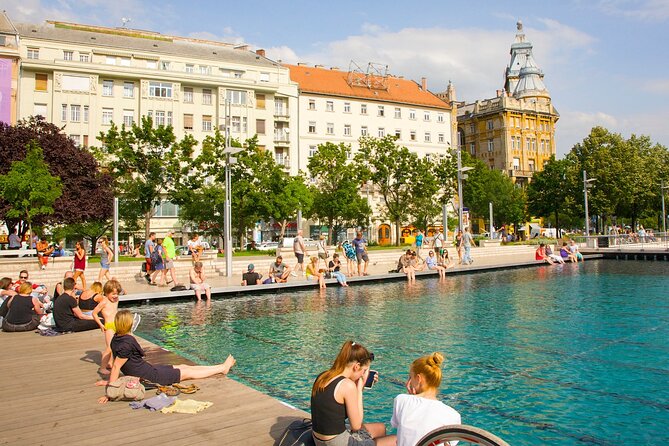
Budapest earns its nickname of the Queen of the Danube for a reason. The tour guides you past Saint Stephen’s Basilica, then through key grand spaces like the Opera area and Parliament building, plus Heroes’ Square and Fisherman’s Bastion for sweeping city views.
What makes this day work is that you get both architecture and orientation. You’re shown what’s on the Pest side and how the river divides the city.
Then you visit Buda Castle, UNESCO listed. You’ll cross over bridges and see the Baroque-style Street as part of the experience. Buda Castle gives you a historic core, and the UNESCO label here is not just paperwork, it explains why Budapest’s skyline means more than postcard photos.
And yes, there’s time at night too. The tour gives you free evening time to explore, which I consider one of the best ways to enjoy Budapest because the city looks different after dark.
Day 12 and 13: Győr, Baross Gábor street, Bratislava, and the Danube view climb
Day 12 turns to Győr, a “City of Rivers” stop with baroque architecture and Hungarian food. You’ll walk historic streets and visit Győr Town Hall, notable for a 59-meter tower with a green top, and you’ll also see the Cathedral of The Virgin Mary, Roman style from the 11th century.
There’s a synagogue visit too, Győr Synagogue, with a colossal grey dome and architecture tied to inspirations for other synagogues in Central Europe. This adds a thoughtful cultural layer that many quick tours skip.
After that, you walk Baross Gábor Way, a pedestrian-only street packed with cafes and restaurants. The tour even calls out blueberry beer, which is a fun “try something local” prompt.
Then you reach Bratislava, where Day 13 handles the medieval old town and castles. You visit the Old Town Hall area for a sense of the city’s older roots, then stop at Michael’s Gate, the only medieval gate preserved from fortifications.
Next is Bratislava Castle, built in the 9th century, perched above the Danube. The view is described as amazing and worth a picture, and after that you return to the city center for coffee culture time. If you care about comfort-food travel, Bratislava’s cafe vibe is an easy win at the end of a long trip.
Day 14: Vienna hotel drop-off, and how to use your last day well
Your final day ends with a Vienna drop-off at your hotel. The tour doesn’t stretch into a full guided Vienna day, which actually helps you keep Vienna flexible.
If you arrive with energy, Vienna is ideal for a low-stress wander, good pastry, and museums you choose on your own terms. If you’re tired, Vienna still rewards you with easy strolling and clear city areas to navigate.
Either way, the value of finishing in Vienna is simple: it’s a transport-friendly, high-comfort landing spot after a multi-country journey.
Price and logistics: what $4,876.33 is buying you
This price is high compared with some “budget Balkan bus tours,” but it looks more reasonable when you line up what’s included.
You’re paying for:
- 3-star hotel accommodation for all overnights plus breakfast for 14 mornings
- Private transportation and a professional tour leader
- Entry tickets for the sites that are part of the plan
- Hotel pickup in Tirana and drop-off in Vienna
- Tourist and road costs, plus petrol, so you are not nickel-and-dimed on the road
You’re also traveling with a maximum of 10 people, which is a real quality lever. In practical terms, it usually means easier listening on moving days, quicker clarifications, and less time waiting around at each stop.
Where you need to be mentally prepared: lunches, dinners, and drinks are not included. So if you eat in tourist areas a lot, your total trip cost can climb quickly. You’ll want a simple plan for meals, even if it’s as basic as buying lunch close to the guided stops.
Who should book this small-group tour, and who should skip it
This tour fits best if you want a structured route that connects countries with clear historical themes. You’ll like it most if you care about castles, old towns, mosques, church and synagogue history, and the way empires left physical marks on cities.
It’s also a good pick if you prefer guided time but still want free moments in places like Prizren, Mostar, Novi Sad, and Budapest evenings.
Skip it, or at least think hard, if you want slow travel with long unstructured days. This route has many stops and a lot of driving, so you won’t get the “one city per week” rhythm.
Also consider comfort if you have mobility limits. Old towns and fortress areas tend to involve uneven ground and stairs, even when guides do their best to keep things manageable.
Should you book this Tirana to Vienna tour?
I’d recommend it if you want one trip that covers a huge slice of the Balkans and Central Europe with a high concentration of meaningful sights, without you juggling transport and ticket chaos.
The strongest reasons to book:
- The route keeps connecting the same big themes, Ottoman and Austro-Hungarian traces, plus fortress and river city life
- You get guided entry into major sites, with hotel and breakfast support to stabilize daily costs
- Small group size helps the experience feel personal, and prior departures highlight guides like Sokol and Mandi for making the day flow well
The reason to hesitate:
- The pace is built on moving often. If you get cranky from long drives, you may feel it by midweek.
If you want variety with structure, this is a solid value play despite the sticker price.
FAQ
Where does the tour start and end?
It starts in Tirana, Albania, with hotel pickup, and it ends in Vienna, Austria, with hotel drop-off.
How long is the tour?
The duration is listed as approximately 14 days.
What is the group size?
The tour has a maximum of 10 travelers.
What time does the tour begin each day?
The start time is 9:00 am.
Are hotel stays included?
Yes. Accommodation for all overnights is included in 3-star hotels, with breakfast included.
Is transportation included?
Yes. Private transportation is included.
Are attraction entry tickets included?
Yes. Entry tickets for the sites that will be visited are included.
Are lunches and dinners included?
No. Lunches, dinners, drinks, and snacks are not included.
Do I need my own travel or health insurance?
Yes. All participants are responsible for having their own health and travel insurance.
Is the tour refundable if plans change?
The experience is non-refundable and cannot be changed for any reason.
More Albanian Tours, Rated
Every Albania Review We Have
Latest Albania reviews off the desk
- UNESCO heritage in Albania – 4 days
★ 5.0 · 3 reviews - Transfers Tirana Airport – Sarande – Ksamil – Airport Tirana
★ 4.5 · 3 reviews - Private Transfers from Tirana International Airport to Sarandë
★ 4.5 · 3 reviews - Tirana’s Communist Past: A Tasting Tour with Traditional Lunch
★ 5.0 · 3 reviews - Tirana ⇔ Ohrid, North Macedonia
★ 5.0 · 3 reviews - Tirana and Kruja in a Day Trip
★ 5.0 · 3 reviews
Tours, compared.
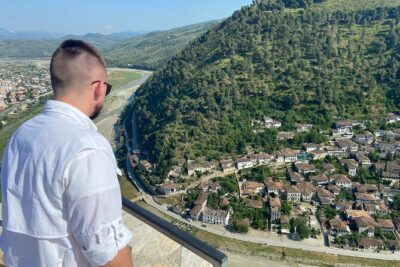 ★ 5.0Berat city UNESCO tour, the Castle & Belshi lake- From TiranaFrom $12804 reviews
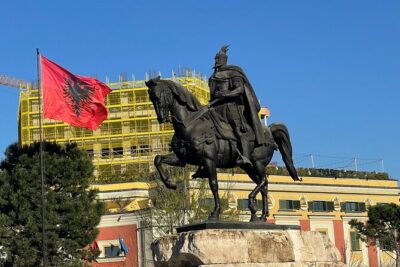 ★ 5.0Walking Tour of TiranaFrom $18646 reviews
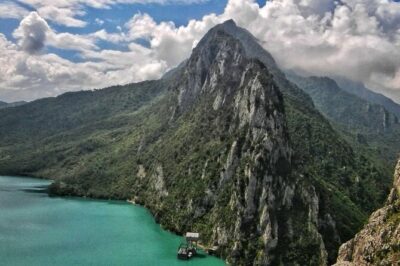 ★ 5.0From Tirana- Hiking Tour to Bovilla Lake & Gamti MountainFrom $12358 reviews
 ★ 4.5Berat-Durres and Belsh Lake, day tour from TiranaFrom $22274 reviews
 ★ 4.5Berat Tour Osumi Canyons Exploration Lunch TransferFrom $47212 reviews
 ★ 5.0Local food experience & walking tour of TiranaFrom $60192 reviews
 ★ 5.0Osumi Canyons and Bogova Waterfall from Berat – Tour by 1001 Albanian AdventuresFrom $72177 reviews
 ★ 5.0Tour a Piedi di TiranaFrom $20174 reviews