
REVIEW · UNESCO HERITAGE TOURS
Small Group Tour; Pearls of Albania in 8 Days (3 UNESCO Sites)
Eight days in Albania, with the hard parts handled. This small-group route connects northern Shkodra and Theth with UNESCO Berat and Gjirokastra, then down to the Blue Eye, Ksamil, Butrint, and finally Tirana. I really like that hotel pickup and drop-off in Tirana is included, so you start the trip without taxi math or schedule stress.
I also like the feel of a max 10 traveler group, which keeps the days from turning into a stampede. The trip runs with a professional guide throughout, and one guide I saw praised by name was Eduart, for making connections between places you might otherwise treat as separate stops. One thing to consider is that it is a packed route with lots of driving and walking, and lunch and dinner are on your own, so you’ll want a flexible budget and a good rhythm for eating on the go.
In This Review
- Key highlights worth planning around
- How this 8-day route feels easier than doing it alone
- Price and logistics, what you truly pay for
- Day 1: Shkodra city walls, Rozafa Castle views, and Venetian mask lore
- Day 2: Theth National Park, lavender season timing, and Qafa e Thores views
- Day 3: Berat, the UNESCO town of 1001 windows, and Onufri’s red paint
- Day 4: Gjirokaster, the Stone City, fortress houses, and Skenduli House
- Day 5: Blue Eye cold water, Ksamil beach time, and UNESCO Butrint ruins
- Day 6: Himare promenade time and Dhermi beach breaks on the Riviera
- Day 7: Vlora’s Flag Square, Muradie Mosque, Durres ice cream, then back to Tirana
- Day 8: Tirana walking loop, Skanderbeg Square, Bunk’Art 2, and Blloku food energy
- What I’d pack and how I’d pace yourself on this route
- Who this tour is best for, and who should look elsewhere
- Should you book Pearls of Albania in 8 Days?
- FAQ
- FAQ
- How long is the Pearls of Albania tour?
- What group size is this tour?
- Is pickup in Tirana included?
- Are entry tickets included?
- What kind of accommodation is included?
- Is breakfast included?
- Is lunch or dinner included?
- Can I book a single room?
- Is this tour refundable if I cancel?
Key highlights worth planning around
Hotel pickup and drop-off in Tirana
You avoid the usual first-day scramble, and you end where you started.
Private transportation for the whole route
It helps keep timing tight on castles, old towns, and the UNESCO sites.
UNESCO focus plus iconic extras
You get 3 UNESCO sites plus signature stops like the Blue Eye and the Albanian Riviera beaches.
Included entry tickets where you actually stop
That means less waiting, less last-minute wallet surprises.
Bed-and-breakfast stays with praised staff and cleanliness
Expect simple comfort, not luxury, but usually with a warm welcome.
Plenty of viewpoints and waterfront breaks
You’ll get time to slow down at places like Ksamil, Himare, and Vlora’s Lungomare.
The rest of the Albanian UNESCO circuit, reviewed
- Berat city UNESCO tour, the Castle & Belshi lake- From Tirana★ 5.0 · 804 reviews
- From Tirana: Berat UNESCO & Belshi Lake Full-Day Tour★ 5.0 · 118 reviews
- Gjirokastra UNESCO & Ksamil Beach – From Tirana/Durres/Golem★ 5.0 · 117 reviews
- Berat UNESCO Small-Group Day Tour from Tirana★ 5.0 · 31 reviews
- Small Group Tour; Pearls of Albania in 8 Days (3 UNESCO Sites)★ 5.0 · 29 reviews
How this 8-day route feels easier than doing it alone
This tour is built for people who want “the highlights” without the constant planning. The itinerary is structured like a road trip, but the stops are chosen so you are not just driving through Albania, you are getting historical context and the best photo angles along the way.
The big practical win is that you are traveling in a private vehicle with a guide most days. That matters in Albania, where distances can feel long and public transport can be unpredictable for multi-stop schedules.
And because it is a small group (maximum 10), your guide can actually pace the day. You’re not stuck waiting while everyone argues about meeting points in a busy square.
Price and logistics, what you truly pay for
This costs $2,278.09 per person for an 8-day, small-group tour. What makes the price easier to judge is what it includes: bed-and-breakfast accommodation for all overnights, breakfast for 7 days, private transportation, a professional tour leader, and hotel pickup plus drop-off in Tirana.
Entry tickets are included for the scheduled sites, and tourist taxes, road taxes, and petrol are also covered. That bundle is a real value advantage if you’d otherwise be paying separately for guides, taxis, and individual admissions.
The parts you need to plan for are also clear. Lunches, dinners, drinks, and snacks are not included, and you’ll want travel health insurance since it is not provided.
Also note the accommodation is 3 stars hotel for standard pricing, with a single room option available for an extra 45 euros per night per person.
Day 1: Shkodra city walls, Rozafa Castle views, and Venetian mask lore
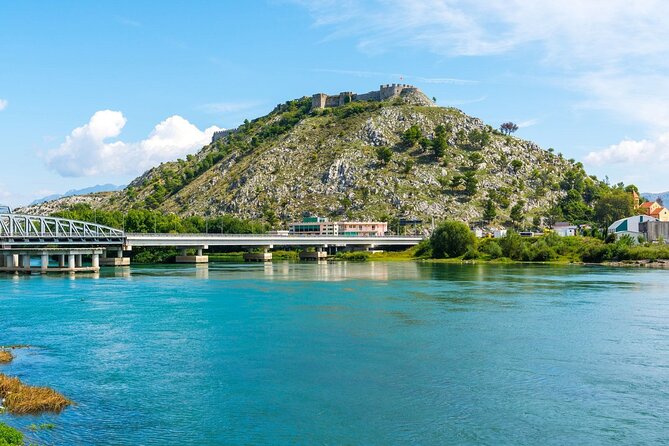
Shkodra is a great first stop because it immediately shows Albania’s mix of cultures and terrain. The city sits in north-western Albania near the big lake, and the tour leans into the sense of age, dating the Shkodra castle wall structure back to the 1st millennium BCE.
You start with the feeling that Shkodra is built on layers. You hear how Livy cited Shkodra in relation to an Illyrian king named Gent, and you get the sense that this wasn’t just a random town on a map.
Then comes Rozafa Castle, which is one of those places where the view does half the storytelling. From the height, you can take in the lake and the three rivers flowing together toward the Adriatic, and it helps you understand why fortifications were so necessary here.
In the afternoon you also get a second look at Shkodra’s old-center vibe. The guide may mention how Venetian influence shows up in local architecture and even how Shkodra produces handmade Venetian carnival masks. If you are traveling in February, you might see carnival festival energy, and it gives the city a livelier edge.
Day 2: Theth National Park, lavender season timing, and Qafa e Thores views
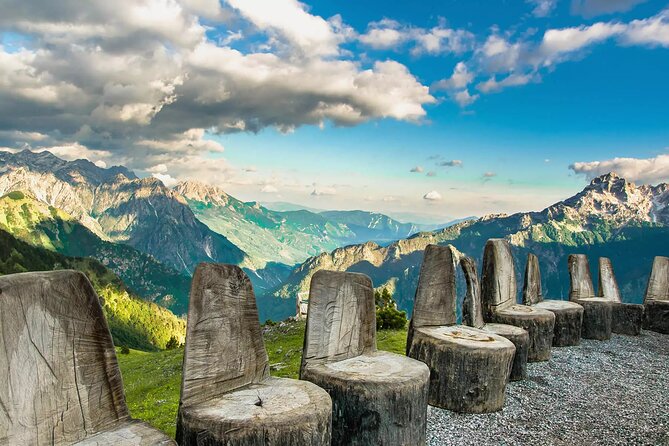
Day 2 shifts from city energy to mountain air and slower roads. As you turn toward Theth, the area becomes more rural with fewer cars and more room to appreciate the Albanian Alps feel.
The tour highlights medicinal herbs in the region, and if you travel around May to June, you might see lavender fields that create a Provence-like mood. Even if lavender is not in season, the farmland and slopes still make it feel distinct from the coast.
On the way up, you pass Qafa e Thores, a steep pass around 1,700 meters. The tour frames it as one of the best picture spots, and that checks out because you’re high enough to see how the valleys open up around Theth.
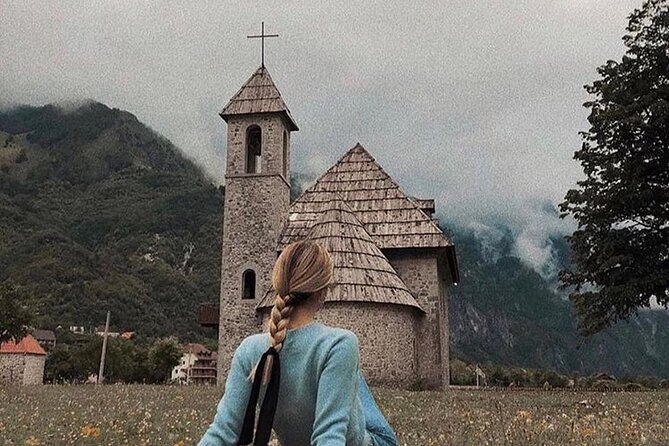
Once you arrive, you visit the Old Church and the Lock in Tower, which the tour describes as a symbol of Theth. This is where the “learning” side of the trip gets emotional, because the buildings look like they were made for daily life, not just tourism photos.
Longer loops through Albania that we have driven
Day 3: Berat, the UNESCO town of 1001 windows, and Onufri’s red paint
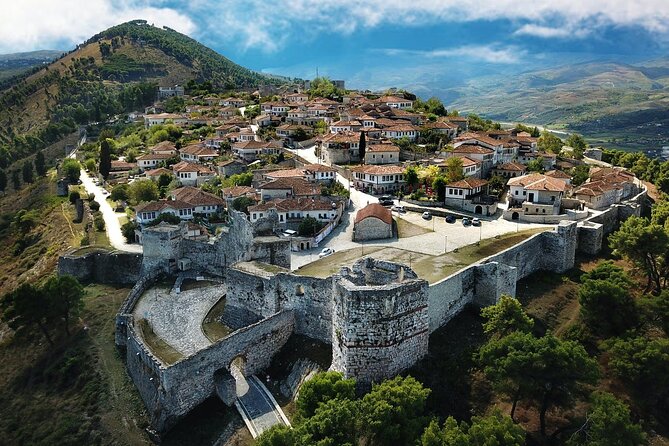
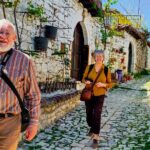
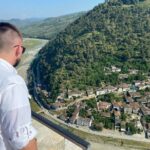
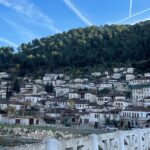
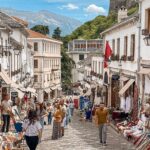
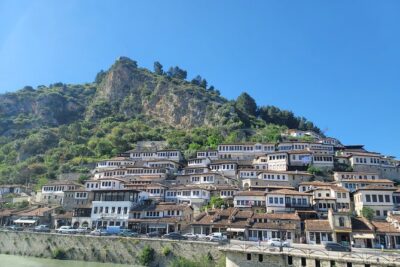
Berat is one of Albania’s must-do towns, and this itinerary makes it easy to appreciate why it earned UNESCO status. Berat is known as the town of 1001 windows, and walking the narrow stone streets gives you those stacked-window views that look almost impossible until you see them in person.
The guide also helps you connect the look of the town to its history. Berat began as an Illyrian settlement in the 6th to 5th century BCE, later became a castle city known as Antipatrea, and today people still live inside the castle walls.
After the initial walk, you go into Berat Castle, where you can see the mix of medieval structures, churches, mosques, museums, and even some remains connected to the communist era. That blend is part of Berat’s power, because it feels like a living place with memory layered on top.
You also visit the National Iconographic Museum Onufri. The tour focuses on Onufri, the famous painter of churches across the Balkans, especially known for a specific reddish color that is hard to imitate. Even if you are not a museum person, this stop helps you understand why the artwork style matters in Orthodox and regional traditions.
The day ends with Gorica Bridge and a neighborhood visit, which is a nice change from the castle and museums. You get a more local-feeling pace before the next big jump south.
Day 4: Gjirokaster, the Stone City, fortress houses, and Skenduli House
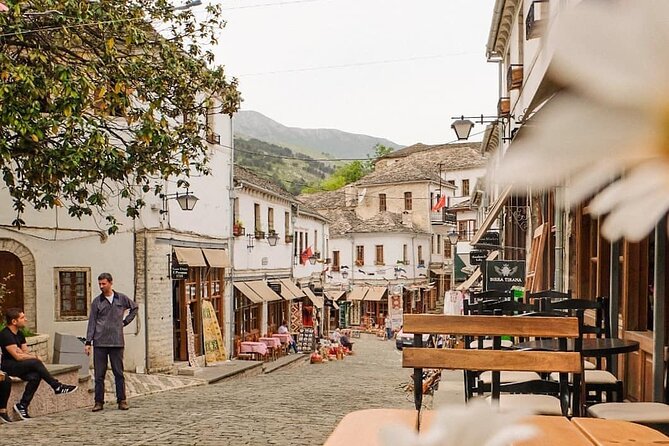
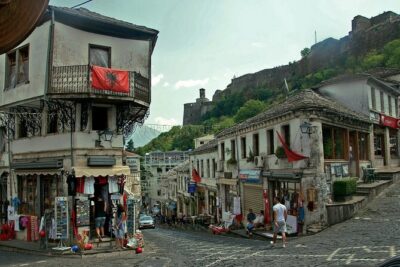
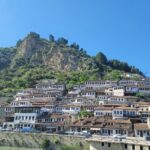
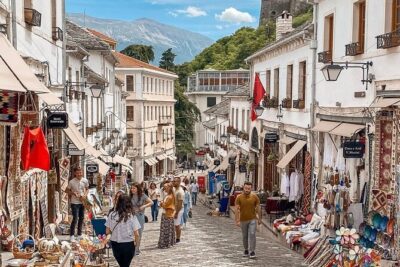
Gjirokastra is where Albania starts feeling like a movie set. The town is part of UNESCO, and the tour emphasizes how it looks like a fortified city where houses are built like mini fortresses.
The castle of Gjirokastra is described as dating back to the 4th century AD, and it sets the tone for the whole day. From there, you can see why the hillside layout helped defense and why the town became so tightly constructed.
A big highlight is the Gjirokastra Castle visit itself. The guide explains how every five years the town becomes a capital for Albanian folklore and traditional music, with ensembles performing in the stone-city setting. That detail matters because it frames the town’s buildings as part of living culture, not only old stone.
Then you walk through the bazaar area before entering the castle. The focus here is on handmade crafts from local artisans, and it gives you time to browse without rushing. If you like seeing how products are made, this is a solid place to spend a little extra time.
To finish the old-town look, you visit Skenduli House, described as one of the best-preserved homes with original authenticity. It is a good stop when you want to understand daily life and not just view exterior walls.
Day 5: Blue Eye cold water, Ksamil beach time, and UNESCO Butrint ruins
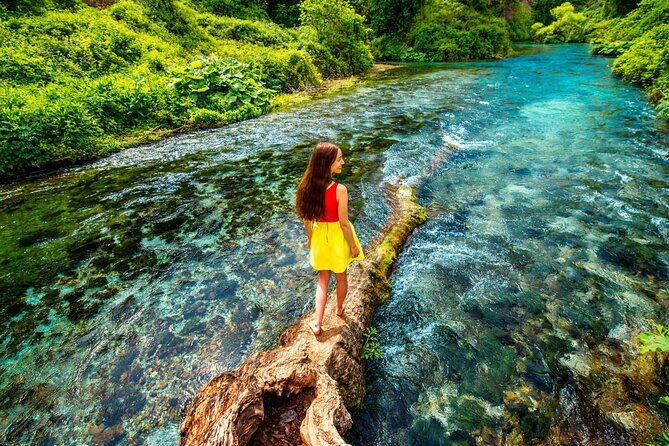
Day 5 is the day your senses catch up with the itinerary. You start with the Blue Eye, a spring source surrounded by evergreen trees, fed from Mali i Gjere.
The tour notes that the water comes from a depth that hasn’t been fully discovered, and divers have gone down to around 50 meters. The water stays very cold, with temperatures not going above 10 degrees, and seeing it in person makes the “fairy tale” description feel earned. The crystal-clear blue is the star here, and you get a visit time that’s short but meaningful.
From there you drive toward Ksamil, which the tour describes as the pearl of the Albanian Riviera. Ksamil’s best appeal is the contrast: white sandy beaches, clear water, and the view of four islands from the shoreline. Even without an all-day beach plan, the stop gives you that vacation feeling, and it helps break up the historical intensity from earlier days.
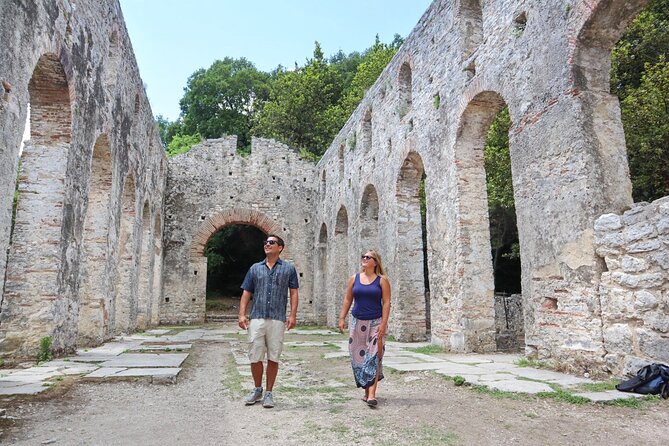
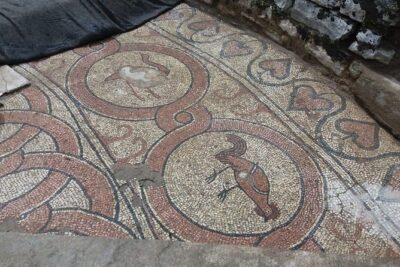
Next is Butrint National Park, another UNESCO site and the centerpiece for archaeological lovers. The tour calls it Albania’s most important archaeological site, and it also notes it was the first Albanian site added to UNESCO’s list.
Butrint is worth it because ruins are only half the story. The second half is the setting, where archaeology and nature hold hands. You walk among remnants while surrounded by an environment that feels calmer and more spacious than the towns.
Day 6: Himare promenade time and Dhermi beach breaks on the Riviera
This day stays focused on the coast. As you drive along the Albanian Riviera, you pass beaches such as Llamani, Dhermi, and Palasa, and you also catch the look of small seaside villages built into rock faces with narrow paths and stone walls.
The tour describes grapes on vines and trees heavy with figs and walnuts along the way. Even if you are just taking quick looks from the vehicle, it helps you appreciate that the coastline is not only beaches, it is also farms and hills.
You arrive in Himare, and the town’s setting is the reason people fall for it. There are mountain peaks covered in deep green forests nearby, crystal-clear seas close to shore, and springs you can feel in the daily rhythm. The promenade walk is the easiest way to enjoy the sea without overplanning, and the tour highlights local food with some Greek influence.
Then you continue to Dhermi. This is a beach stop with coves and pebble stretches, and the guide frames it as clear-water time where you can slow down and store sunlight. The day ends with an overnight near Vlore, which sets you up for a smoother final sightseeing loop.
Day 7: Vlora’s Flag Square, Muradie Mosque, Durres ice cream, then back to Tirana
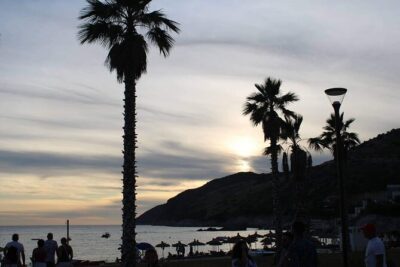
Day 7 connects seaside time to national history. You start with Lungomare, the promenade by the sea where the Adriatic and Ionian meet. Even if you only do a partial stroll, the sea view is a strong payoff, and it makes Vlora feel like more than a transit stop.
Next you explore Vlora itself. The tour calls it the City of the Flag, since Albania’s independence was declared here on 28 November 1912. You visit Flag’s Square and the Independence Monument, which gives you a clear, specific place to anchor that date.
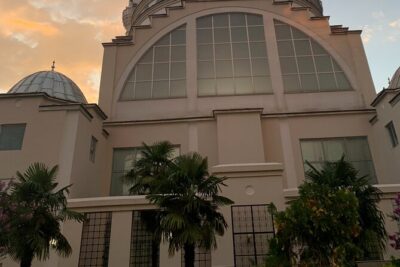
You also walk through Muradie Neighborhood and visit Muradie Mosque, described as a stunning Ottoman building built in 1537 and preserved as an Albanian national monument. That’s a powerful contrast with the modern city mood, and the architectural style helps you understand how long this region has been shaped by multiple empires.
Later, you go toward Durres. The tour emphasizes passing by the amphitheater, Roman ruins, and the Venetian Tower, and then continuing to the promenade Vollga. You get time for coffee with sea views and a stop for traditional ice cream before driving back to Tirana.
Day 8: Tirana walking loop, Skanderbeg Square, Bunk’Art 2, and Blloku food energy
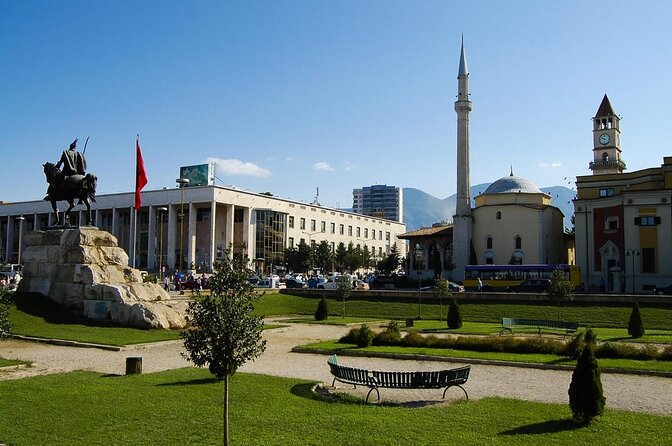
Tirana is the finish line, and the tour gives you a walkable loop that mixes monuments, museums, and neighborhoods. The guide frames the city as a mix of Ottoman, Italian, and communist architecture, and it can be fun to spot these different styles close together as you move around.
You start near major landmarks and then head to Skanderbeg Square, named after national hero Gjergj Kastrioti Skënderbeu. Around the square you see the National Museum, the Bank of Albania, the Opera House, Skanderbeg Statue, and Ethem Beu Mosque. If you like city centers that pack history into a small area, this square is a smart entry point.
Then comes Bunk’Art 2, a standout stop. The tour explains that this started as a nuclear bunker meant to protect Enver Hoxha and the communist leadership during the Cold War. It stayed secret until 2016, when it became a museum and turned into a video-based experience about the communist army and daily life under the regime.
After that, you stroll to Tirana Castle area, now a pedestrian street called Rruga Murat Toptani, where modern and traditional vibes blend in the same block. You finish in Blloku, which the tour describes as colorful and lively, with lots of food options, from cheap street food to higher-end choices.
This ending matters because it lets you shift from “history focus” into “eat, wander, and enjoy the city.”
What I’d pack and how I’d pace yourself on this route
This tour mixes old towns, castles, and museum interiors with coastal walks. Comfortable shoes are the main requirement, because stairs and uneven stone are part of the experience at places like Berat Castle and Gjirokaster.
Because lunch and dinner are not included, I suggest planning for two things: a budget that covers meals most days, and a willingness to eat where it is convenient. In places like Ksamil and Himare, you’ll likely find plenty of options, but the tour pacing still means you might not always land at the most famous restaurant.
Sun and water are also key. Even when you are moving between cool mountain areas like Theth and warmer Riviera stops, you’ll want sunscreen and a reusable bottle.
And yes, a small note on tipping: tips are not required in Albania, but the tour recommends tipping your tour leader and driver as an international practice for good service. If the guide, like Eduart, keeps things smooth, a tip feels like a fair way to say thanks.
Finally, if you want a single room, remember it is available for an extra 45 euros per night per person. That can change the overall value of the trip, depending on your travel style.
Who this tour is best for, and who should look elsewhere
This experience suits you if you want a structured route that hits UNESCO Berat, Gjirokaster, and Butrint plus famous natural sights like the Blue Eye. It is also ideal if you like history with context, because the guide’s job is not only to point at ruins, but to explain why each place looks the way it does.
You’ll also enjoy it if you want a balance between walking days and time for viewpoints and seaside breaks. Ksamil, Himare, Dhermi, and Vlora’s Lungomare give you that reset between castles and museums.
If you hate long driving days, this might feel like too much. The schedule is full, with multiple transitions between regions, and some days will feel more about getting to the next highlight than lingering.
Should you book Pearls of Albania in 8 Days?
Book it if you want a high-effort highlights tour that still feels organized and human. The included pickup in Tirana, private transport, included entry tickets, and bed-and-breakfast stays take the biggest friction points out of Albania travel.
I’d be extra confident recommending it if you appreciate guides who tell connecting stories, and if you value small-group attention. One named example from the feedback was Eduart, praised for turning the country’s sites into a coherent, understandable journey.
Skip it or compare alternatives if you want total freedom to choose your own pacing, or if you rely on meals being fully included. Here, you’ll do the rest yourself for lunch and dinner.
FAQ
FAQ
How long is the Pearls of Albania tour?
The tour is 8 days, approximately.
What group size is this tour?
It is a small group tour with a maximum of 10 travelers.
Is pickup in Tirana included?
Yes. The tour offers hotel pickup and hotel drop-off in Tirana.
Are entry tickets included?
Yes. Entry tickets for the sites that will be visited are included.
What kind of accommodation is included?
Bed-and-breakfast accommodation is included for all overnights.
Is breakfast included?
Yes. Breakfast is included for 7 days.
Is lunch or dinner included?
No. Lunches, dinners, drinks, and snacks are not included.
Can I book a single room?
Yes. Single room occupancy is possible for an extra charge of 45 Euros per night per person in a 3 stars hotel accommodation.
Is this tour refundable if I cancel?
No. The experience is non-refundable and cannot be changed for any reason.
Longer Loops Through Albania

The UNESCO Run Through Albania
Every Albania Review We Have
Latest Albania reviews off the desk
- UNESCO heritage in Albania – 4 days
★ 5.0 · 3 reviews - Transfers Tirana Airport – Sarande – Ksamil – Airport Tirana
★ 4.5 · 3 reviews - Private Transfers from Tirana International Airport to Sarandë
★ 4.5 · 3 reviews - Tirana’s Communist Past: A Tasting Tour with Traditional Lunch
★ 5.0 · 3 reviews - Tirana ⇔ Ohrid, North Macedonia
★ 5.0 · 3 reviews - Tirana and Kruja in a Day Trip
★ 5.0 · 3 reviews
UNESCO Heritage Tours, compared.
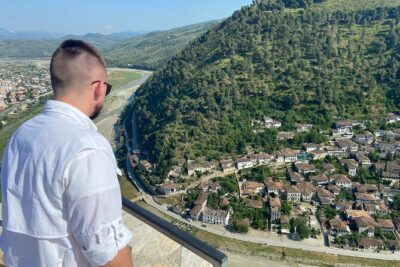 ★ 5.0Berat city UNESCO tour, the Castle & Belshi lake- From TiranaFrom $12804 reviews
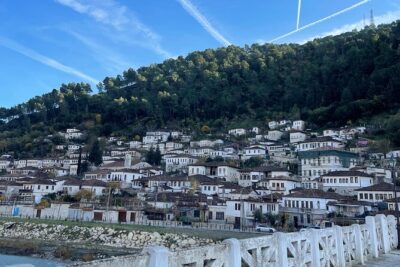 ★ 5.0From Tirana: Berat UNESCO & Belshi Lake Full-Day TourFrom $12118 reviews
 ★ 5.0Gjirokastra UNESCO & Ksamil Beach – From Tirana/Durres/GolemFrom $58117 reviews
 ★ 5.0Berat UNESCO Small-Group Day Tour from TiranaFrom $14231 reviews
 ★ 4.5Ancient City of Butrint, UNESCO World Heritage site – A MustFrom $6327 reviews
 ★ 5.0Berat Day Tour: Explore Albania’s UNESCO City from DurresFrom $8427 reviews
 ★ 5.0Day tour of Berat UNESCO city , castle and Belshi LakeFrom $3826 reviews
 ★ 5.0Day Trip To Berat,UNESCO Heritage with Tirana Day TripsFrom $13219 reviews
Browse the lists this tour appears in