
REVIEW · THE BLUE EYE SPRING
Tour of Komani, Valbona, Thethi, Blue Eye in three days
Komani Lake, Valbona, and Theth in three days is one of those trips that feels like a shortcut into real mountain Albania, not a checklist drive-by. I love how this route strings together big scenery moments and small local stops, from the ferry ride on Komani Lake to an old mill in Valbona. I also like the pacing logic, you get a mix of short nature walks and one major hiking day, so you can plan your energy without guessing.
The possible drawback is also the point, you need moderate physical fitness for the hike over Valbona Pass, plus weather matters in the Alps. If you are prone to getting cold, or you hate long walking days, you may want to rethink the pace.
In This Review
- Key highlights to know before you go
- Entering the Albanian Alps circuit, Komani to Theth in 3 days
- Komani Lake by Wild Tour Albania: a ferry through canyons and wildlife
- Valbona Valley National Park: quiet alpine power
- Mulliri i Vjeter and Xhemes’ Lake: two “small” stops with big atmosphere
- Ujevara e Rrogamit and the Rragami Waterfall walk: easy effort, real reward
- Valbona Pass (1759 m) to Theth: the big day you plan for
- Theth National Park: what you get when you step into the protected zone
- Tower of Nikoll Koceku: local mountain history in stone
- Grunasi Waterfall in Theth: a 25 m drop and a rainbow chance
- Blue Eye of Theth: the color-changing well you can’t fake
- Boga and the drive back to Tirana or Shkoder
- What $591.46 really buys you, and where you still spend extra
- Who should book this Theth and Blue Eye tour, and who should skip it
- Should you book? My straight answer
- FAQ
- What is the duration of the tour?
- Where does pickup happen?
- Does the tour include meals?
- What are the main walking parts of the itinerary?
- Are any admission tickets included?
- Is this a private tour?
- What happens if the weather is bad?
- When can I cancel for a full refund?
Key highlights to know before you go
- Komani Lake ferry time with wildlife and canyon walls: a reservoir-fed river gorge that runs through dense forest hills.
- Valbona Valley National Park access: a protected area with glacial springs, rock formations, forests, and waterfalls.
- The old stone mill at Mulliri i Vjeter: a working relic where locals once ground corn and wheat.
- Valbona Pass is the main workout: a 9.5 km crossing with a big altitude change depending on direction.
- Theth’s waterfall trio: Rragami Waterfall, Grunasi Waterfall, and then Blue Eye, all in different moods.
- Tower of Nikoll Koceku for local history: a centuries-old lock-in tower tied to the village’s blood-feud era.
The Blue Eye turns up on half the southern itineraries. Compare them properly.
- Hiking Tour of Valbona, Theth & Blue Eye in 3 Days from Tirana★ 5.0 · 73 reviews
- Semi-Private Day Tour of Theth & Blue Eye from Tirana / Shkoder★ 5.0 · 52 reviews
- From Tirana/Durrës: Saranda, Ksamil, and Blue Eye Tour★ 4.6 · 49 reviews
- Semi – Private Tour of Saranda, Ksamil & Blue Eye from Tirana★ 5.0 · 48 reviews
- Gjirokastra, Blue Eye, Ksamil & Saranda – Day Tour from Tirana★ 4.5 · 47 reviews
Entering the Albanian Alps circuit, Komani to Theth in 3 days
This tour is built around one simple goal, connect the dramatic north Albanian mountain valleys by doing the signature routes in the right order. You start with Komani Lake by ferry, then base yourself through Valbona, and finish with Theth and the Blue Eye. The overall rhythm is practical: transport handles the long road stretches, while you handle the walking.
One of the smartest parts for first-timers is that transfers are stitched together. You get pickup and drop-off, company transport to Komani, a ferry ticket from Komani Lake to Fierze Dam, then local transport into Valbona. From Theth, you are transported back to your hotel in Tirana or Shkoder. It turns the “remote Alps” problem into a guided plan.
Price-wise, you are not just paying for sights. You are paying for a multi-day package that includes lodging and breakfast, a professional guide, the ferry ticket on Komani Lake, and admission for the two paid stops that are called out as included. Dinner and lunch are not included, so you should plan on meals outside your package on travel days.
Komani Lake by Wild Tour Albania: a ferry through canyons and wildlife
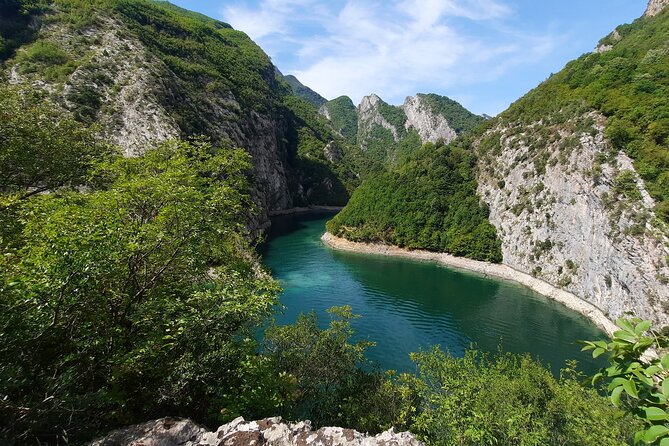
Day 1 starts with a 2-hour Komani Lake stop with an admission ticket included. Komani Lake is a reservoir on the Drin River, formed by dam construction between 1979 and 1988 near the village of Koman. What makes it feel special is the tight geometry of the waterway: dense forested hills, vertical canyon walls, and a narrow valley that the river dominates.
You get specific natural facts on the ride that make the scenery easier to read. The lake stretches about 34 km2, and the narrowest gorge is more than 50 m wide. It is fed not only by the Drin, but also by the Shala and Valbona Rivers, which matters later because you see where those systems connect in Valbona and Theth.
This is also where wildlife context helps. The region has mammals like golden jackal, red fox, European badger, Eurasian otter, beech marten, and European polecat. Bird life is a big part too, with species such as common kingfisher, common quail, grey heron, Eurasian wryneck, great spotted woodpecker, and black-headed gull. You will not be able to guarantee sightings, but knowing the habitat makes the ride more interesting than just staring at cliffs.
Practical note: dress for a mix of sun and shade. Water rides can cool quickly, especially when the canyon walls block light.
Valbona Valley National Park: quiet alpine power
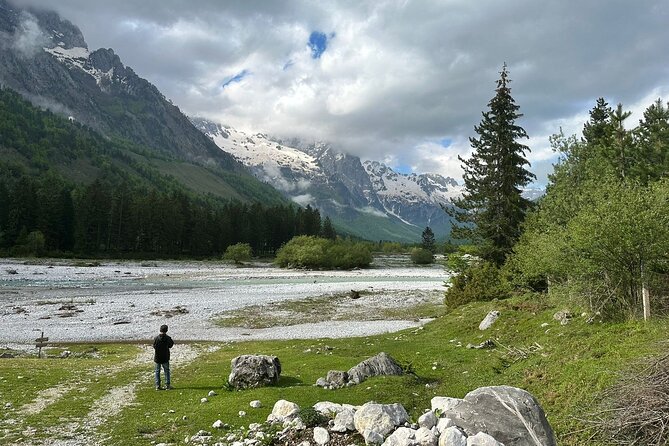
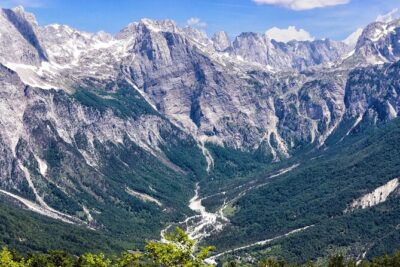
After Komani, you spend 2 hours in Valbona, with park entry described as free. Valbona Valley National Park, now integrated into the Alps of Albania National Park, covers about 80 km2. The key idea is remoteness. The park is described as having a preserved ecosystem and pristine quality, shaped by alpine terrain, glacial springs, deep depressions, waterfalls, and a mix of dense coniferous and deciduous forest.
Valbona is not just a scenic base, it is also a place where the mountains feel lived-in. That matters because later, you walk to waterfalls and a pass route that connects toward Theth. When you view it from different angles in a single day, you start to understand the valleys as corridors rather than “pretty spots.”
For your planning, think of Valbona as your acclimation day. You are not asked to do a huge hike right away. Instead, you get time to absorb the area, then add local details with stops that feel more grounded than photo points.
Mulliri i Vjeter and Xhemes’ Lake: two “small” stops with big atmosphere
Still on Day 1, you add two stops that are free and easy to like.
First is Mulliri i Vjeter i Valbones, an almost 150-year-old mill used by Valbona villagers to grind corn, wheat, and other grains. It is described as the attraction on the right just before you enter the village, plus a socialization point when it was functional. Today it is mainly intact, and the grinding stones and equipment remain. You also cross a wooden bridge, and you are encouraged to breathe in the fresh air and notice Valbona River flowing through large rocks. This stop is short, but it gives you a human scale. You see mountain life as labor and routine, not only tourism.
Next is Xhemes’ Lake, also free, at Quku i Dunishes near Dragobi to Valbona. This one is a visual payoff. The lake sits at about 770 m above sea level, which is unusual compared with glacial lakes that are often over 1500 m. Water depth can reach about three meters, the surface area is around 500 square meters, and it is clear and deep blue in color. In winter it freezes under snow but can still be deep.
Surrounded by majestic beeches, Xhemes’ Lake feels calm. For me, it is the kind of stop that stops your brain from rushing. You get one hour, so you can take your time without it turning into “staring for 3 hours and waiting for the next bus.”
Getting to Theth is half the trip. Here are the other ways in.
Ujevara e Rrogamit and the Rragami Waterfall walk: easy effort, real reward
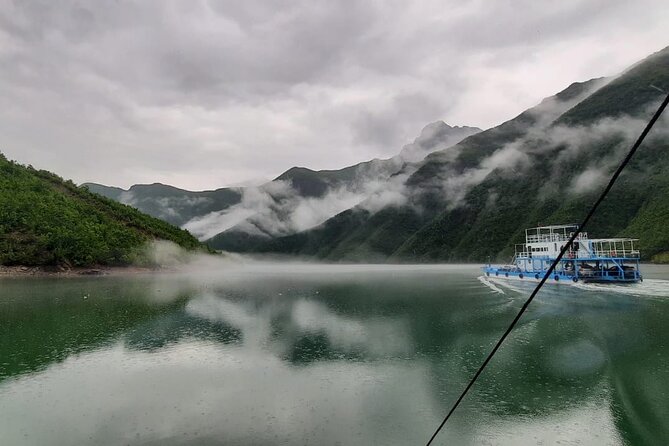
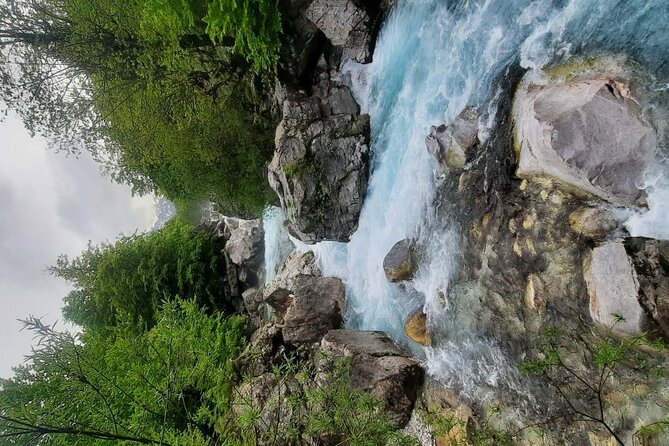
Day 2 begins with Ujevara E Rrogamit (Rrogami Waterfall). This is the water source of the Valbona River, shaped into an attractive waterfall. The trail starts around Rragam village and is described as a 50-60 minute easy walk one direction through a beech forest, scaling up to about 200 m at most.
This is a great warm-up for the pass day coming next. It is not a brutal climb, but it gets your legs moving and your breathing set for higher effort. And because it runs through a beech forest corridor, it gives you shade and a tunnel-like walking feel compared with exposed ridge hiking.
The spot is also useful for context. The Valbona River is described as a 50 km long river that begins with natural spring water and continues toward Fierza Lake. Later on, you see how these river systems end up linked to Komani Lake through the Drin. Water becomes the organizing thread for the entire tour.
If you prefer to move fast, this part still works because it is one-direction walking with a clear turnaround. If you need slower pacing, it is also comfortable because it is called easy and limited to roughly an hour.
Valbona Pass (1759 m) to Theth: the big day you plan for
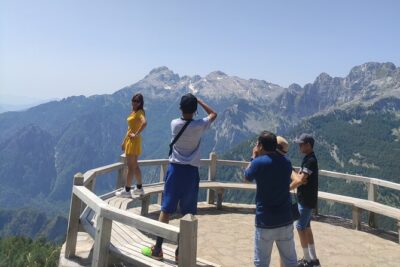
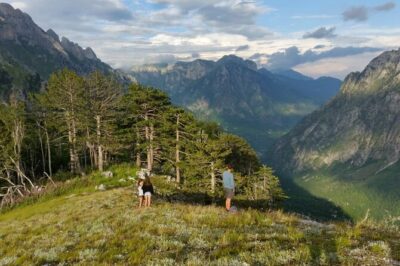
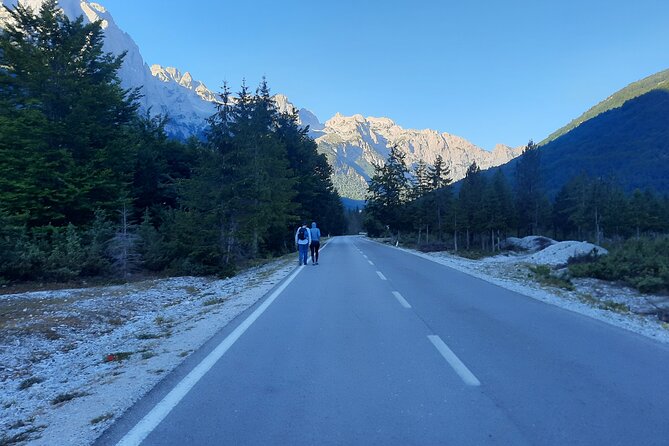
Then comes the main event: Valbona Pass. The route connects Valbona and Theth and is described as an epic trail across the Albanian Alps. The pass location is at an altitude of 1759 m, and the hiking distance is listed as 9.5 km to Theth. The altitude difference depends on which direction you hike. If you start from Valbona toward Theth, the difference is about 630 m. If you start from Theth toward Valbona, it is about 850 m.
This is the day where you should think like a mountain hiker, not like a city walker. Nine and a half kilometers is manageable, but the altitude change means your pace will be slower. Plan to take breaks, especially if you are not used to steep grades.
The trail begins in the Gjelaj neighborhood in the upper part of Valbona valley, around Rragam of Shala, and it can be started from a guesthouse door down in the valley or from the beginning of the trail in Gjelaj of Valbona to Gjelaj of Thethi. That matters because the tour plan is built on getting you to the key junction, not on making you solve the trailhead problem.
If you do only one thing to prepare, prepare for this. Bring a layer you can peel off while climbing and put back on when you slow down. And bring water. The itinerary notes that everything depends on weather, so bring attention to cloud cover and wind.
Theth National Park: what you get when you step into the protected zone
After crossing to Theth, you get Theth National Park time. Entry here is described as free, and the park is now part of the Alps of Albania National Park. The park is dominated by high terrain, valleys, rivers, waterfalls, dense forests, and rock formations. It is also protected for biodiversity and cultural and historical heritage.
This stop is listed for about an hour, so it is not a long nature immersion session. But it sets you up for the next day’s sights by giving you the park context. The area has been recognized as important for birds and plants, and it has a protected historic center.
In practical terms, think of this stop as a “scene setter.” It helps you understand why Grunasi Waterfall and Blue Eye feel like they belong to the same place, not separate attractions that could have been anywhere.
Tower of Nikoll Koceku: local mountain history in stone
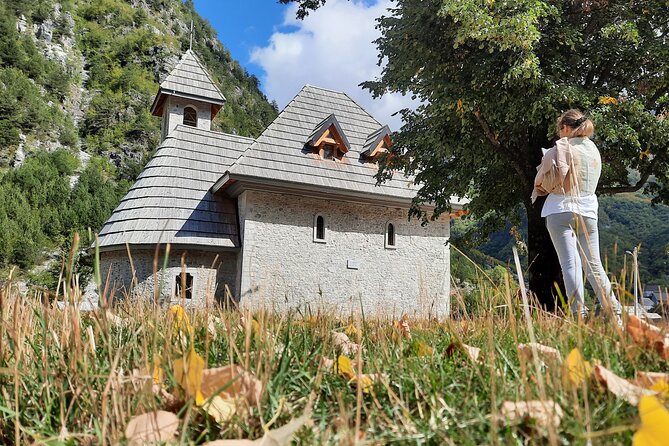
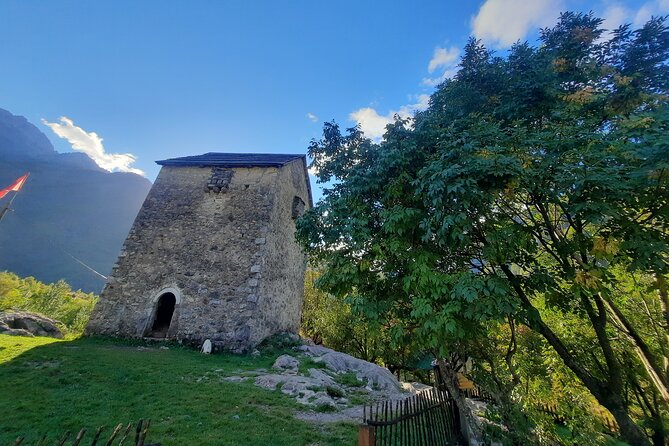
Day 3 begins with Tower of Nikoll Koceku, with an admission ticket included. This is described as a typical lock-in tower in Theth, built at the end of the village and used by the whole community. It is tied to blood feuds, with details that make it sobering. Families were forced to stay there, with males over 14 locked in the tower, while women remained free to go out and work land in front of the tower.
The tower was built about 388 years ago and is divided into three floors. The upper two floors have old wooden floors. Today it can be visited, and it is located south of the village, very close to the Shala River. That close river proximity helps. You see how defense and daily life coexisted in the same valley corridor.
This stop is brief at about 30 minutes, but it changes how you perceive everything after. After a couple days of water and hikes, you get a human timeline built right into the mountains.
Grunasi Waterfall in Theth: a 25 m drop and a rainbow chance
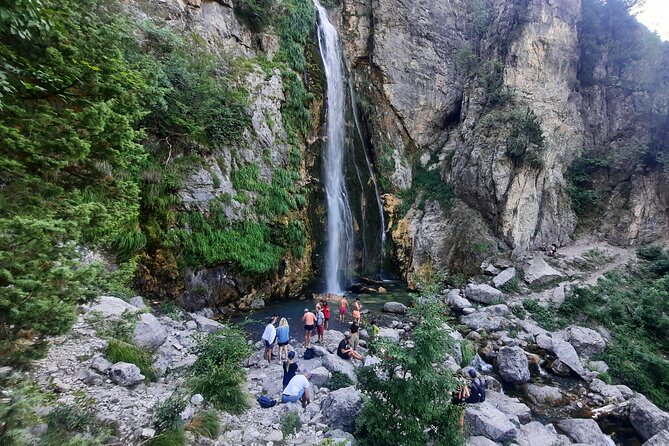
Next is Grunasi Waterfall, described as one of the most amazing natural attractions in Theth and declared a natural monument since 2002. The waterfall starts on the western slope of the Thethi valley, at the western foot of Boshi Mountain peak. It forms a narrow rocky trough through a limestone slope, then water falls about 25 m.
At the bottom is a pond, and water flows into Thethi valley, joining the Shala River at the beginning of the Grunasi canyon. The slopes around it are covered by dense forest. On sunny days, the droplet mist can make a rainbow visible at the bottom.
This is the kind of stop that can feel both dramatic and gentle. You get a full hour, enough time to take photos, then just stand and watch the water do its job.
Blue Eye of Theth: the color-changing well you can’t fake
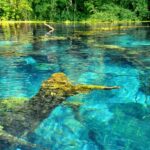
After Grunasi, you go for Blue Eye of Theth, near the village of Kaprre about 7 km from Theth center. It is described as the most frequented natural attraction in Theth, and for good reason: it is a well formed by the Black River descending from the upper Kaprrea.
The well has a surface around 100 m2 and a depth of about 4-5 m. The water takes on blue and emerald color tones depending on the season. That seasonal shift is key. It means your timing can change what you see. The Black River source is in Maja e Zeze and is fed mainly by melting snow, and in Nderlysa it joins the Shala River, which then flows onward toward the Drin and eventually into Komani Lake.
So Blue Eye is not just a pretty endpoint. It is a visual summary of the water network you followed for days, from spring-fed rivers to gorge reservoirs.
You get about 2 hours, which is a good length. You can take in the view, then wait for changes in light that can make the color look different within the same visit.
Boga and the drive back to Tirana or Shkoder
The tour adds Boge (Bogë) for about an hour. This is a village in the former Shkrel municipality and part of the Malësi e Madhe municipality since 2015. It is described as a historical bajrak of the Kelmendi tribe, bounded north by Shala and south by Ducaj. There is also a noted historical detail from Edith Durham that the village had 75 families in 1908, all Catholic.
The stop is also split into two neighborhoods, Preçaj and Kolaj. Even if you only get an hour, these are the kinds of clues that make the drive feel less like transit and more like learning how tribal communities mapped the valley systems.
Finally you return to Tirana, with about 3 hours listed for the ride. On the way back, you make short photo stops in special places. This helps you catch one last look at the scenery without turning the final hours into a rush.
What $591.46 really buys you, and where you still spend extra
This tour lists a price of $591.46 per person for about 3 days. That sounds like a chunk until you look at what you are paying for.
You get:
- Breakfast included twice, plus BB for all overnights
- A professional tour guide
- Hotel pick up and drop off
- Transport from Tirana or Shkoder to Komani and from Theth back to your hotel area
- A ferry ticket from Komani Lake to Fierze Dam
- Local transport from Fierze to Valbona
- Admission ticket included for Komani Lake and the Tower of Nikoll Koceku
- All fees and taxes
What you do not get:
- Dinner, lunch, snacks, and personal spending
So your practical planning is simple. Budget for lunch and dinner each day, and bring cash or card depending on what works where you eat, but the package itself reduces the biggest costs and stress points: getting to and from remote trail areas and paying for the ferry component.
The value is strongest if you want a guided route with minimal guesswork. If you were planning to piece together transport yourself across Tirana, Fierza, Valbona, Theth, and back, you would pay in time and nerves even if the ticket cost looked lower.
Who should book this Theth and Blue Eye tour, and who should skip it
Book this if you want a true mountain circuit with a mix of history and nature. The Blue Eye of Theth and Grunasi Waterfall are the headline sights, but the route gets better because you also have human details like Mulliri i Vjeter and the Tower of Nikoll Koceku. And the route is guided, with transport handled, which makes a first visit to the Albanian Alps feel doable.
You should think twice if you hate long walking days. Valbona Pass can take about 7 hours in the tour plan, and the route has meaningful altitude difference. Also, the experience requires good weather, and if conditions are poor, it may be rescheduled or refunded.
Should you book? My straight answer
Yes, if you want one organized package that hits Komani Lake, Valbona Valley, and Theth’s top natural sights while keeping you out of transport chaos. I especially like that the plan has both easy walking moments, like the Rragami Waterfall trail, and a clear “workout day” on Valbona Pass.
If you only want flat sightseeing, or you want guaranteed sunny skies and zero hiking, then this is the wrong match. But if you are willing to work a little for views and you respect mountain weather, this 3-day itinerary is a strong way to see the Albanian Alps.
FAQ
What is the duration of the tour?
It runs for about 3 days.
Where does pickup happen?
Pickup is at your location. You send the address at least one day before the trip starts.
Does the tour include meals?
Breakfast is included, with Breakfast listed as 2. Dinner and lunch are not included.
What are the main walking parts of the itinerary?
There is an easy one-way walk toward Rragami Waterfall of about 50-60 minutes, and a longer hike over Valbona Pass with a 9.5 km trail to Theth and an altitude difference listed at about 630 m or 850 m depending on direction.
Are any admission tickets included?
Yes. Komani Lake has an admission ticket included, and the Tower of Nikoll Koceku includes an admission ticket. The other listed stops are marked as free.
Is this a private tour?
Yes, it is a private tour/activity, and only your group participates.
What happens if the weather is bad?
The experience requires good weather. If canceled due to poor weather, you are offered a different date or a full refund.
When can I cancel for a full refund?
You can cancel up to 24 hours in advance for a full refund. If you cancel less than 24 hours before the start time, the amount paid is not refunded.
Theth and the Accursed Mountains
Blue Eye Trips, Compared
Every Albania Review We Have
Latest Albania reviews off the desk
- UNESCO heritage in Albania – 4 days
★ 5.0 · 3 reviews - Transfers Tirana Airport – Sarande – Ksamil – Airport Tirana
★ 4.5 · 3 reviews - Private Transfers from Tirana International Airport to Sarandë
★ 4.5 · 3 reviews - Tirana’s Communist Past: A Tasting Tour with Traditional Lunch
★ 5.0 · 3 reviews - Tirana ⇔ Ohrid, North Macedonia
★ 5.0 · 3 reviews - Tirana and Kruja in a Day Trip
★ 5.0 · 3 reviews
The Blue Eye Spring, compared.
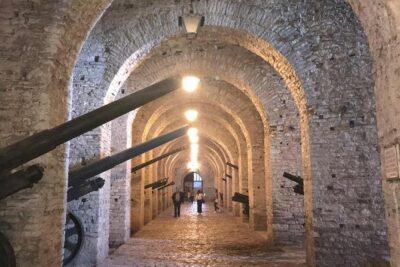 ★ 4.5Gjirokastra- The Stone City & Blue Eye- The monument of Nature.From $71180 reviews
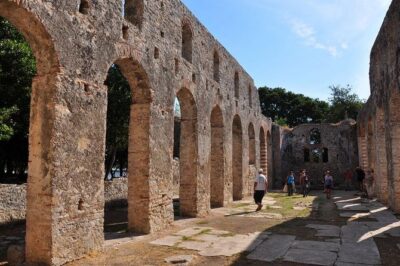 ★ 4.5Butrint, Ksamil, Blue Eye, Lekuresi Castle. All-in-one daytrip.From $71125 reviews
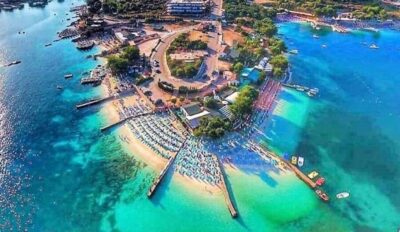 ★ 4.2From Durrës/Golem: Saranda, Ksamil, and Blue Eye Day Trip113 reviews
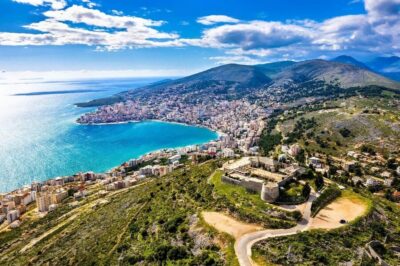 ★ 4.5From Durrës or Golem: Ksamil, Saranda and Blue Eye TourFrom $52111 reviews
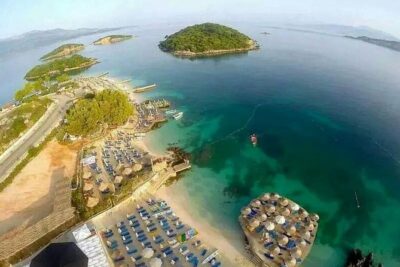 ★ 4.0Butrint, Blue Eye, Ksamil and Lekuresi Castle Tour From SarandaFrom $81102 reviews
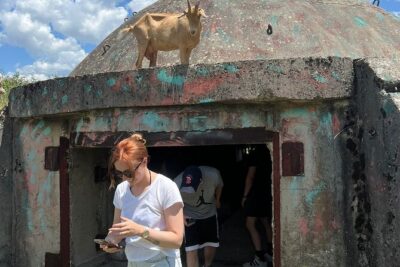 ★ 5.01-Day Tour in Blue Eye, Monastery, Gjirokaster and Lekursi CastleFrom $4476 reviews
 ★ 5.0Hiking Tour of Valbona, Theth & Blue Eye in 3 Days from TiranaFrom $52473 reviews
 ★ 4.5Explore Blue Eye- The Monument of NatureFrom $2268 reviews
Browse the lists this tour appears in