
REVIEW · PRIVATE
Semi-Private Tour of The Balkans from Tirana to Dubrovnik / Split
Balkan travel moves fast, this one even more. You’ll cover Albania, Kosovo, Montenegro, Bosnia and Herzegovina, and Croatia in a tight, small-group semi-private route, with food stops, old towns, and UNESCO sites along the way. The trip also leans human, you get guided context for places that can feel overwhelming if you’re doing it alone.
I especially love the food and market focus in Tirana and Kosovo, from byrek and raki breaks to lunch like grilled qofte and the chance to shop in local bazaars. I also like that the tour mixes big-name sights with calmer stops, like the Bunk’Art 2 bunker museum and the slow-food farm visit near Shkoder, so the day does not feel like nonstop sightseeing.
One drawback to plan for: it is a lot of driving and border crossing in 8 days, and some walking is uneven. If you want a slower, independent pace, this route may feel like a quick sprint across countries.
In This Review
- Quick highlights you should care about
- Semi-private route across five countries: how the pace really feels
- Price and value: private transport, hotels, and entry tickets
- Tirana day-by-day tastes and history at Bunk’Art 2 (Days 1-2)
- Kosovo on foot: bazaars, monasteries, and fortress views (Days 2-3)
- Slow-food farm and Shkoder lake area: Rozafa Castle views (Day 4)
- Montenegro coast highlights: Sveti Stefan viewpoint, Budva Old Town, and Kotor UNESCO (Day 5)
- Mostar and Blagaj: Stari Most, old bazaars, and the Buna spring (Day 6)
- Sarajevo street-level history and the Latin Bridge trigger (Day 7)
- Crossing into Croatia and settling into Dubrovnik or Split (Day 8)
- Who should book this 8-day Balkans route
- Should you book this Tirana to Dubrovnik/Split tour?
- FAQ
- How many travelers are on this semi-private tour?
- Where does the tour start, and what time?
- Is pickup included?
- What meals are included in the price?
- Are admission tickets included?
- Is the tour refundable if I cancel?
Quick highlights you should care about
- Small group size (max 10 travelers) keeps the trip from feeling like a cattle call.
- Tirana food crawl includes byrek, Albanian coffee culture, and a proper lunch stop with grilled qofte.
- UNESCO hits like Kotor and Stari Most plus the UNESCO Decan monastery are built into the route.
- Cultural contrast from communist-era history at Bunk’Art 2 to Ottoman and Austria-Hungarian city quarters in Sarajevo.
- Nature breaks with views including Rozafa Castle and Blagaj at the spring of river Buna.
Private departures we have reviewed elsewhere in Albania
- Semi-Private Tour of North Macedonia: Ohrid & Struga from Tirana★ 5.0 · 170 reviews
- Private Ohrid Day Tour and Authentic Village from Tirana & Durres★ 5.0 · 71 reviews
- Semi-Private Day Tour of Montenegro: Budva & Kotor from Tirana★ 5.0 · 71 reviews
- From Tirana; Semi – Private Day Trip to Berat & Belsh Lake★ 5.0 · 63 reviews
- From Tirana: Semi-Private Day Tour to Prizren★ 5.0 · 53 reviews
Semi-private route across five countries: how the pace really feels
This is a semi-private setup with a maximum of 10 travelers, so you’re not stuck waiting on a huge bus line every time you turn a corner. You’ll also have private transport throughout, which matters in the Balkans because getting from one place to the next can eat half your day if you’re trying to DIY.
Expect a “see, learn, move” rhythm. You’ll spend time in old towns on foot, then switch to car for the next jump across regions. Most days include at least a couple of stops with short visits, which is great if you like variety, but less ideal if you hate schedule pressure.
Timing and order can shift because the tour notes changes due to weather, bank holidays, temporary site closures, and other outside factors. The good news is the route is designed so you still get key sights even if a small stop gets adjusted.
Price and value: private transport, hotels, and entry tickets
At $2,754.29 per person for about 8 days, this is not a budget trip. The value is in what’s bundled: 3-star hotel bed and breakfast for all overnights, private transport, a professional tour leader, hotel pickup in Tirana, and drop-off in Dubrovnik or Split.
Entry tickets are also included for the sites that are visited, plus tourist taxes and the basics for the ride like road taxes, petrol, and international car insurance. You’re also given a mobile ticket, which is handy for smoother check-ins and access on the go.
What is not included is equally important: lunches, dinner, drinks, and snacks. That means your daily spending will depend on how you eat. If you like trying a lot of local food beyond what the tour provides, you should budget for it.
Tirana day-by-day tastes and history at Bunk’Art 2 (Days 1-2)
Your journey starts in Tirana, meeting with a local companion and setting the tone with food and neighborhoods rather than just landmarks. You get a short intro moment in the capital, then the day becomes a guided walk through places locals actually use.
Day 1 begins with byrek and a breakfast-style stop at Tregu Çam, a bazaar tied to the Çam community, originally from Çameria in today’s North-Western Greece. You’ll see the kind of everyday trade that doesn’t show up on typical sightseeing-only routes, plus a chance to bargain for goods like clothes or kitchen equipment.
Then the tour leans hard into “Tirana how it feels.” You’ll skip tourist traps and move through alleyways and markets with street hawkers selling fresh produce. You’ll also join locals for Albanian coffee, so you understand that coffee culture here is not just caffeine, it’s a social rhythm.
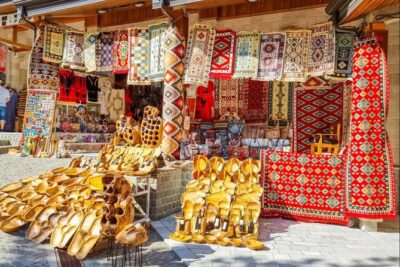
After that, you hit Pazari i Ri, including the Bicycle bazaar, where you can find everything from secondhand clothes to secondhand furniture. Next comes the New Bazaar, with a lunch stop built around qofte and grilled meatballs, with bread on the side, plus optional vegetarian options like bread and Albanian gjize (cottage cheese). Raki tasting is part of the meal flow too, and if you’re not a spirits person, consider it more of a cultural sampler than a forced shot.
Finally, Bunk’Art 2 gives the day a sharp historical edge. This is a converted nuclear bunker connected to Enver Hoxha-era shelter, later turned into a museum. It’s not a casual stop, but it’s the kind of place that gives you context for why people here talk about the past the way they do.
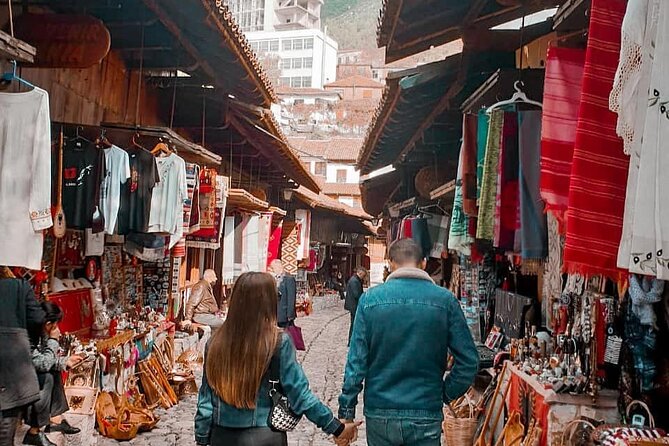
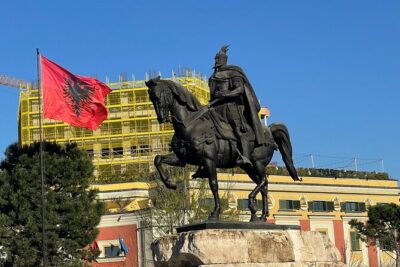
Day 2 adds Kruje. You’ll drive up to Kruja, known for Albanian resistance against Ottoman expansion in the 15th century. The Medieval Old Bazaar is where the town becomes tangible, with wooden houses and narrow streets that feel built for wandering and shopping.
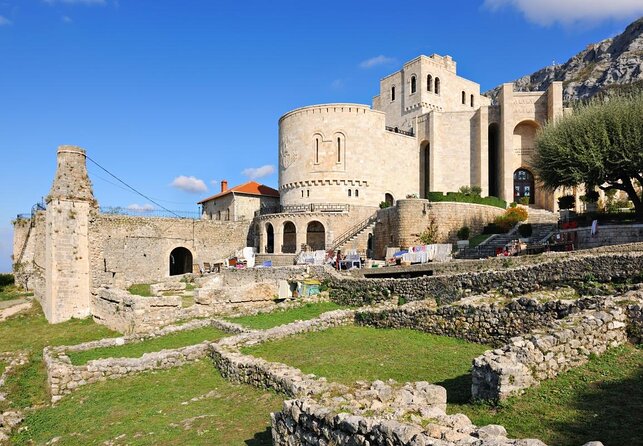
From there, Kruja Castle sits on a rocky hill, and the tour leader takes you through hidden paths used by locals to escape during sieges. If you like views and stories that change how you see a place, this is one of the best “walk and learn” combinations on the early part of the trip.
Kosovo on foot: bazaars, monasteries, and fortress views (Days 2-3)
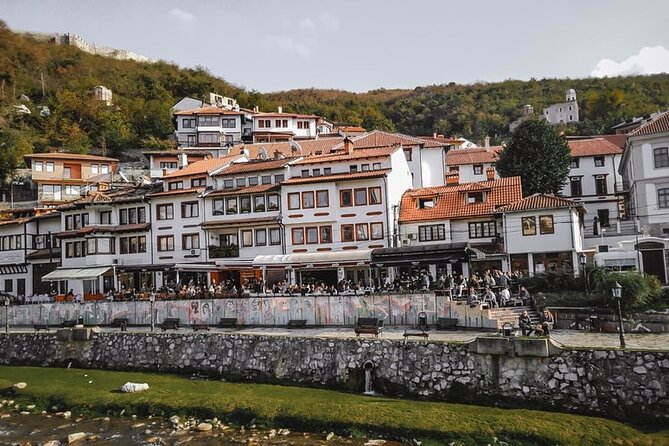
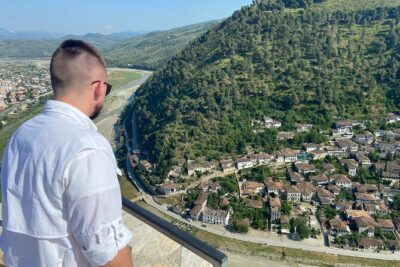
Once you cross into Kosovo, the tour moves into cities where faith, trade, and crafts overlap. Prizren is the first big stop, and it’s known as a cultural hub with religious tolerance, plus a river cutting through the center of the old town.
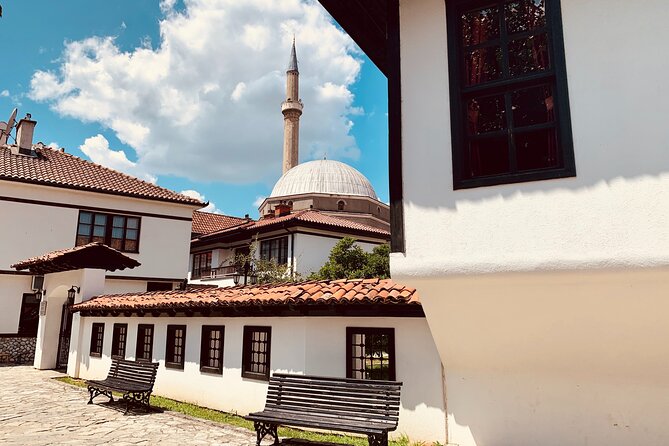
You’ll visit Sinan Pasha Mosque, admired for its arabesque color and pattern. It’s a short stop by time, but it’s meaningful because you get a clear feel for local artistry and design.
After mosque time, the tour includes Kalaja Fortress above town for a panorama. There’s also free afternoon time in Prizren, which is useful because it lets you reset. If you’ve been walking all morning, that chunk of unstructured time helps you enjoy the city instead of just checking boxes.
Day 3 keeps Kosovo’s variety rolling. You’ll head to Gjakova, famous for having the oldest and largest bazaar in Kosovo. Even after destruction in the Balkan wars and again during the Kosovo conflict, it was rebuilt, so you see continuity rather than ruins alone.
Next is Decan, focused on the Orthodox Monastery of Decan. This monastery is part of UNESCO since 2004, and the big draw is the frescoes. The tour also points out that monks still inhabit the site and make fresh organic food, including cheeses, so it’s not just a museum, it’s an active religious community.
You finish Day 3 in the Rahovec Valley, the wine-growing area near Prizren. The tour frames it historically too, with grape cultivation said to date back to Illyrian times, about 2,000 years. If you travel in September, there’s a wine festival, but even if you’re not there then, the vineyards and hill valleys explain why the region has that reputation.
Slow-food farm and Shkoder lake area: Rozafa Castle views (Day 4)
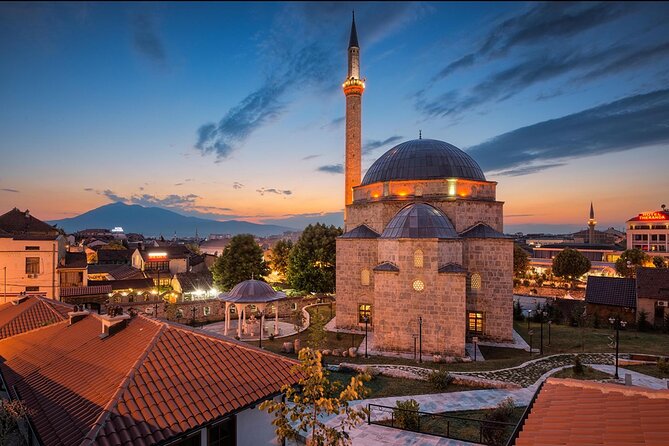
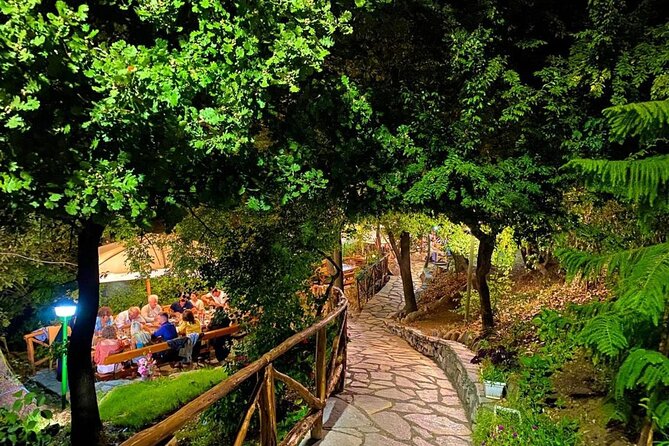
Day 4 slows the pace in the best way. You start at Mrizi i Zanave, a slow-food agritourism farm. The tour includes a farm visit where you learn how the family business created jobs for more than 400 people in the surrounding area and how they preserve regional bio products. There’s also time to enjoy a traditional lunch or buy fresh produce.
This stop matters more than it sounds because it shifts the trip from “look at places” to “learn how people work and eat.” It also gives you a break from the nonstop historic city circuit.
After the farm, you move to Shkoder, described as an ancient city with Venetian-influenced architecture and a long trading role due to its position near the lake. The tour connects this to the wider region, including Lake Shkodra being the biggest lake in the Balkans.
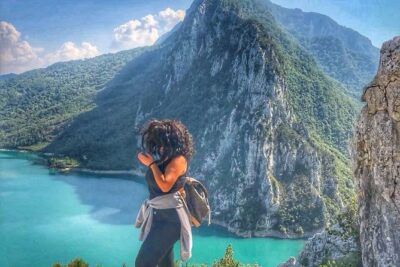
Rozafa Castle is the next major highlight. The views are the point here, with the lake and three rivers meeting as they flow toward the Adriatic Sea. It’s the kind of viewpoint that helps you understand why castles were built where they were: visibility, control, and easy storytelling.
You also get some city walking time in Shkoder, with the note that Venetians masks are handmade here. If you travel in February, the carnival festival is mentioned, though that will only apply to travelers whose dates match.
Montenegro coast highlights: Sveti Stefan viewpoint, Budva Old Town, and Kotor UNESCO (Day 5)
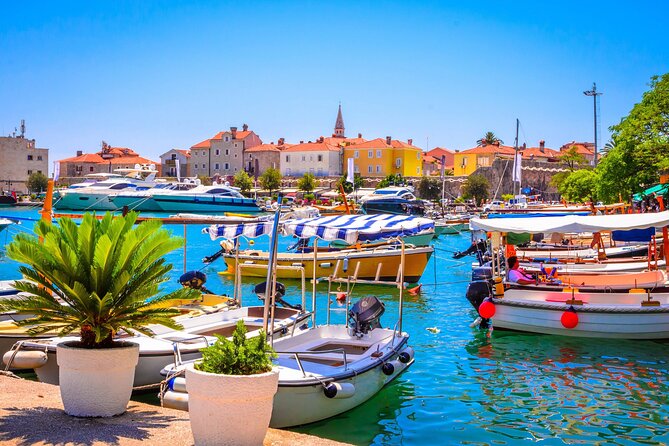
Day 5 feels like a mood shift, from inland culture to the Montenegro coast. You start with a viewpoint near Sveti Stefan. The island itself is now an exclusive residential resort, so you can’t visit it, but the viewpoint still gives you a strong photo moment.
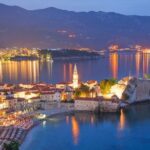
Then you head to Budva, split between New Budva and Old Budva. You’ll focus on Old Budva, where the tour highlights medieval buildings and includes churches like St. Ivan and St. Mary. This is a good day if you like walking old streets that still look lived-in, not theme-parked.
Next is Kotor, a UNESCO World Heritage site, and you’ll walk the maze of narrow, cobblestone streets in the old town. The tour explains the defense logic behind the layout, built to confuse intruders, which makes the street grid feel purposeful rather than random.
You’ll visit Saint Luke’s Church too, with the significance tied to local unity. Kotor is a place where small details help: plaques on buildings with dates, and the way the old town feels layered with different eras.
Mostar and Blagaj: Stari Most, old bazaars, and the Buna spring (Day 6)
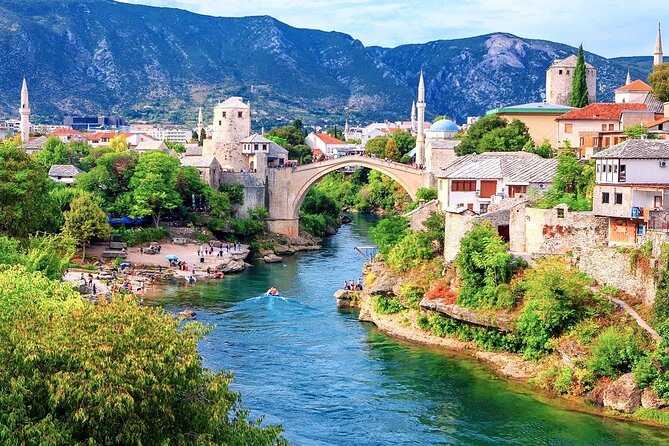
Day 6 is Bosnia and Herzegovina, and it starts with Mostar’s iconic Old Bridge, Stari Most. The tour notes it as UNESCO World Heritage, built in the typical Islamic architectural style in the 16th century. This is one of the rare sights that people remember instantly, even if they can’t name every detail.
After the bridge, you explore the old bazaar area with colorful streets and a lively atmosphere. Mostar also features stones around town with the message Don’t Forget, a reminder of the city’s history you’ll notice as you walk.
Then Blagaj tekija enters the story outside Mostar. You visit the monastery at the foot of a cliff with blue spring waters in front of it and learn about the Ottoman medieval town feel. The tour points out the imposing spring of river Buna, and that natural setting gives you a scenic contrast after the urban old-town walking.
You also get afternoon free time in Mostar. That’s a gift on a day like this, because you’ve already had major “anchor” sights, so you can spend your free time choosing what you personally want to revisit.
Sarajevo street-level history and the Latin Bridge trigger (Day 7)
Sarajevo on Day 7 is not a “relax and stroll” day. The tour includes walking on uneven terrain and visiting ruins, with visible reminders of the Yugoslav War like bullet holes and cannon marks. If you’re sensitive to war history, go in prepared for the emotional weight.
The guided portion covers the origins of Sarajevo and the medieval Bosnian kingdom. Then you’ll see Ottoman and Austria-Hungarian parts of the city, including markets, bazaars, mosques, churches, and synagogues. The point is the mix, how different communities shaped the city over time.
You’ll also visit the Latin Bridge and learn why WWI is linked to this spot. The tour explains that the bridge connected the right bank of the Miljacka with the Catholic quarter, once informally called Latinluk in Ottoman times.
After that, you get time to enjoy Sarajevo’s food and desserts in the old town. This is where you can rebalance your day after heavy history, with meals that feel like part of the culture rather than a break from it.
Crossing into Croatia and settling into Dubrovnik or Split (Day 8)
Day 8 is your wrap-up day. You cross into Croatia at the border, and then the local representative shuttles you to your hotel in Dubrovnik or Split.
This last piece is simple but practical. You’re not left navigating transport from a long route after you’ve already done a lot. You get dropped off so you can unpack, find dinner on your own, and plan an easy next day.
Who should book this 8-day Balkans route
This tour fits best if you want a structured “greatest hits” route with real guided context. It’s also a good match if you care about food and markets, not just monuments.
You should book if:
- You like small-group travel and want private transport instead of public hassle.
- You want a tight route across multiple countries with fewer decisions each day.
- You’re comfortable with walking old streets and some uneven ground.
You might want to skip or reconsider if:
- You want lots of free time every day, because the days are full.
- You’re very budget-focused, since lunch, dinner, and drinks are not included.
- You need a fully smooth walking itinerary, because Sarajevo includes uneven terrain and ruins.
Should you book this Tirana to Dubrovnik/Split tour?
If your goal is to see Albania, Kosovo, Montenegro, and Bosnia in one efficient loop, this is a strong choice. The biggest strengths are the guided attention to food and bazaars and the way the itinerary balances powerful history with standout scenery like Rozafa Castle, Stari Most, and Kotor’s old-town streets.
If you do book, pack for long days on the move and plan to spend on meals beyond what’s included. Also, if you care about service, note that guides such as Besa and Sirma are specifically praised for passion and help, which is a good sign for how the tour experience may feel.
FAQ
How many travelers are on this semi-private tour?
The tour has a maximum of 10 travelers.
Where does the tour start, and what time?
It starts in Tiranë, Albania, with a start time of 9:00 am.
Is pickup included?
Yes. Hotel pick up in Tirana is included.
What meals are included in the price?
Breakfast is included for all overnights, listed as 7 breakfasts. Lunches, dinner, drinks, and snacks are not included.
Are admission tickets included?
Entry tickets for the sites that will be visited are included.
Is the tour refundable if I cancel?
No. This experience is non-refundable and cannot be changed, and the amount you paid will not be refunded.
Private Trips Across Albania
More Albanian Tours, Rated
Every Albania Review We Have
Latest Albania reviews off the desk
- UNESCO heritage in Albania – 4 days
★ 5.0 · 3 reviews - Transfers Tirana Airport – Sarande – Ksamil – Airport Tirana
★ 4.5 · 3 reviews - Private Transfers from Tirana International Airport to Sarandë
★ 4.5 · 3 reviews - Tirana’s Communist Past: A Tasting Tour with Traditional Lunch
★ 5.0 · 3 reviews - Tirana ⇔ Ohrid, North Macedonia
★ 5.0 · 3 reviews - Tirana and Kruja in a Day Trip
★ 5.0 · 3 reviews
Private, compared.
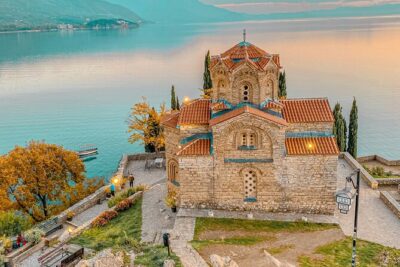 ★ 5.0Semi-Private Tour of North Macedonia: Ohrid & Struga from TiranaFrom $262170 reviews
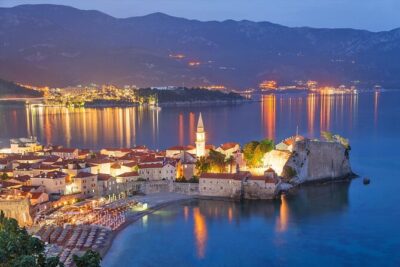 ★ 5.0Semi-Private Day Tour of Montenegro: Budva & Kotor from TiranaFrom $26171 reviews
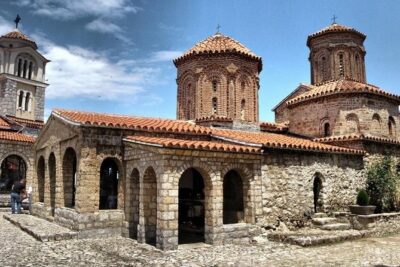 ★ 5.0Private Ohrid Day Tour and Authentic Village from Tirana & DurresFrom $15071 reviews
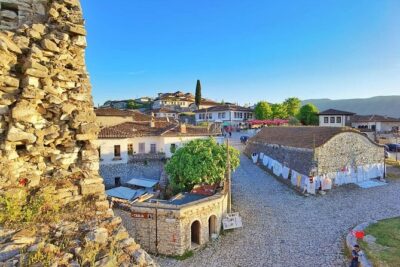 ★ 5.0From Tirana; Semi – Private Day Trip to Berat & Belsh LakeFrom $16863 reviews
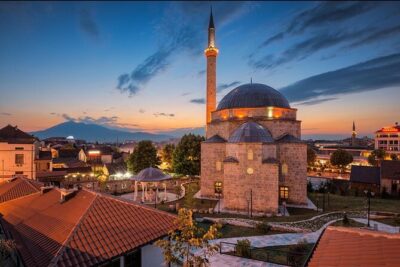 ★ 5.0From Tirana: Semi-Private Day Tour to PrizrenFrom $26153 reviews
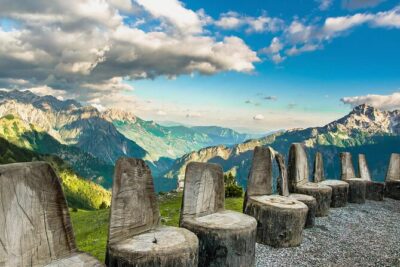 ★ 5.0Semi-Private Day Tour of Theth & Blue Eye from Tirana / ShkoderFrom $26152 reviews
 ★ 5.0Semi – Private Tour of Saranda, Ksamil & Blue Eye from TiranaFrom $23548 reviews
 ★ 5.0Semi – Private Tour at Cape of Rodon; Hidden Beaches & HistoryFrom $17046 reviews